Zelda: Ocarina of Time on Switch 2: Why Nintendo Uses 2021's AMD FSR 1.0 Instead of Nvidia DLSS
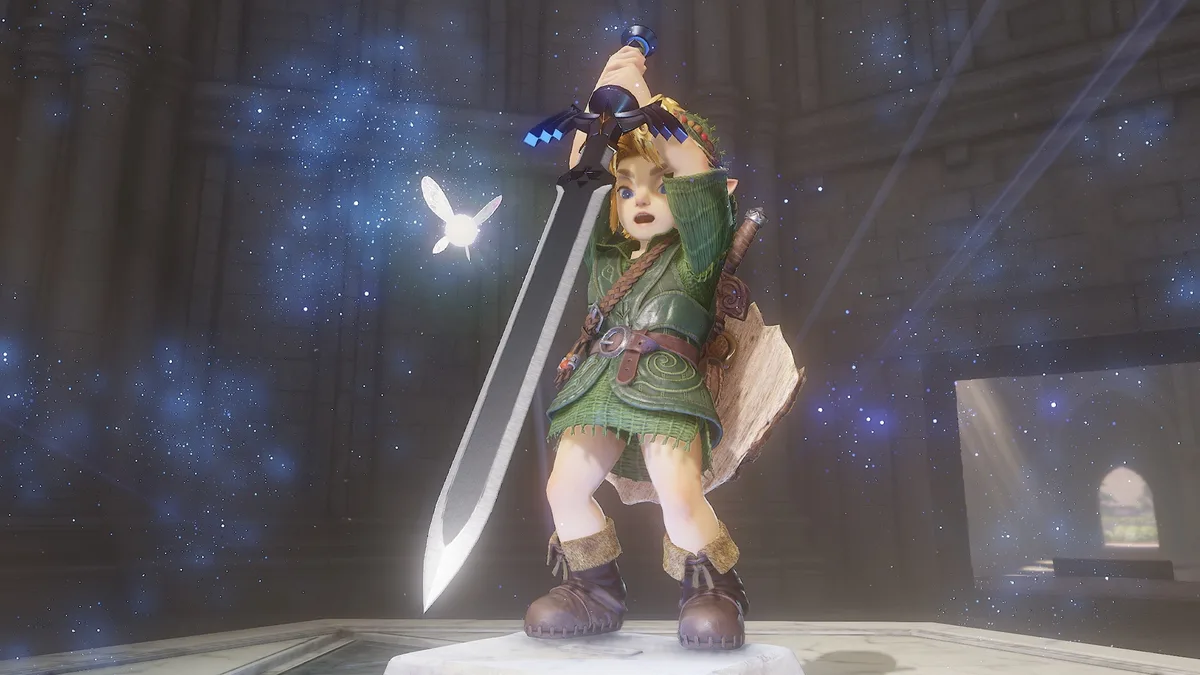
Just four days ahead of the worldwide launch of The Legend of Zelda: Ocarina of Time on Nintendo Switch 2 on November 5, 2026, a closer look at the pre-loaded Version 1.0.0 software files has uncovered an unexpected technical detail. Even though Nintendo's hybrid console runs on custom Nvidia silicon equipped with hardware Tensor Cores built for AI reconstruction, the game's built-in legal notices confirm that Nintendo bypassed DLSS in favor of an older spatial upscaler: AMD FidelityFX Super Resolution 1.0 (FSR 1.0) paired with SMAA anti-aliasing.
What the Version 1.0.0 Intellectual Property Notices Reveal
The discovery was shared on X by tech analyst and content creator SuperMetalDave64 and quickly gained traction across the r/NintendoSwitch2 community. When a game is pre-loaded on a Nintendo Switch 2 system prior to release, users can open its software options menu from the home screen and browse the mandatory Intellectual Property Notices, where publishers disclose all third-party and open-source libraries compiled into the retail binary.
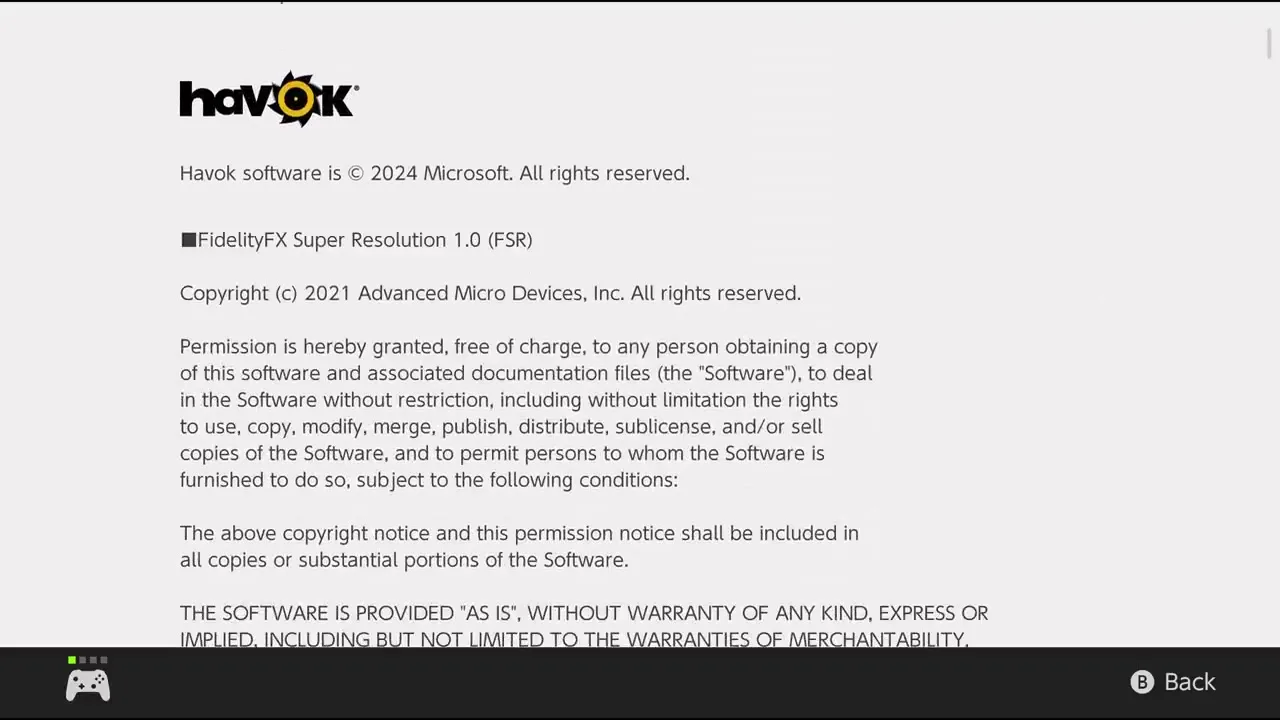
Scrolling through the Version 1.0.0 documentation, directly beneath the entry for the Havok physics engine (copyright 2024 Microsoft), three distinct graphics middleware disclosures appear:
- FidelityFX Super Resolution 1.0 (FSR): AMD's first-generation open-source spatial upscaler, released under the MIT license in 2021 (Copyright 2021 Advanced Micro Devices, Inc.).
- An Optimized Mobile EASU Implementation: A separate notice explicitly credits "An optimized AMD FSR's EASU implementation for Mobiles." Within the FSR 1.0 pipeline, EASU (Edge-Adaptive Spatial Upsampling) handles directional edge detection and spatial resolution scaling before passing the frame to RCAS (Robust Contrast-Adaptive Sharpening).
- SMAA (Enhanced Subpixel Morphological Antialiasing): A post-processing anti-aliasing solution used to smooth out geometric edges alongside the spatial upscale pass.
Conversely, Nvidia DLSS (Deep Learning Super Sampling) does not appear anywhere in the third-party software notices for this build, whose trimmed 24.54 GB eShop file size was confirmed last week.
Why Nintendo Opted for AMD FSR 1.0 and SMAA Over Nvidia DLSS
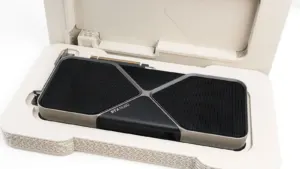
At first glance, skipping hardware-accelerated AI reconstruction on an Nvidia-powered console nearly a year and a half into the Nintendo Switch 2 lifecycle seems counterintuitive. The system's custom Ampere-based GPU includes dedicated Tensor Cores designed specifically to run DLSS, which leverages machine learning and temporal data across multiple frames to reconstruct sharp high-resolution images. By contrast, FSR 1.0 is a purely spatial upscaler from June 2021 that enlarges each frame independently without historical frame data.
However, several practical game-engine factors explain why Nintendo's internal divisions continue to rely on the exact same FSR 1.0 and SMAA pairing previously deployed in Donkey Kong Bananza on Switch 2:
- Zero Motion-Vector Overhead in Proprietary Engines: Temporal upscalers like DLSS, FSR 2, and FSR 3 require the game engine to output accurate per-pixel motion vectors and depth buffers for every moving object in a scene. Because FSR 1.0 operates strictly on the final rendered image as a lightweight spatial pass, the development team working alongside Eiji Aonuma on this remake could integrate it rapidly without overhauling Nintendo's internal rendering pipeline, which already utilized FSR 1.0 in Splatoon 3 and Tears of the Kingdom.
- Sub-Millisecond Execution for Locked 60 FPS: The mobile-optimized EASU pass runs in a fraction of a millisecond and leaves the GPU's matrix hardware untouched, helping the game maintain its 60 frames per second target while keeping power draw and battery consumption in check in handheld mode.
- No Temporal Ghosting on Fast-Moving Elements: While spatial upscaling can occasionally exhibit slight shimmering on fine distant foliage, pairing FSR 1.0 with SMAA edge smoothing avoids the disocclusion artifacts and trailing ghosting that temporal reconstruction can introduce around UI elements, particles, and character silhouettes.
Launching exclusively on Nintendo Switch 2 this Thursday, November 5, 2026, this complete ground-up reimagining of the 1998 Nintendo 64 classic introduces full 360-degree camera control, voiced cutscenes, manual jumping, boss rematches, and interactive ocarina performances using the console's built-in microphone.
My Perspective
Spotting AMD FSR 1.0 inside the legal notices of a flagship late-2026 Nintendo Switch 2 release running on Nvidia silicon is undeniably ironic if you follow graphics hardware closely. Part of me wishes Nintendo's internal engine teams would tap into those Ampere Tensor Cores to give the foliage of Kokiri Forest the crisp temporal stability that DLSS delivers so effortlessly. Still, Kyoto's engineering philosophy has always prioritized rock-solid 60 FPS pacing, predictable handheld battery life, and battle-tested internal tools over chasing bleeding-edge spec sheets. As long as the internal base resolution is high enough before SMAA and FSR 1.0 take over, stepping back into the Temple of Time this Thursday is going to look and feel magical regardless of which upscaler sits in the credits.

Based on the outskirts of New York City, Chaya 'Chayane' spent five years studying software engineering in Montreal before returning to her home state. A Full-Stack developer and Deep Learning AI architecture researcher, she explores neural networks and algorithmic optimization while engineering data pipelines for Retrocharting and Gamescharting alongside Grimtag. A gamer for over 20 years and an avid collector of Nintendo history and The Legend of Zelda, she explored World of Warcraft's Azeroth before bringing her deep technical background to video game analysis.