"I Love Nintendo, We Are All Friends": Ken Kutaragi Dismantles 30 Years of PlayStation Revenge Lore
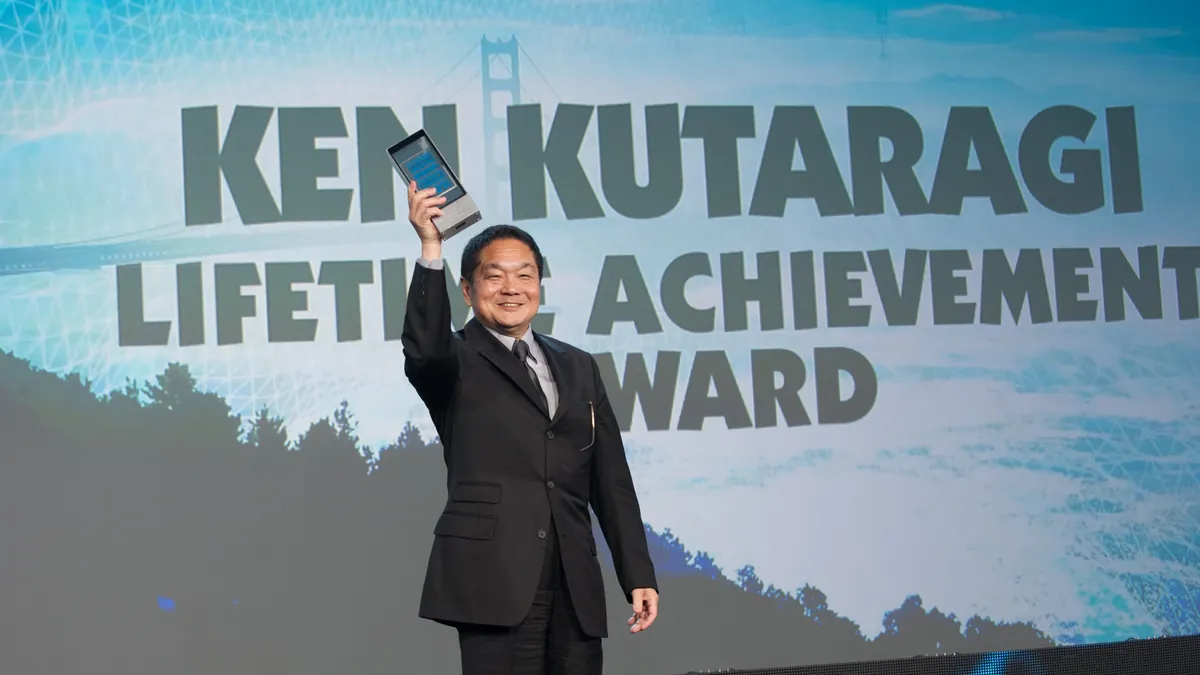
For more than three decades, video game history has repeated the same dramatic origin story: humiliated by Nintendo at CES 1991, Sony supposedly built the original PlayStation out of pure spite and a thirst for revenge. Speaking on stage at the Game Republic New Horizons conference in Middlesbrough, England, in a full keynote interview published on November 24, 2026 by The Game Business, Ken Kutaragi has put that legend to rest once and for all.
Widely known as the Father of PlayStation, the former Sony Computer Entertainment CEO insists there was never any grudge against Kyoto. On the contrary, he still speaks of Nintendo and its catalog with unmistakable warmth.
"I Love Nintendo, We Are All Friends"
Long before PlayStation and Nintendo became fierce rivals in the 32-bit era, Kutaragi spent years commuting between Tokyo and Kyoto. He recalled riding the bullet train every single week to work alongside Nintendo engineers, viewing the partnership without corporate walls.
"We never think about Sony as a separate entity. We all are a team. With this mentality, I approached the Nintendo headquarters every week by using the bullet train. So, I seemed to be an acting member in Nintendo. One woman there assumed I was their employee. I had a very close relationship with Nintendo."
When asked about the widely repeated narrative that Sony's standalone console was born as retaliation for Nintendo walking away from their joint CD-ROM hardware deal, Kutaragi rejected the premise outright.
"Many of the media said, 'Sony suffered a betrayal, they will take some revenge.' No. Totally no. We are all friends. I love Nintendo. I contacted them every week. One of my counterparts there was my best business friend. I love Nintendo games."
From the SNES Sound Chip to the Real Reason Behind the Split
Kutaragi traced that close bond back to his earlier pitches to Nintendo. After Kyoto passed on his proposal for a fast, compact floppy disk during the Famicom cycle, he questioned why home game systems settled for weak audio and convinced Nintendo to adopt Sony's custom sound chip for the Super Famicom and Super Nintendo, an effort he still describes as a great collaboration for the gaming industry.
The disagreement that led to the original PlayStation prototype was not personal, but strictly economic. Kutaragi acknowledged that ROM cartridges were fast and dependable, yet they created a severe supply bottleneck for third-party publishers. If a hit title needed another run beyond 100,000 copies, manufacturing fresh cartridges took two to three months because studios were effectively ordering physical semiconductor hardware and assembled circuit boards.
Unable to wait months for restocks, players bought used copies from the second-hand market, leaving software developers without revenue from their own hits. That structural flaw pushed Kutaragi toward optical discs. When Nintendo announced at CES that it was partnering with Philips on CD-i, a format Sony had actually co-developed with Philips, Kutaragi was surprised mainly on technical grounds. He knew CD-i suffered from slow read speeds and heavy data overhead, whereas his own vision centered on real-time 3D graphics.
"Sony Is Not a Toy Company!"
The toughest resistance Kutaragi faced did not come from Nintendo, but from inside Sony itself. Many senior executives still dismissed video games as childish gadgets unworthy of a prestigious consumer electronics brand.
He recounted how one senior colleague inside Sony actually broke down in tears and shouted, "Sony is not a toy company!" Breaking through that mindset meant proving that interactive 3D entertainment could become a mainstream cultural pillar backed by developer-friendly tools. That groundwork paid off immediately: Namco ported arcade racer Ridge Racer to the original PlayStation in just a couple of months, while Tamsoft built texture-mapped fighter Battle Arena Toshinden in roughly a month with fewer than ten people.
Secretly Pushing Microsoft Toward Xbox, and Warning About Console Prices
The keynote also surfaced two striking revelations beyond Nintendo. Kutaragi recalled a one-on-one meeting with Microsoft's leadership prior to the original Xbox, during which Microsoft offered Sony free hard disk drives and licensing terms. Kutaragi replied with a single word, "No," explaining that his secret hope was to push Microsoft into building its own console platform so both companies could expand living-room gaming beyond the PC.
Now serving as president and CEO of Cyber AI Entertainment, Kutaragi also issued a blunt warning about the current state of hardware. Echoing his recent remarks on why physical media is losing economic ground, he argued that aligning consoles closely with PC architecture starting with PlayStation 4 has now collided with runaway graphics card prices, leaving high-end gaming PCs costing as much as a car. Looking ahead, he believes distributed, energy-efficient AI systems could eventually give rise to a lightweight entertainment platform that replaces both traditional consoles and smartphones.
My Take
Hearing Ken Kutaragi dismantle the revenge narrative in his own words puts one of gaming's biggest myths back into proper perspective. Industry lore loves a personal grudge, yet the 1991 split was really a clash of engineering philosophies: Kyoto's attachment to reliable cartridges against Sony's bet on optical media and real-time 3D. Thirty years later, the clarity of his outlook stands out just as much. The architect of PlayStation openly credits Nintendo's games and even Microsoft's entry with growing the medium, while sounding an honest alarm over hardware prices that risk pricing everyday players out of the market.

SEO consultant for over 20 years and digital entrepreneur, Charles "Grimtag" is the founder of Pro-Gamer.gg, Retrocharting.com, and Gamescharting.com. A competitive gamer, streamer, and retro game collector, he has worked in the video game industry for over 15 years, notably as a consultant for leading game price comparison platforms. Passionate about real-time performance data and gaming technology, he analyzes competitive esports, gaming hardware benchmarks, and creator workflows on Pro-Gamer.gg with an authentic player perspective.