10x More Interiors, Dynamic Odors, and Unseen Rooms: Why Even GTA 6 Developers Are Still Discovering Leonida
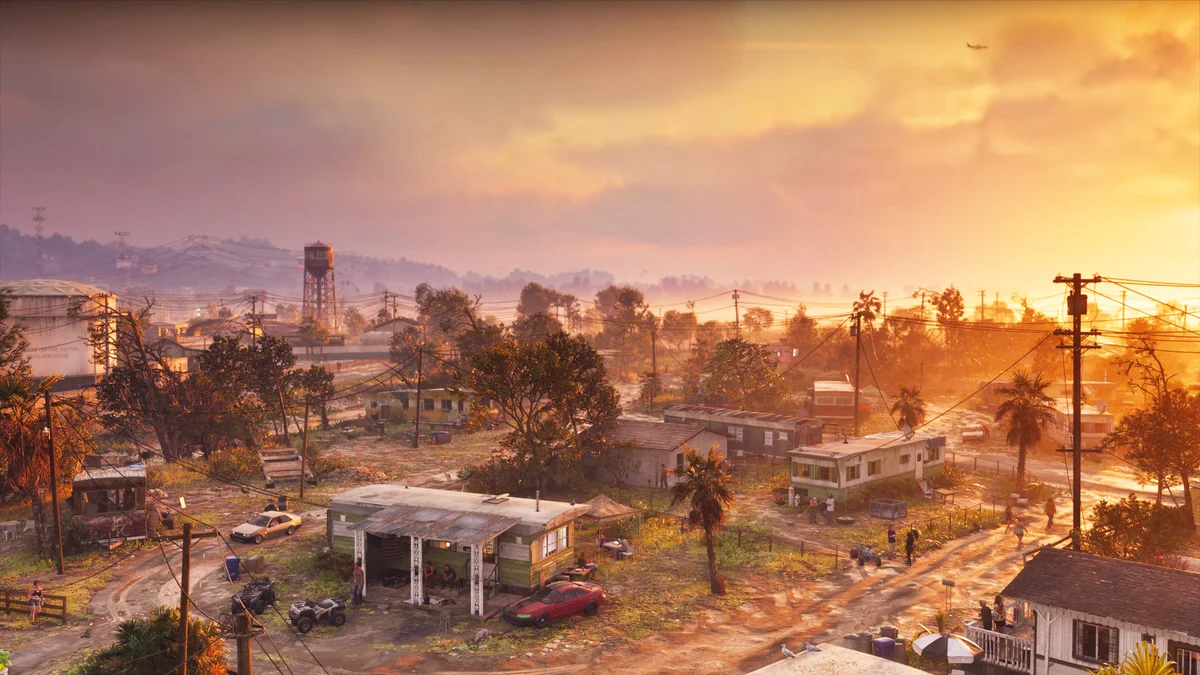
Launching on November 19, 2026 for PlayStation 5 and Xbox Series X|S, Grand Theft Auto VI pushes environmental detail so far that even the veteran leads who built it are still being caught off guard. In the cover story of British magazine Edge Issue 430 written by Simon Parkin, Rockstar North co-studio head and head of development Aaron Garbut revealed that despite spending literally years exploring increasingly dense internal builds of the state of Leonida, he still regularly stumbles into locations, back alleys, and interior rooms he has never seen before.
On paper, the raw square mileage of the Florida-inspired playground is already staggering: spanning Vice City and its surrounding counties, the map is roughly twice the size of Grand Theft Auto V, and Rockstar notes that its total landmass is nearly as large as the playable maps of GTA IV, GTA V, and Red Dead Redemption 2 combined. Yet at a time when open-world games routinely inflate their acreage through procedural generation, the Edinburgh studio focused its firepower on what it calls handmade density.
"An Order of Magnitude More Interiors" Built in Layers by Architects and Designers
A single figure shared by Aaron Garbut, a foundational artistic pillar at Rockstar since Grand Theft Auto III, captures the scale of this shift: GTA 6 contains "an order of magnitude more interiors" than its predecessors, representing at least ten times as many accessible indoor spaces.
Far from being restricted to main story set-pieces across the full GTA 6 map of confirmed regions, cities, and counties in Leonida, this density extends to random back streets, neighborhood shops, and ordinary homes. Aaron Garbut described that handcrafted philosophy directly:
"Every back alley is as densely detailed and interesting as the others. You can go anywhere, any random location, and so many people have thought about that location."
Rather than treating indoor spaces as blank, copy-pasted rooms, dedicated teams of architects, artists, and designers construct these interiors in layers to serve as physical evidence of entire lives. Houses have inhabitants who leave traces behind: family photographs hang on walls, personal possessions accumulate on coffee tables, and living rooms and kitchens reflect the specific disorder of the people who use them. Stepping inside an unfamiliar building as Jason Duval or Lucia Caminos consequently feels, more than ever before in the series, like an actual act of trespass.

A House Trashed by a Dog and a Systemic Smell and Disgust Engine
To illustrate how a studio head can still encounter unfamiliar rooms after years of daily playtests, Aaron Garbut recounted a moment from a play session earlier the same morning in Edinburgh. Wandering into a house he had never visited before, he noticed affectionate family photographs of a dog hanging in the first room. When he walked into the next room, he discovered what the pet had been doing while left home alone:
"The whole place was trashed. There was shit in the corner, smeared around a bit."
Moments like this highlight how Rockstar North connects environmental storytelling with underlying simulation systems. Originally, the development team had created a character reaction to an unpleasant smell for one specific piece of explorable content. Later in production, engineers decided to expand that animation into a broader systemic odor mechanic, allowing different environments across Leonida to provoke varying degrees of disgust.
When Jason walked into that dog-trashed room, without any bespoke cutscene or scripted trigger having been written for the house, the two systems collided organically: Jason immediately began to grimace and recoil from the stench.

"We've Built a Pyramid on Everest": Thousands of Hands Without a Fixed Design Bible
The reason no single developer can hold the entirety of Leonida in their head also comes down to the sheer scale of Rockstar's modern studio network. Co-studio head Rob Nelson pointed out that some individual groups responsible for specific aspects of Leonida are now comparable in size to the 50-to-60-person teams that built entire Rockstar games during the era of GTA III and The Warriors. Alongside the Los Angeles team dedicated to the 600,000 animations and district personality profiles of GTA 6 NPCs, Rockstar Toronto leads world population and research, while Rockstar San Diego drives ambient and interactive events.
Just as remarkably, Rob Nelson revealed that there is no immutable design bible dictating what GTA 6 must be. Early design documents quickly became out of date, and the team found instead that "the game tells you what it needs." That organic approach even governs the series' signature satire on a 360-degree level: Nelson cited the example of a small town in Leonida designed to be unusually patriotic, home to a pro-police biker gang and caught in the middle of a mayoral election, where the humor naturally radiates outward into campaign billboards, radio ads, television shows, overheard street conversations, and the clutter found inside incidental rooms.
To make work created by thousands of pairs of hands over ten years feel as though it was crafted by one, Rockstar operates in six-to-eight-week milestones. Once a build is stabilized and played intensively across the studio, it generates "thousands and thousands" of notes that Rockstar Games president Sam Houser and Rob Nelson spend two weeks reviewing together before redistributing tasks across lighting, audio, narrative, and mechanics. While fellow head of development Phil Hooker summed up the finished work by stating "we've made what we wanted to make," Aaron Garbut offered a striking metaphor for following up GTA V and Red Dead Redemption 2 without cutting corners:
"We can't just trot out something that's what people might expect, or that was the easy thing to do. We've not compromised on the scale, the detail, the interactivity, the story, the open world. I feel like we've built a pyramid on Everest."
Overview of World Scale and Interior Density in Grand Theft Auto VI
| Open-World Pillar | Scale and Architecture in GTA 6 | Practical Impact for Players |
|---|---|---|
| Leonida Landmass | Roughly 2x the size of GTA V (nearly equal to GTA IV, GTA V, and Red Dead Redemption 2 combined) | A massive state spanning Vice City, the Keys, Grassrivers, Port Gellhorn, Ambrosia, and Mount Kalaga |
| Accessible Interiors | "An order of magnitude more interiors" (at least 10x more indoor spaces than past titles) | Homes, shops, and back rooms open for seamless exploration with a genuine sense of trespass |
| Layered Construction | Built in layers by dedicated teams of architects, artists, and designers | Wall photographs, household clutter, and personal items that tell the story of each resident |
| Systemic Odor Engine | Global disgust mechanic evaluating environmental mess and unpleasant smells | Unscripted physical reactions (Jason and Lucia grimacing and recoiling) triggered dynamically |
| Creative Pipeline | 6-to-8-week milestones reviewed by Sam Houser, Rob Nelson, Aaron Garbut, and Phil Hooker | 360-degree cohesion connecting local town politics, billboards, radio ads, and interior props |
My Take
For the past decade, the open-world genre has been obsessed with selling players hundreds of square miles of algorithmically generated emptiness where 95% of the doors are painted onto cardboard facades. Hearing a veteran like Aaron Garbut, who has been shaping Rockstar cities since GTA III, casually admit that he still walks into random Leonida houses he has never seen before and stumbles onto a dog-trashed living room that makes Jason recoil from the smell puts the rest of the industry on notice.
That is the exact dividing line between a pretty postcard backdrop and a living sandbox: when environmental storytelling and small physical systems collide without a scripted cutscene holding your hand. With a landmass rivaling GTA IV, GTA V, and Red Dead Redemption 2 combined and ten times as many handcrafted interiors built by teams of architects, players are going to be uncovering secrets in the back alleys of Leonida long after November 19.

SEO consultant for over 20 years and digital entrepreneur, Charles 'Grimtag' Ronchain is the founder of Pro-Gamer.gg, Retrocharting.com, and Gamescharting.com. A competitive gamer, streamer, and retro game collector, he has worked in the video game industry for over 15 years, notably as a consultant for leading game price comparison platforms. Passionate about real-time performance data and gaming technology, he analyzes competitive esports, gaming hardware benchmarks, and creator workflows on Pro-Gamer.gg with an authentic player perspective.