“Games Are Best Made by People”: IWGB and 5 European Game Worker Unions Launch Joint Manifesto Against Generative AI
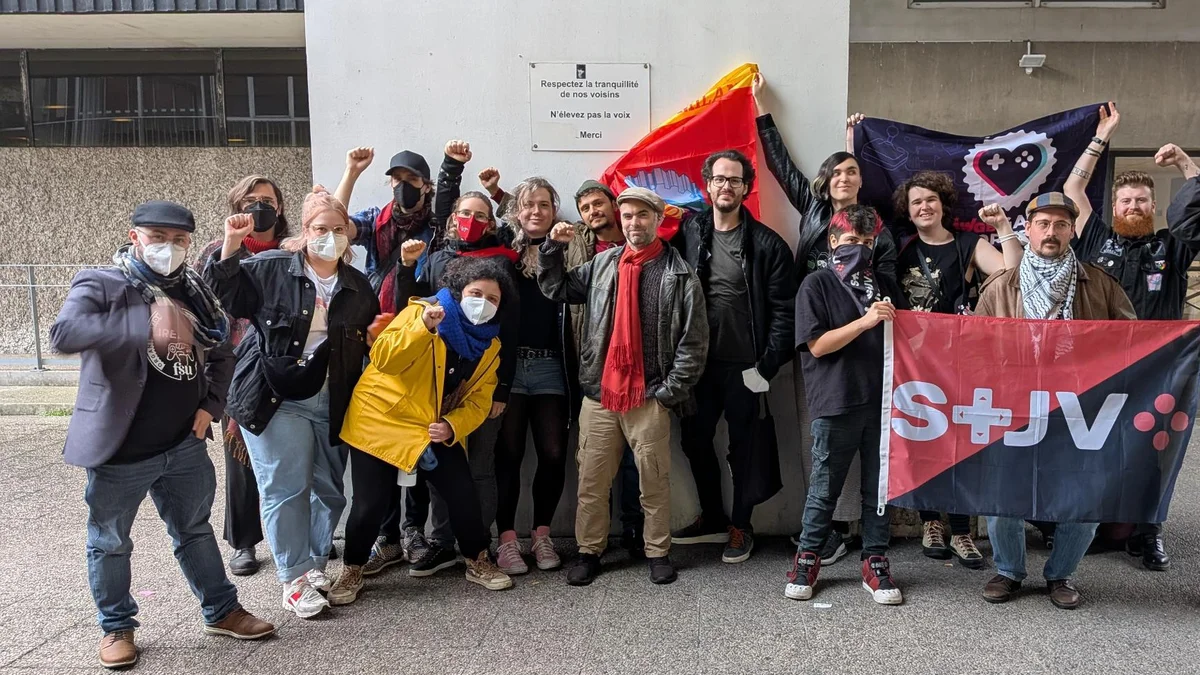
The spread of generative AI across video game studios is a management decision rather than an unstoppable force of nature. Following a European labor summit in Manchester, a coalition of six video game unions and work councils has published a joint manifesto titled On Generative AI Usage in the Games Industry. Spearheaded by the UK's IWGB Game Workers branch and co-authored with France's STJV (Syndicat des Travailleureuses du Jeu Vidéo), Game Workers Unite Ireland (GWUI), Spain's CSVI (CGT), Germany's GDRT (ver.di Game Devs Roundtable), and Italy's FIOM-CGIL Milan Work Council, the declaration rallies behind a clear foundational principle: "Games are best made by people."
The coordinated campaign lands at a pivotal moment for European labor organizing, right as Rockstar UK developers vote on formal IWGB union recognition through November 26 amid the launch of Grand Theft Auto VI. By uniting across borders, the coalition aims to flip the burden of proof inside development studios: rather than forcing artists, writers, and programmers to constantly defend why generative AI should be kept out of their pipelines, executives and publishers must justify why they want to introduce it in the first place.
From Early Concept Art to Final Assets: Why "Optional" AI Is No Choice at All
The manifesto explicitly covers the entire game production pipeline. The unions address both player-facing assets shipped in commercial releases (including 2D and 3D art, voice and sound assets, code, and dialogue) and behind-the-scenes materials used during pre-production that players never see directly, such as early concept art, mood boards, reference materials, and automated pre-translations.
While tech vendors and studio executives routinely pitch large language models (LLMs) and image generators as tools of worker empowerment, the unions point out that true empowerment would require every developer to freely choose whether, when, and how to use them. That critique echoes recent industry data showing that 55% of developers polled in the GDC Survey believe generative AI is actively hurting the games industry. Even in studios that do not mandate generative AI in writing, management frequently sets compressed schedules and output quotas that are impossible to meet without automation, turning supposed choice into implicit coercion.
"AI Brain Fry," Cognitive Surrender, and the Collapse of Junior Roles
Drawing on peer-reviewed research from 2025 and 2026, the manifesto details how generative AI degrades day-to-day working conditions. Instead of freeing developers to focus on high-level craft, AI workflows pivot skilled professionals toward a grind of small, parallel tasks centered on babysitting prompts and bug-fixing faulty machine output. The unions cite research by Pearl et al. (2025) on "AI brain fry" and reduced focus, alongside a 2026 study by Shaw & Nave defining "cognitive surrender": under tight deadlines, workers using generative AI habitually offload their critical judgment and adopt systematically incorrect results.
- Hollowing Out Entry-Level Talent: Generative AI is disproportionately deployed on foundational tasks traditionally assigned to junior staff, choking off entry-level jobs and starving the industry of fresh talent and future leads.
- Loss of Creative Ownership: Stripped of their personal artistic and technical stamp, developers become alienated from their labor and can no longer take pride in the finished game.
- Management Sycophancy and Blame-Shifting: Because conversational AI interfaces are engineered to be eager to please and never tell a user "no" (Cheng et al., 2026), executives who rely on them to plan schedules and workloads become less receptive to legitimate pushback from human staff, while blaming workers when unverified AI output fails.
- Data Theft and Uncompensated Training: Stating bluntly that "GenAI does not create, it appropriates," the unions condemn models trained on scraped third-party work as well as internal studio datasets where employees were forced to train the very systems that later replaced them.
A Call for Studio Bans, Regulator Action, and Vocal Player Pushback
The document also warns studio CEOs that outsourcing institutional knowledge to third-party AI conglomerates is a trap for employers too: once external tech giants monopolize skills previously held by in-house staff, they will inevitably hike licensing prices when studios can no longer operate without them.
To push back, the six unions outline concrete guidelines for four groups. They urge workers to avoid generative AI wherever possible, refuse to burn themselves out chasing artificially inflated quotas, negotiate collective agreements protecting the right to refuse AI tools, and unionize early. They call on employers to ban generative AI in company codes of conduct even during early prototyping, never mandate its use, and prohibit training on employee work without explicit consent, fair compensation, and a permanent right of withdrawal. Finally, the coalition asks players to actively support human-made games and speak out loudly in comments and videos against AI slop, while urging regulators to outlaw non-consensual dataset training.
My Take
What makes this European manifesto hit so hard is that it looks past the surface-level debate over whether an AI-generated texture looks passable and focuses on what automation actually does to a studio floor. Turning veteran artists, writers, and coders into full-time prompt janitors fixing hallucinated output under halved deadlines destroys both the pride of craft and the junior career ladder that builds tomorrow's creative directors. Seeing the IWGB, STJV, and four other European unions lock arms on a unified labor standard sends a clear message to publishers chasing short-term shareholder hype: you cannot build lasting art by cutting out the humans who give a game its intent and soul.

SEO consultant for over 20 years and digital entrepreneur, Charles "Grimtag" is the founder of Pro-Gamer.gg, Retrocharting.com, and Gamescharting.com. A competitive gamer, streamer, and retro game collector, he has worked in the video game industry for over 15 years, notably as a consultant for leading game price comparison platforms. Passionate about real-time performance data and gaming technology, he analyzes competitive esports, gaming hardware benchmarks, and creator workflows on Pro-Gamer.gg with an authentic player perspective.