Having RAM in Your PC Is "Quite Terrible": Why OpenAI CEO Sam Altman Wants Scarce DRAM and DDR5 Memory Inside Cloud Data Centers

Is keeping 32GB or 64GB of memory inside your gaming rig a waste of global silicon? Speaking with Stripe co-founder John Collison on Episode 39 of the Cheeky Pint podcast (titled Why Sam Altman is against a single superintelligence), OpenAI CEO Sam Altman delivered a blunt assessment of the ongoing global memory crunch: from a resource allocation standpoint, he argued, having millions of personal computers hold onto the world's constrained DRAM supply is "quite terrible."
"Used 5% of the Time": Sam Altman's Case Against Local PC Memory
During the conversation, Collison and Altman discussed the surging popularity of open-source artificial intelligence models that developers, gamers, and power users increasingly run directly on their own desktops and laptops (known as local inference) to avoid recurring cloud subscriptions and keep their data private.
In Altman's view, distributing memory across consumer machines runs directly counter to what a supply-starved semiconductor market needs. Addressing the push for local hardware independence, the OpenAI chief stated:
"A lot of people want local inference. And somehow, they assume that the problem is solved now because we are going to have open-source models, we're going to be able to run them on our computers, and so we're not going to need all the stuff in the data center. But from a global allocation perspective, actually, it's quite terrible to have everybody have a bunch of the world's limited supply of DRAM sitting in their own computer and being used 5% of the time. You want maximum utilization in the cloud if you're trying to deal with this very supply-constrained environment. And somehow many people's intuition is the opposite of that."
Why "The Invisible Hand Is Failing" on DRAM and DDR5 Supply
When John Collison asked why soaring memory and chip prices have not naturally triggered a massive wave of new factory construction through standard market forces, Altman argued that traditional semiconductor economics have broken down:
"I think the invisible hand is failing right now. Memory makers remember almost going bankrupt from building too many factories, so they stay careful."
Burned by historical boom-and-bust cycles that previously crashed NAND and DRAM pricing, the industry's big three manufacturers (Samsung Electronics, SK Hynix, and Micron) have remained cautious about building new fabs, choosing instead to shift existing wafer capacity toward high-margin enterprise orders. With Samsung locking up to 80% of its memory production capacity to feed AI data centers and prioritizing HBM3E and HBM4 stacks, consumer-grade DDR5 kits and GDDR7 graphics memory have been left fighting for leftovers.
The scale of capital required to feed centralized AI infrastructure is staggering: during the episode, Altman noted that building and operating 1 gigawatt (GW) of AI compute capacity over five years currently costs roughly $70 billion, adding that bringing that figure down to $20 billion would make him "much happier." To break through physical construction bottlenecks over the long term, Altman even floated directing OpenAI's robotics program toward building "self-replicating data centers," where AI-driven robots operate chip fabs, manufacture solar panels and turbines, and assemble server facilities.
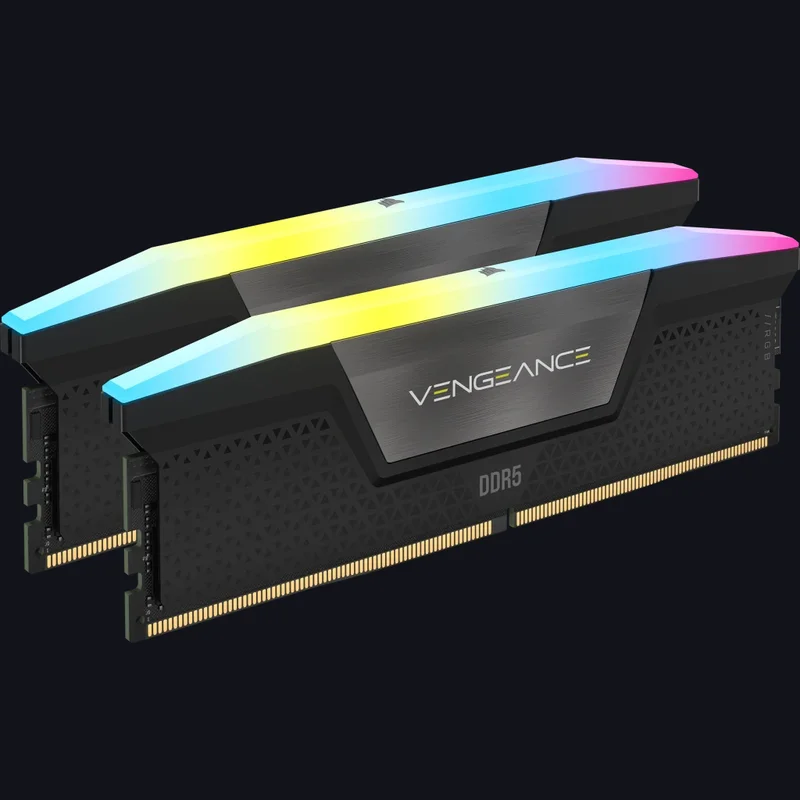
Corsair Vengeance RGB DDR5 32GB (2x16GB) 6000 MT/s CL30
- 32GB (2x16GB) DDR5 Desktop Kit
- 6000 MT/s CL30 Low Latency Timing
- Intel XMP 3.0 and AMD EXPO Certified
PC Gamers Push Back: Local RAM Does Much More Than Run AI Models
Altman's remarks quickly ignited fierce backlash across hardware forums and Reddit communities such as r/Games and r/pcmasterrace, with PC builders highlighting three glaring flaws in the cloud-first argument:
- Personal computers do far more than local AI inference: Framing consumer DRAM as sitting idle 95% of the time ignores why PC users buy memory in the first place. Modern Unreal Engine 5 titles, shader compilation, background recording, video editing, and everyday multitasking routinely push past 16GB, making 32GB of DDR5 the practical baseline for smooth gaming.
- AI data centers caused the shortage, not consumers: PC gamers upgrading a dual-channel DDR5 kit once every few years did not drain the global silicon supply chain. Hyper-scale AI orders created the bottleneck that is now driving up component bills across the entire gaming industry, directly explaining Sony CEO Hiroki Totoki holding back on the PlayStation 6 price and release window amid the global RAM crisis.
- Hardware ownership beats cloud rent-seeking: Pushing for "maximum utilization in the cloud" aligns conveniently with a business model where users no longer own capable local hardware, forcing them to rent compute by the month behind rate limits, network latency, and subscription tiers.
My Take on Sam Altman's Cloud Pitch
It takes remarkable nerve to watch PC gamers and builders pay inflated prices for memory kits and then lecture them that keeping DRAM inside their own towers is a "terrible" allocation of global resources. When I slot 32GB or 64GB of DDR5 into my motherboard, I am not trying to maximize server-rack utilization metrics for Silicon Valley: I am paying for zero-latency responsiveness, offline independence, and the right to own my hardware outright. If building $70-billion-per-gigawatt data centers requires treating personal computer RAM like an inconvenience to be centralized in the cloud, the problem isn't the memory sitting in our gaming PCs. It's the unchecked appetite of the data centers devouring the supply chain. We have not yet had a physical unit on our desk,if the manufacturer's team would like to send over a review sample so we can put it through our full real-world testing protocol, our lab doors are wide open.

PC hardware enthusiast and competitive gamer, Arthur 'Heimdall' splits his time between France and the UK working in enterprise B2B software solutions. A business school graduate passionate about component benchmarking, he has been building, modding, and tuning PCs since childhood, optimizing every thermal degree and millisecond of display latency. An avid gamer across Assassin's Creed and sandbox titles, he forged his alliance with Grimtag and Chaya during late-night World of Warcraft raids before joining Pro-Gamer.