"Copying and Pasting Rarely Stands the Test of Time": Why Shigeru Miyamoto Says Generative AI Cannot Replace a Creator's Design Intention
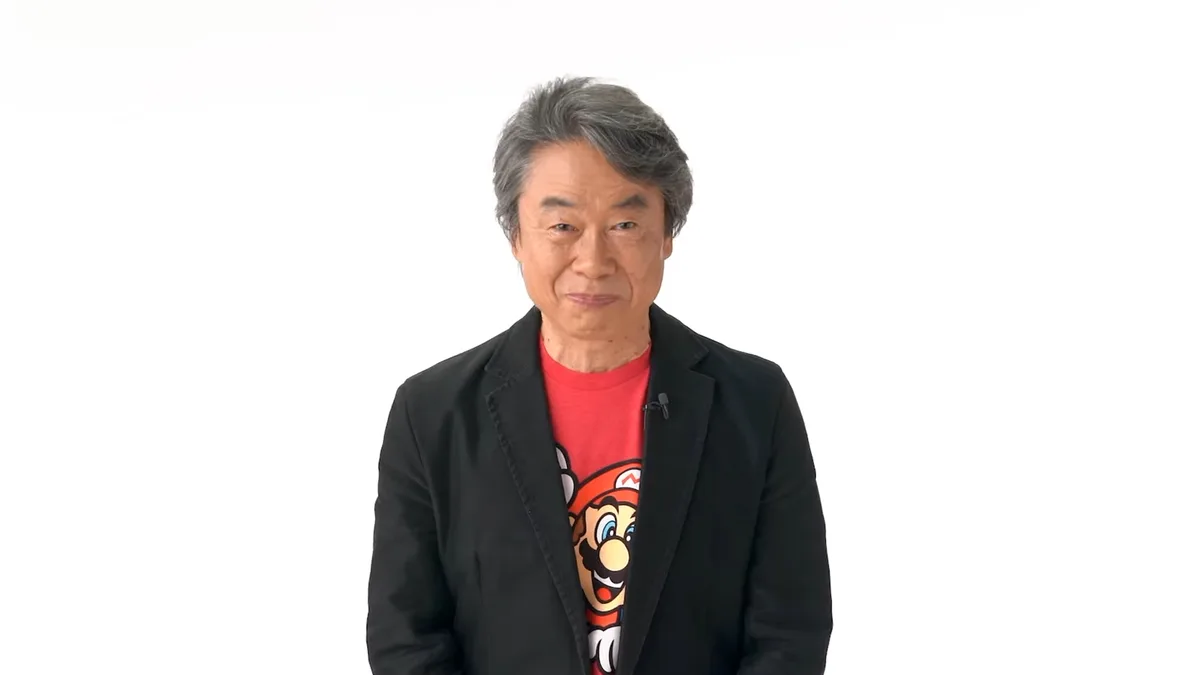
As he prepares to receive Japan's highest cultural honor from the Emperor at the Imperial Palace in Tokyo on November 3, Shigeru Miyamoto used his press conference at Nintendo headquarters in Kyoto to share a remarkably candid reflection on the rise of generative artificial intelligence in game creation.
Speaking during the media session covered by Japanese daily newspaper Yomiuri Shimbun, the 73-year-old creator of Super Mario, Donkey Kong, Pikmin, and The Legend of Zelda rejected both industry doomsaying and blind technological hype. Having just made history as the first video game creator awarded Japan's Order of Culture while addressing the challenge of keeping a 10,000-employee Nintendo original, Miyamoto framed generative AI within the broader evolution of tools he has witnessed since joining the company in 1977.
From Hand-Lettering and Typewriters to Word Processors: How New Tools Expose True Design Talent
An industrial design graduate from Kanazawa College of Art before entering the video game industry, Shigeru Miyamoto pointed out that his generation lived through the rapid birth of modern computing, transitioning from mechanical typewriters to digital word processors.
To illustrate his point, he recalled how design students were once taught manual "lettering" in school to neatly draw text on posters. At the time, mastering that manual execution alone was enough for someone to be called a "designer," just as adapting a foreign trend with a Japanese twist could earn someone the same label.
"Our generation lived through a period of rapid computer development, a time when tools were constantly evolving, moving from typewriters to word processors. However, as computers and technology advanced, a designer's true individual capabilities, such as their innate sense of layout, finally came to the fore. I believe generative AI represents a similar shift."
Shigeru Miyamoto, Representative Director and Fellow at Nintendo
In Miyamoto's view, whenever technology absorbs purely mechanical execution, technical polish stops being a crutch and exposes what a creator truly brings to the table: spatial awareness, pacing, and structural vision.

The Psychological Trap of Confusing "Labor" With True Creation
From there, Shigeru Miyamoto delivered his sharpest diagnosis of modern creative work. He drew a clear line between the act of creating (establishing a broad structure and vision) and the hands-on labor that follows, such as filling in gaps, refining small details, and completing routine production tasks.
The tricky part, he explained, is that this hands-on execution is genuinely enjoyable, creating a psychological trap for development teams.
"While the act of creation is inherently satisfying, there is a danger: one might find satisfaction in the labor itself and mistakenly believe that a high-quality piece of work has been created. In that sense, the more AI replaces these tasks, the more it provides an opportunity to reflect on what is really important, which I think is a positive thing."
Shigeru Miyamoto
Spending hundreds of hours mechanically polishing assets does not automatically make a game meaningful or fun. By stripping away part of that repetitive busywork, automation forces creators to confront what actually matters instead of hiding behind the sheer volume of their labor.

Why "Copying and Pasting" Never Stands the Test of Time
While open to technology easing mechanical workloads, Miyamoto issued an uncompromising warning against relying on automated generation or imitation to build games. His perspective directly complements the warning shared a day earlier by Masahiro Sakurai on how Steam's surge from 275 to 19,000 yearly releases risks a flood of unoriginal and unprofitable AI games.
"Looking back at past designs, there are some that were created merely by copying and pasting. Yet, such work rarely stands the test of time; it lacks the individual's particular design intention. Because the process relies on an individual's intent, with the computer serving as an assistant for the labor, I believe that even as technology continues to evolve, and even if AI were to eventually handle everything, there will always be a role left for us to play."
Shigeru Miyamoto
At a time when several major publishers are racing to industrialize generative pipelines, Nintendo's creative fellow underscored the principle that has guided Kyoto for nearly half a century: a computer can assist with execution, but it has no lived experience, no personal perspective, and no design intention of its own.
My Take: Separating the Sweat of Execution From the Spark of Design
What strikes me most about Shigeru Miyamoto's perspective on generative AI is how effortlessly he elevates the conversation above technical buzzwords to focus on craft and creative psychology.
His warning about confusing the satisfaction of "labor" with genuine creative quality hits at the heart of modern game development: in an industry obsessed with massive production pipelines and endless asset generation, it is easy to forget that player joy comes from a clear human design intention rather than automated filler.
By reminding everyone that copy-paste creations never survive the test of time because they lack an individual author's intent, Miyamoto captures in a few sentences why his classics from 1985 and 1998 still feel alive today, and why no algorithm will ever replace a designer's personal vision.

SEO consultant for over 20 years and digital entrepreneur, Charles 'Grimtag' Ronchain is the founder of Pro-Gamer.gg, Retrocharting.com, and Gamescharting.com. A competitive gamer, streamer, and retro game collector, he has worked in the video game industry for over 15 years, notably as a consultant for leading game price comparison platforms. Passionate about real-time performance data and gaming technology, he analyzes competitive esports, gaming hardware benchmarks, and creator workflows on Pro-Gamer.gg with an authentic player perspective.