13 Classes and 39 Methods Copied Byte for Byte: Needle in a Haystack Clone Devs Accuse a Steam Vibe-Coder of Stealing Their Code
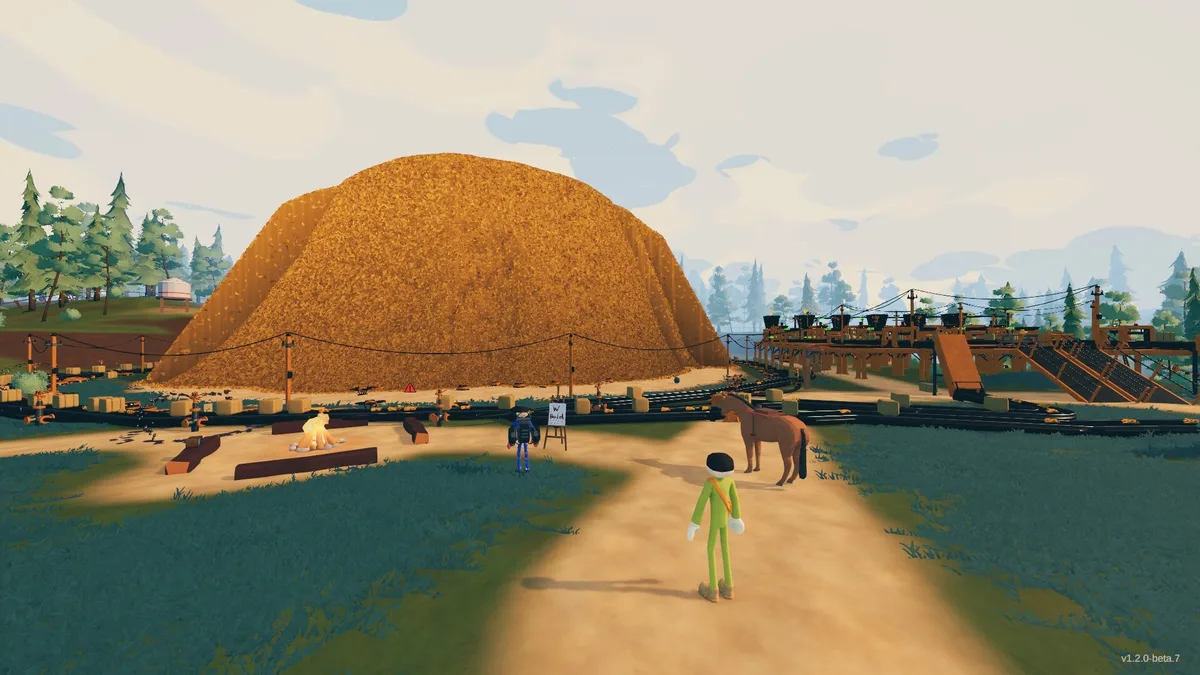
An absurd Matryoshka doll of copycat accusations has erupted on Valve's storefront, offering a textbook look at the dark side of rapid AI-assisted game development. Just days after data revealed that Steam surpassed 21,388 game releases in 2026 amid the rise of AI vibe coding, the viral "needle in a haystack" micro-genre has reached peak irony: indie studio NoGlyph, which rushed out its own take on another developer's viral concept, is now publicly accusing a third developer, Little Field Studios, of using vibe-coding tools to decompile and steal its source code byte for byte.
How a Viral 5-Million-Straw Prototype Sparked a Stampede of Steam Clones
The saga began in August 2026 when solo creator Nas Nakarus (founder of Studio Bitdot, partnered with Polden Publishing) shared a short social media clip of his upcoming title, Needle In A Haystack Simulator. The premise was deceptively simple and instantly hypnotic: digging through a physically simulated pile of 5,000,000 individual pieces of hay to locate a single hidden metal needle.

The clip racked up tens of millions of views and drew more than 23,000 playtest signups on Steam. However, because the core hook was so easy to grasp at a glance, opportunistic developers immediately raced to beat Studio Bitdot's Q4 2026 release window. Within weeks, nearly a dozen lookalike titles flooded Steam search results, forcing Studio Bitdot to update its official store description with a blunt disclaimer: "The viral one. The one and only."
13 Classes and 39 Identical Methods Found Inside Assembly-CSharp.dll
One of the fastest studios to capitalize on the trend was NoGlyph, which launched a free demo on September 20 and 21, 2026, before releasing its $5.99 commercial version, Needle In A Haystack, on September 29, 2026 (expanding the pile to 10 million pieces of hay with up to six-player online co-op).
Then, on October 16, 2026, yet another entry titled A Game About Needle In A Haystack launched on Steam for $6.99 from developer Little Field Studios. When NoGlyph developer Jahvin watched the newcomer's trailer, something looked suspiciously familiar: the geometry and behavior of the hay mound closely mirrored the legacy haystack mode from NoGlyph's late-September demo builds.
After inspecting the rival game's compiled Unity binary (Assembly-CSharp.dll), NoGlyph published a detailed forensic breakdown on Steam accusing Little Field Studios of outright code theft:
- Inside
Assembly-CSharp.dll, a namespace calledNeedlefield.ReferenceHaycontained 13 classes copied under NoGlyph's exact original names, includingHayDomeRendererandHayExcavationCollider, which handle mound rendering, digging collision, and rare gold, lapis, and diamond hay spawns. - More than half of the functions in that section, 39 methods in total, were byte-for-byte, instruction-for-instruction identical to NoGlyph's September 20 and 21 demo builds.
- Most damning of all, NoGlyph's internal debugging and error strings were left completely untouched word for word, including an error call pointing to a custom shader named
"Needle in a Haystack/Hay Dome Procedural"that does not even exist in Little Field Studios' project.
The Vibe-Coding Fingerprint and a Panic Patch That Broke Player Saves
Across Steam discussion boards and developer forums, programmers quickly pointed out how such a brazen copy-paste job happens in 2026. Much like the wave of automated AI forks that recently forced retro engineering hub decomp.dev to shut down its public leaderboard, decompiling an un-obfuscated Unity Assembly-CSharp.dll and feeding the extracted classes into an AI coding assistant like Claude makes it trivial for a "vibe-coder" to transplant working physics systems into a new wrapper without even noticing leftover shader error strings.
After NoGlyph filed a formal copyright infringement notice with Valve and archived the offending binaries, Little Field Studios pushed an emergency patch on October 17 at 23:26 UTC (Build 26014549) to scrub the copied code. The hasty overhaul immediately backfired on paying customers: players who updated the game reported on the Steam forums that their Continue button was suddenly greyed out behind an error reading "OLD FIELD PRESERVED - REQUIRES THE PREVIOUS BUILD", wiping out their active save progress.
My Take: Poetic Justice Meets a Real Threat to Indie Prototyping
I cannot deny the rich comedic irony of watching a developer who jumped on Studio Bitdot's viral concept complain about getting undercut by an even faster copycat. Still, once you get past the Spider-Man pointing meme of it all, NoGlyph's complaint highlights a critical line in game development: chasing a trending gameplay idea is legally and ethically worlds apart from decompiling another studio's executable and lifting 13 classes and 39 methods verbatim with an AI coding tool. The real tragedy here belongs to Nas Nakarus and Studio Bitdot, who shared a clever prototype in August only to watch their concept turn into a chaotic battleground of clones before their original game even crosses the finish line.

Based on the outskirts of New York City, Chaya 'Chayane' spent five years studying software engineering in Montreal before returning to her home state. A Full-Stack developer and Deep Learning AI architecture researcher, she explores neural networks and algorithmic optimization while engineering data pipelines for Retrocharting and Gamescharting alongside Grimtag. A gamer for over 20 years and an avid collector of Nintendo history and The Legend of Zelda, she explored World of Warcraft's Azeroth before bringing her deep technical background to video game analysis.