Assassin’s Creed Destiny: Cancelled PC and Console Game Set in Ancient China Surfaces in Leaked Prototype Footage
Long before Assassin's Creed Codename Jade went quiet on mobile platforms, Ubisoft and Chinese tech giant Tencent secretly had a second, far more ambitious project set in Ancient China in the pipeline. Operating under the working title Assassin's Creed Destiny, this unannounced entry built specifically for PC and home consoles was quietly scrapped behind closed doors, but gameplay clips and high-resolution 3D renders unearthed from developer portfolios now reveal what this Qin Dynasty adventure looked like in motion.
206 BCE Qin Dynasty Collapse and a Boss Fight Against Warlord Xiang Yu
Unlike Codename Jade, which was designed from the ground up for mobile devices and set in 215 BCE, Assassin's Creed Destiny was a full-scale console and PC installment led by a division of TiMi Studio Group, the Tencent subsidiary that also collaborated on Jade. Chronologically, the story took place nine years later in 206 BCE, right at the violent collapse of China's Qin Dynasty.
Footage taken from an internal prototype dated February 2025 follows a female Assassin infiltrating a besieged sacred palace to recover a mysterious artifact. Amid burning courtyards and clashing armies, the mission culminates in an early boss encounter against one of Chinese history's most legendary military figures: the rebel warlord Xiang Yu, whose forces are storming the palace walls.
Spinning Blade Umbrella, Ink-Brush UI, and Dual Protagonists
Across the leaked animation reels, the core gameplay loop sticks closely to classic franchise pillars. The prototype highlights rooftop parkour, contextual ground takedowns, stealth assassinations, and the signature Leap of Faith. Separate animation files also depict a male Assassin executing parkour kills, indicating that TiMi Studio Group planned to let players choose their protagonist's gender.
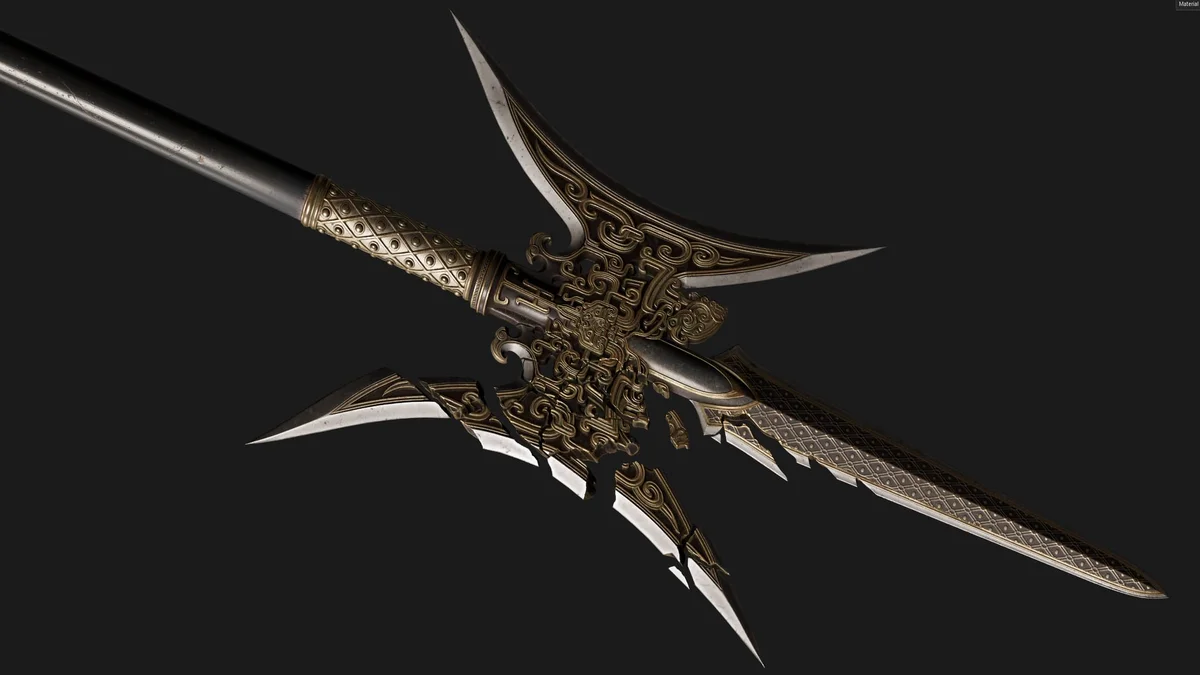
Where the prototype truly stands out is its wuxia-infused combat flair and visual presentation. One test-room sequence showcases the protagonist wielding a spinning umbrella-like bladed weapon, whirling it to slice through armored guards at mid-range. The on-screen HUD pairs that weaponry with traditional ink-brush ability icons, a stylized health bar, and an ornate meter crowned by a yin-yang emblem.
Why Tencent and Ubisoft Pulled the Plug in Early 2025
The timing of the February 2025 build explains why Assassin's Creed Destiny never made it to an official reveal. Just one month earlier, in January 2025, TiMi Studio Group underwent a major internal restructuring that split the studio into four separate teams. That shake-up followed Tencent's broader strategic pivot away from licensing Western franchises, which carry tighter profit margins than domestic Chinese releases and casual party games like DreamStar, a project that previously absorbed hundreds of developers from the Jade team.
That pullback collided with Ubisoft's own cost-cutting drive, which has recently resulted in Ubisoft's workforce cuts across its German studios as well as the shutdown of Trials studio RedLynx alongside layoffs in Singapore. Alongside Destiny, two other unannounced projects in the TiMi ecosystem were also axed: Athena, a third-person action game steeped in Greek mythology in development between 2024 and 2026, and Invictus, a stylized cyberpunk open-world title directed by Assassin's Creed veteran Ashraf Ismail at TiMi's Montreal branch before the studio closed its doors in February 2026.

My Take
Watching this prototype footage with its spinning bladed umbrella, ink-brush HUD, and a boss showdown against Xiang Yu during the fall of the Qin Dynasty stings quite a bit. I have been waiting for years for a full-fledged console and PC Assassin's Creed set in Imperial China that isn't held back by free-to-play mobile design or the 2.5D side-scrolling scope of Assassin's Creed Chronicles: China. Knowing that TiMi actually had a proper console build up and running in early 2025 before corporate restructuring killed it off , right alongside Ashraf Ismail's cyberpunk open-world project , is a frustrating reminder of how much creative potential gets lost when major publishers retreat into safe bets.

SEO consultant for over 20 years and digital entrepreneur, Charles 'Grimtag' Ronchain is the founder of Pro-Gamer.gg, Retrocharting.com, and Gamescharting.com. A competitive gamer, streamer, and retro game collector, he has worked in the video game industry for over 15 years, notably as a consultant for leading game price comparison platforms. Passionate about real-time performance data and gaming technology, he analyzes competitive esports, gaming hardware benchmarks, and creator workflows on Pro-Gamer.gg with an authentic player perspective.