9 Screws, No Glue and No Ribbon Cables: Nintendo Reveals Switch 2 Easy Removable Battery Revision
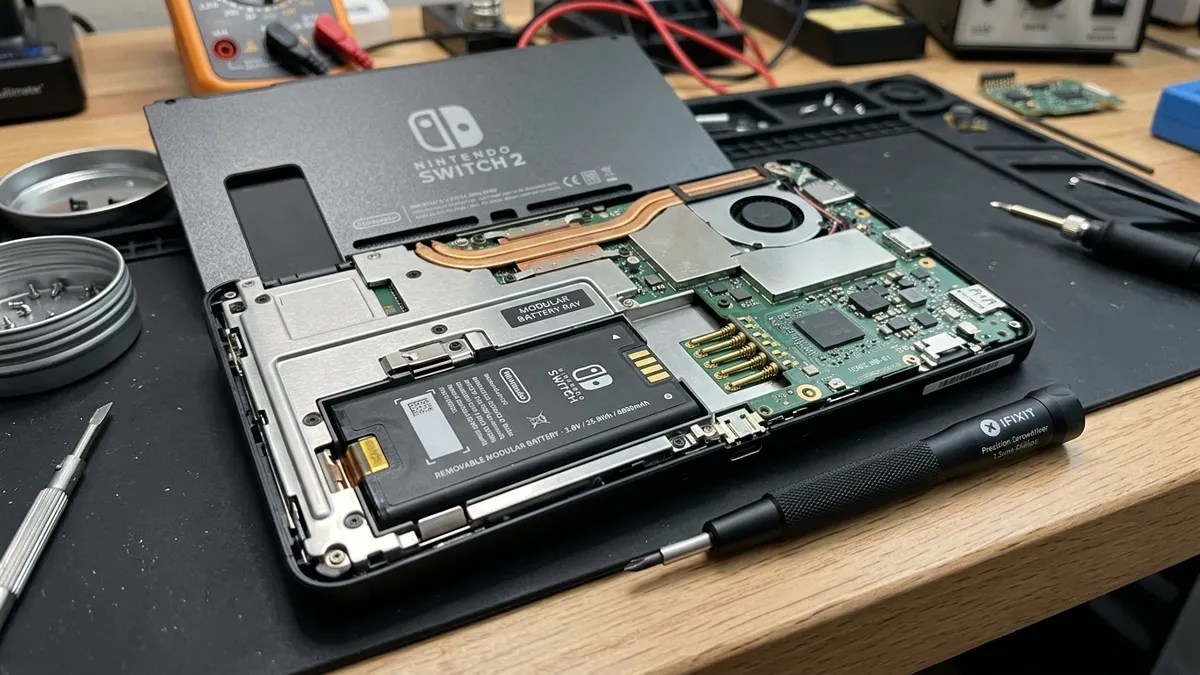
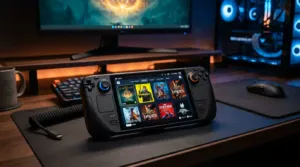
The era of heating guns, toxic solvent glues, and torn ribbon cables to replace a handheld console battery is officially coming to an end. In anticipation of the European Union's 2027 Right to Repair directive, official technical teardown documentation reveals that Nintendo has completely overhauled the internal chassis of the Nintendo Switch 2. The result is a modular, user-accessible battery enclosure designed for rapid swap without specialist tools.
Nine Standard Screws and Farewell to Industrial Adhesive
Console teardowns will no longer require obscure proprietary bits. While past hardware generations demanded specialized tri-wing screwdrivers, the rear plate of this updated Switch 2 chassis relies solely on nine standard Phillips screws. Once these fasteners are removed, the back casing unclips cleanly to expose the internal structure without requiring the disassembly of intricate shielding.
Most importantly, Nintendo has eliminated the aggressive adhesive pull tabs that frequently snap during repair attempts. The battery cell sits firmly inside an injection-molded bay equipped with a mechanical keying mechanism. This physical guide ensures that the battery can only be inserted in the correct orientation, eliminating any risk of reversed polarity.
Check console precision screwdriver kits on Amazon→
Spring-Loaded Metal Contacts Replace Fragile Cables
The most elegant engineering choice lies in the power interface. Instead of delicate JST plugs or thin ribbon cables that risk tearing upon extraction, the console features heavy-duty gold-plated spring contacts mounted directly onto the motherboard. The battery drops into place and establishes a direct electrical connection under uniform mechanical pressure.
The official replacement component, designated under part number BEE-003(-01), is rated at 5,172 mAh. While this represents a microscopic 0.9% reduction from the early 5,220 mAh engineering samples, it accommodates the reinforced modular housing without altering overall handheld runtime. Furthermore, regulatory filings with the Federal Communications Commission (FCC) confirm that this design is not an EU-exclusive compromise, but a universal manufacturing standard across all territories.
Modular Ecosystem Extended to Joy-Con 2 and Pro Controller
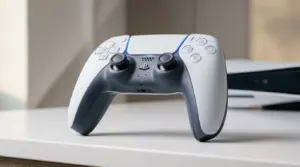
This repair-friendly architecture also extends to peripherals. Both the Joy-Con 2 and the Switch 2 Pro Controller feature glue-free battery retention brackets, allowing players to service their controllers after years of intense charge cycles. Coupled with modern hardware optimizations seen across Switch 2 game storage requirements, Kyoto proves that handheld hardware can adhere to stringent electronic waste regulations without compromising industrial build quality.
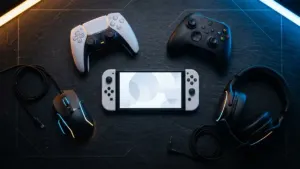
Check Nintendo Switch OLED deals on Allkeyshop→
My Take: Real Hardware Ownership and Pain-Free Maintenance
This is outstanding news for console owners. On any portable device, the battery is consistently the first component to degrade after years of daily recharge cycles. Being able to restore full battery life by removing nine standard screws, without fighting industrial adhesive or risking a torn ribbon cable, makes maintenance remarkably accessible for everyone.
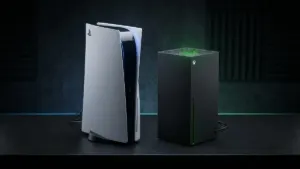
When you look at the frustrating complexity of tearing down a PS5 or an Xbox Series just for basic servicing, the repairability score on this Switch 2 revision is going to set a massive benchmark. Replacing high-wear parts should be effortless and mandatory across the entire industry. Unlike digital game licenses that publishers can arbitrarily revoke, the physical console actually belongs to us. Being able to service and preserve our hardware without facing exorbitant manufacturer repair fees is a fundamental player right, and Nintendo finally got the engineering right.
By engineering a clean modular solution years ahead of statutory deadlines, Nintendo sets a high benchmark for handheld durability and long-term hardware ownership.

Based on the outskirts of New York City, Chaya 'Chayane' spent five years studying software engineering in Montreal before returning to her home state. A Full-Stack developer and Deep Learning AI architecture researcher, she explores neural networks and algorithmic optimization while engineering data pipelines for Retrocharting and Gamescharting alongside Grimtag. A gamer for over 20 years and an avid collector of Nintendo history and The Legend of Zelda, she explored World of Warcraft's Azeroth before bringing her deep technical background to video game analysis.