First Intel Nova Lake-S Motherboard Pictured: LGA 1954 Socket, 900-Series Chipsets, and Cooler Compatibility
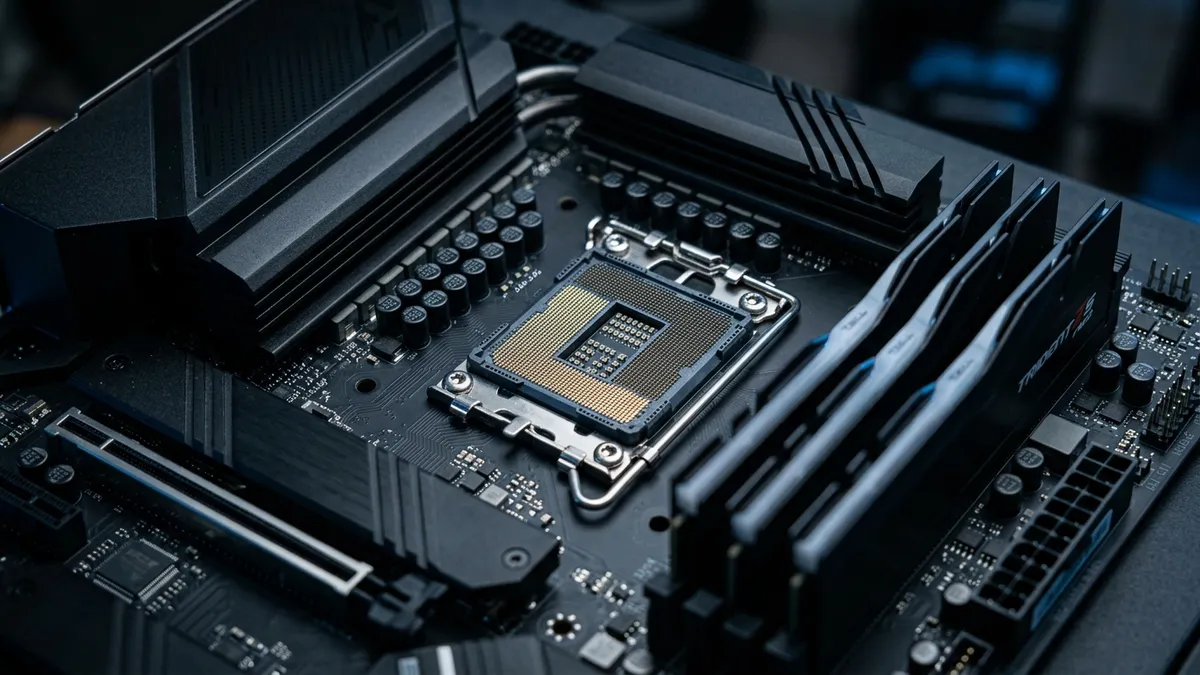
The LGA 1851 socket introduced with Arrow Lake will not stick around for long. With Core Ultra 200S processors struggling to win over PC gamers against AMD's Ryzen 9000X3D lineup, Intel is already accelerating its next desktop generation. A real-world prototype motherboard designed for Intel Nova Lake-S (the upcoming Core Ultra 400S family) was publicly showcased at an industry event in China, offering our very first look at the brand-new LGA 1954 socket and the foundation of the 900-series platform.
LGA 1954: 103 Extra Pins, But Cooler Compatibility Survives
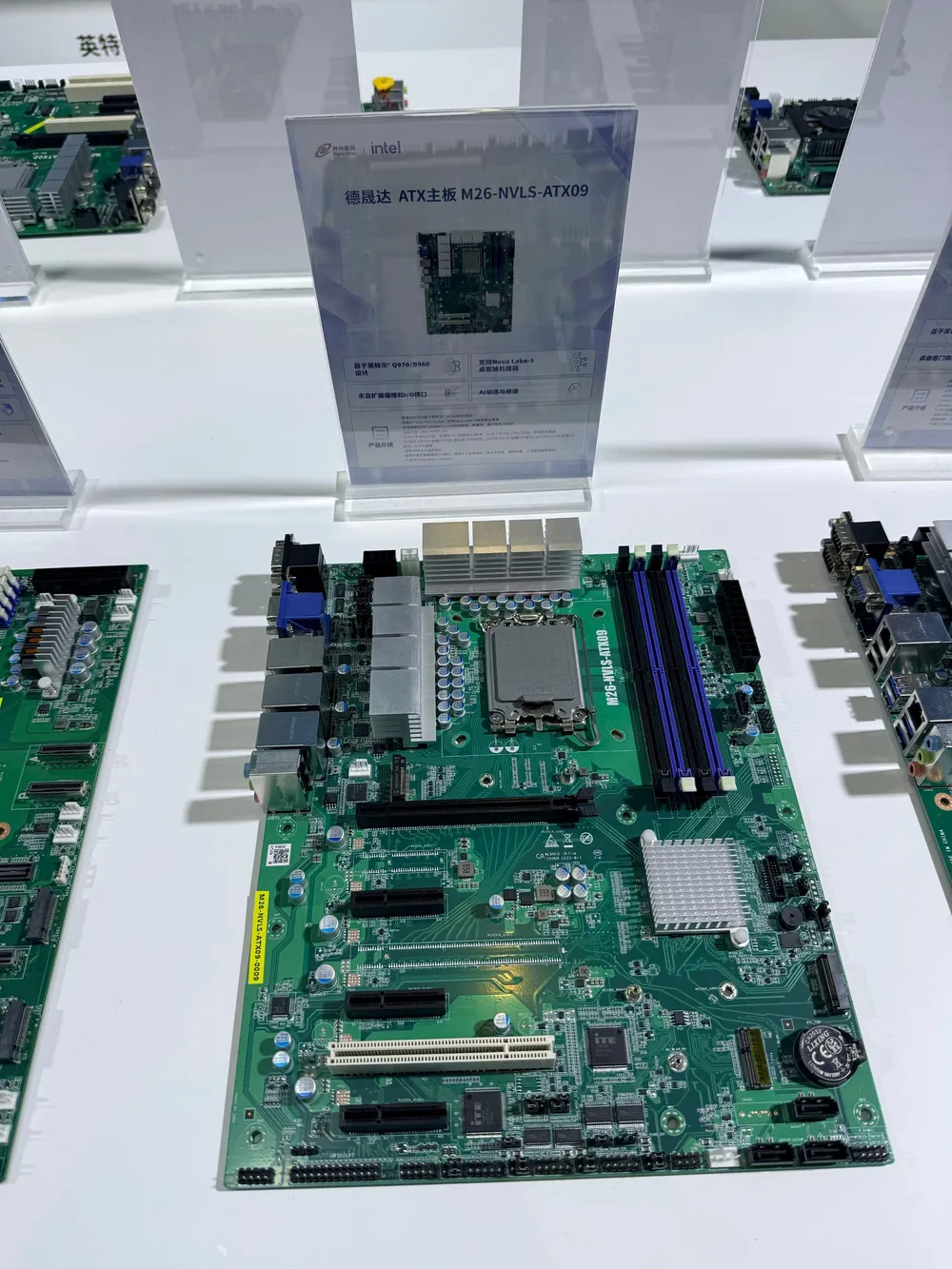
Spotted by hardware leaker @wxnod at an event hosted by partner Digital China, the board labeled M26-NVLS-ATX09 puts the LGA 1954 socket on full display. Housing 1,954 contact pins compared to 1,851 on Arrow Lake, this pin-count increase officially cements LGA 1851 as a short-lived single-generation stopgap. The big relief for system builders and hardware enthusiasts lies in mounting geometry: external physical dimensions and z-height remain close enough that the vast majority of CPU air coolers and AIO liquid cooling brackets designed for LGA 1700 and LGA 1851 will mechanically fit the LGA 1954 socket.
The leak also clears up lingering questions regarding the Independent Loading Mechanism (ILM). While reports indicated that Intel might transition entirely to a reinforced dual-lever design (2L-ILM), this prototype clearly sports a conventional single-lever latch. This suggests Intel is reserving the 2L-ILM mechanism for flagship overclocking motherboards, leaving mainstream and commercial boards with standard, cost-effective ILM hardware.
Q970 and B960 Chipsets: 256GB Memory, Wi-Fi 7, and PCIe 5.0
The spec placard sitting beside the board highlights compatibility with Intel Q970 and B960 chipsets. These logic controllers form the commercial and mainstream backbone of the upcoming 900-series lineup, flanked by the enthusiast Z990 and workstation W980 platforms. The spec sheet confirms out-of-the-box memory support for DDR5 up to 6400 MT/s, robust compatibility with high-speed Clocked Unbuffered DIMM (CUDIMM) modules, and a massive 256GB memory capacity across four DIMM slots.
This physical reveal follows closely behind early software references, including recent findings in AIDA64 confirming Intel Core Ultra 4000 desktop CPUs alongside their dedicated bLLC cache layer. The motherboard's expansion layout covers high-performance setups without compromise: two PCIe 5.0 x16 slots (wired for x16 and x8), two PCIe 5.0 x4 slots, dual NVMe Gen5 x4 M.2 connectors, a dedicated M.2 2230 E-Key slot for Wi-Fi 7 networking, and even a legacy 32-bit PCI slot for specialized enterprise hardware.
Intel Accelerates the Transition to Counter Zen 6
Power delivery features solid aluminum VRM heatsinks alongside an 8+4 pin EPS connector array, signaling ample overhead for next-generation Panther Cove performance cores and Darkmont efficiency clusters. By placing working Nova Lake-S motherboard samples in the wild this early, Intel is signaling an urgent push to move beyond Arrow Lake and challenge AMD's future Zen 6 architecture with a refreshed, long-term desktop platform.

SEO consultant for over 20 years and digital entrepreneur, Charles 'Grimtag' Ronchain is the founder of Pro-Gamer.gg, Retrocharting.com, and Gamescharting.com. A competitive gamer, streamer, and retro game collector, he has worked in the video game industry for over 15 years, notably as a consultant for leading game price comparison platforms. Passionate about real-time performance data and gaming technology, he analyzes competitive esports, gaming hardware benchmarks, and creator workflows on Pro-Gamer.gg with an authentic player perspective.