Base PS5 Gets AI Upscaling with QSSR, but the Framerate Penalty Is Real
Machine learning reconstruction is no longer exclusive to the PS5 Pro. Sony has officially rolled out a brand-new upscaling solution called Quick Spectral Super Resolution (QSSR) directly to the base PlayStation 5.
On paper, this sounds like the ultimate win for players who skipped the 800-dollar hardware upgrade. You get superior temporal stability, less shimmering on foliage, and sharper fine details than standard FSR passes.
However, running neural upscaling on launch-era hardware comes with an unavoidable mechanical catch. Because the standard console lacks a dedicated machine learning processor, your GPU pays the toll in raw frames.
Project Amethyst and the Silicon Bottleneck
Engineered under a close engineering collaboration between Sony and AMD dubbed Project Amethyst, QSSR relies on a streamlined neural network model. The algorithm is heavily optimized to reconstruct frames using a compact instruction set.
On the PS5 Pro, PSSR offloads frame reconstruction onto a custom hardware NPU, leaving graphics execution units completely free. The standard PS5 features no such neural accelerator on its die.
Instead, QSSR must execute directly on the console's existing Radeon Compute Units. That means the same shaders rendering lighting, post-processing, and geometry now share their limited cycles with AI upscaling passes.
Balancing compute budgets on fixed console silicon mirrors the architectural trade-offs explored across Sony and AMD hardware engineering for future gaming hardware.
The Framerate Hit: A 10% to 20% Performance Drop
Early benchmarks and developer patch telemetry confirm the trade-off. While QSSR cleans up sub-pixel noise and resolves fine meshes far better than traditional spatial filters, it carries a notable 10% to 20% framerate penalty under heavy load.
Titles with comfortable performance headroom can absorb the impact smoothly. But for demanding games locked to a tight 30 FPS envelope, shaving milliseconds off frame times can introduce noticeable frame drops.
There is also an output target limit. While PSSR reconstructs an internal image up to a 4K canvas, QSSR targets a 1440p resolution window to prevent the 2020 GPU from stalling completely.

Ghost of Yôtei and Marvel's Wolverine Lead the Rollout
QSSR is not an OS-level toggle that automatically sharpens older backlog games. Game developers must manually build the API hooks into their rendering pipelines through targeted game updates.
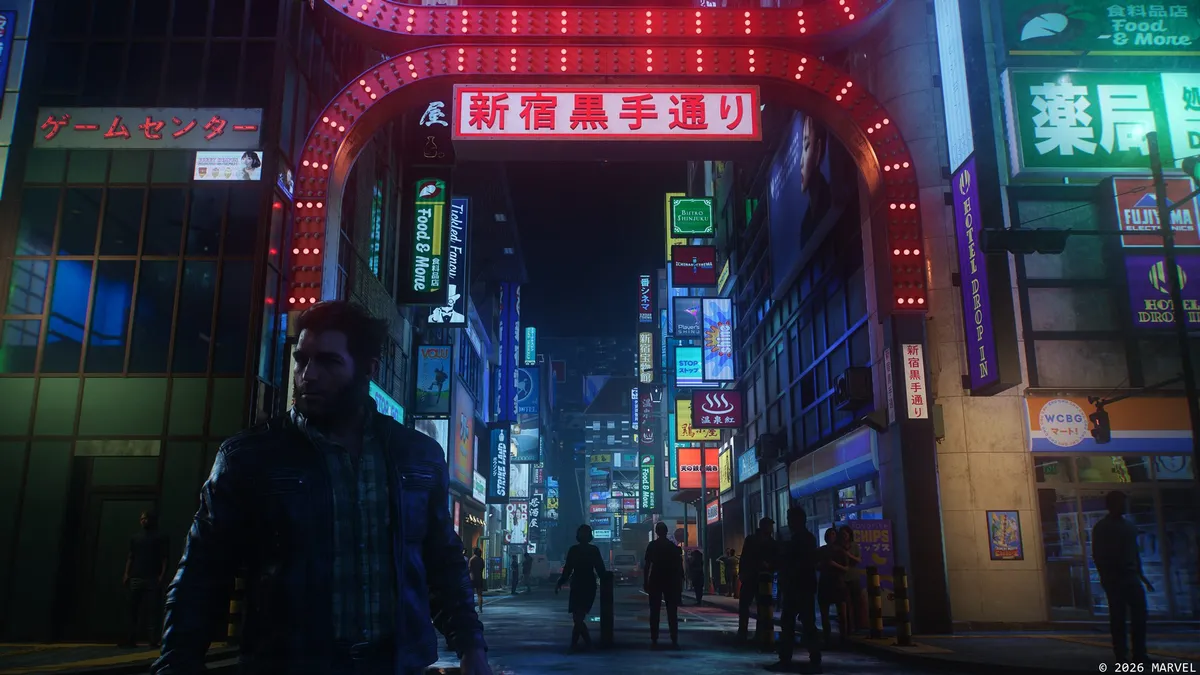
Two tentpole PlayStation Studios projects spearhead the feature: Marvel's Wolverine from Insomniac Games and Ghost of Yôtei from Sucker Punch. Ghost of Yôtei's recent version 2.0 update quietly introduced the setting alongside its story expansion.

Sony is now distributing the QSSR SDK to partnered third-party developers. Whether studios embrace AI reconstruction at the expense of raw framerate headroom will depend entirely on how much performance they can spare.
My Take: Software Tricks Cannot Replace Dedicated Silicon
From an engineering perspective, backporting neural reconstruction models to standard RDNA 2 compute units is a genuine technical achievement. If you prefer playing slower, visually rich titles locked at 30 frames per second, the extra edge clarity and temporal stability are hard to deny.
However, surrendering 10 to 20 percent of an already strained GPU budget makes little sense for fast paced action titles. Ultimately, QSSR proves why Sony added dedicated machine learning hardware to the PS5 Pro. Without hardware acceleration, running AI upscaling on 2020 silicon remains an expensive tradeoff that reinforces why the Pro model exists in the first place.

SEO consultant for over 20 years and digital entrepreneur, Charles 'Grimtag' Ronchain is the founder of Pro-Gamer.gg, Retrocharting.com, and Gamescharting.com. A competitive gamer, streamer, and retro game collector, he has worked in the video game industry for over 15 years, notably as a consultant for leading game price comparison platforms. Passionate about real-time performance data and gaming technology, he analyzes competitive esports, gaming hardware benchmarks, and creator workflows on Pro-Gamer.gg with an authentic player perspective.