Building a PS5 Pro Equivalent PC Costs $1,500 in Late 2026 as DDR5 and GPU Prices Surge
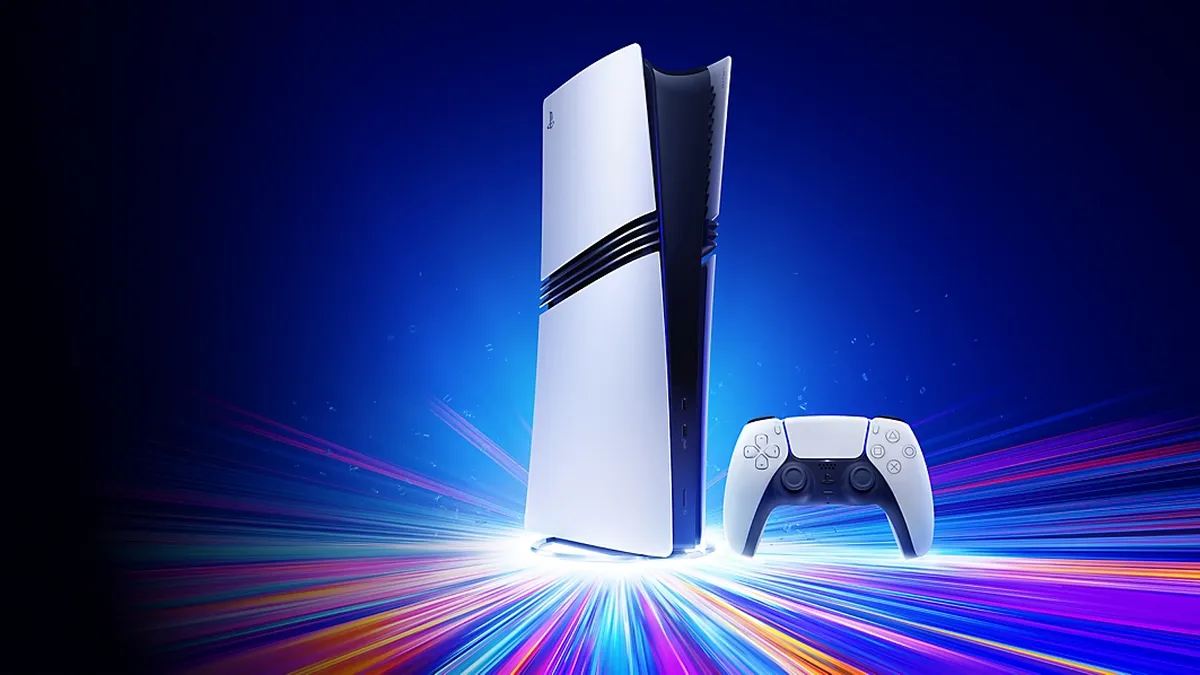
When Sony raised the official retail price of the PlayStation 5 Pro to $899.99 on April 2, 2026, plenty of players asked the obvious question: at nearly nine hundred dollars, does building a desktop gaming PC finally make more sense? Looking at real retail prices in late November 2026, the parts bill tells a very different story. Between surging DDR5 memory costs, inflated 2TB NVMe SSDs, and mid-range graphics cards selling far above launch MSRP, assembling a brand-new PC with comparable capabilities now lands around $1,500 with an AMD GPU, and climbs toward $1,800 if you go with NVIDIA.
What Hardware Does a PC Actually Need to Match the PS5 Pro?
Matching Sony's mid-generation console on paper is never a strict one-to-one exercise because of its unified architecture. Inside the PS5 Pro sits a custom 8-core, 16-thread AMD Zen 2 processor, a bespoke RDNA graphics engine with upgraded ray tracing and PlayStation Spectral Super Resolution (PSSR) AI upscaling, 16GB of unified GDDR6 memory for games (plus 2GB of DDR5 reserved for the OS), and a built-in 2TB NVMe SSD.
To deliver similar 1440p high-refresh and upscaled 4K performance on Windows, a custom desktop needs a 16GB graphics card in the tier of the AMD Radeon RX 9060 XT 16GB, or an NVIDIA GeForce RTX 5060 Ti 16GB if you want DLSS and stronger ray tracing headroom. Pairing that GPU with a 6-core, 12-thread AMD Ryzen 5 7600X on an AM5 B650 motherboard comfortably outpaces the console's aging Zen 2 CPU while keeping a clear upgrade path open.
Late November 2026 Parts Breakdown: Why the Build Hits $1,500
The painful part of building a gaming rig in late 2026 is not the processor or the motherboard. Instead, AI data center demand has squeezed both DRAM and NAND supply chains, driving memory costs into territory where market analysts now forecast a DDR5 RAM price peak in 2027 before meaningful relief arrives.
Here is what a brand-new AM5 desktop matching the PS5 Pro's core specs actually costs at US and European retailers in late November 2026, compared against the console's $899.99 / €899.99 official price:
| Component | Target PC Part | US Street Price (Late Nov. 2026) | EU Street Price (VAT Incl.) |
|---|---|---|---|
| Processor (CPU) | AMD Ryzen 5 7600X (AM5, 6-Core) | $160 to $180 | €150 to €170 |
| Motherboard | AMD B650 Chipset (AM5) | $160 to $185 | €155 to €190 |
| Graphics Card (AMD Option) | Radeon RX 9060 XT 16GB | $510 to $540 | €510 to €575 |
| Graphics Card (NVIDIA Option) | GeForce RTX 5060 Ti 16GB | $800 to $860 | €760 to €899 |
| System Memory (RAM) | 16GB DDR5 (32GB recommended) | $180 to $240 ($430+ for 32GB) | €170 to €220 (€400+ for 32GB) |
| Internal Storage | 2TB PCIe 4.0 NVMe SSD | $279 to $299 | €260 to €280 |
| Case + Power Supply | ATX Chassis and Certified 650W to 750W PSU | $130 to $150 | €130 to €150 |
| Tower Total (with RX 9060 XT) | AM5 Build + 16GB DDR5 | $1,420 to $1,590 | €1,375 to €1,585 |
| Tower Total (with RTX 5060 Ti) | AM5 Build + 16GB DDR5 | $1,710 to $1,910 | €1,625 to €1,910 |
The gap between original launch MSRPs and current checkout totals is stark. The Radeon RX 9060 XT 16GB debuted at $349 MSRP, yet new retail cards now sell between $510 and $540 in the US. The markup is even steeper on the GeForce RTX 5060 Ti 16GB (originally $429 MSRP), which now hovers around $800 to $860 at major stores. Add DDR5 memory trading near $19 to $20 per gigabyte and budget 2TB NVMe drives starting around $279 (with DRAM-cached flagship drives hitting $350 to $400), and the tower alone lands $520 to $950 above the PS5 Pro's official sticker price.
Hidden Platform Costs, Console Shortages, and the Five-Year Math
Raw component math only tells part of the story. Starting from scratch on PC means budgeting extra for a Windows license, keyboard, mouse, controller, and a dedicated monitor if you are not plugging into a living room TV. Console titles also benefit from low-level optimization tailored to one fixed piece of silicon, avoiding the shader compilation stutters that still plague uneven PC ports. On top of that, console-first launches like Grand Theft Auto VI have triggered heavy retail shortages, pushing third-party listings well past official pricing and even causing PS5 Pro prices to spike to 1,500 CHF at European retailers under strict purchase quotas.
On the flip side, Sony's box carries its own recurring and optional costs. The attachable disc drive costs an extra $79.99, the vertical stand is sold separately, and online multiplayer requires PlayStation Plus Essential at $79.99 per year (€71.99 in Europe). Over five years, online access alone adds $400 to the console's lifetime bill, before factoring in steeper Steam discounts on PC. Desktop builders can also trim several hundred dollars off the upfront cost by buying a last-generation used GPU, sticking with an older AM4 motherboard, or carrying over an existing case, power supply, and SSD.
My Test Bench
I have not bolted this exact AM5 parts list together on my workbench this week, but running late November 2026 street prices makes the verdict crystal clear: for anyone starting from zero with brand-new parts, the PS5 Pro wins on frames per dollar right now, provided you actually buy it at $899.99. Paying $200 or more for just 16GB of DDR5 and nearly $300 for a basic 2TB SSD wrecks the value proposition of a fresh sub-$1,000 gaming PC.
That balance flips the moment scalpers or third-party marketplaces push the PS5 Pro above $1,150 to $1,200. If you only want plug-and-play couch gaming for current console exclusives, wait for an official $899.99 restock instead of overpaying. If you already own a monitor, case, or power supply, or you need a versatile machine for work and content creation, stretching to a PC still pays off over five years thanks to free online play, cheaper software sales, and modular upgrades once memory prices finally cool down.

PC hardware enthusiast and competitive gamer, Arthur 'Heimdall' splits his time between France and the UK working in enterprise B2B software solutions. A business school graduate passionate about component benchmarking, he has been building, modding, and tuning PCs since childhood, optimizing every thermal degree and millisecond of display latency. An avid gamer across Assassin's Creed and sandbox titles, he forged his alliance with Grimtag and Chaya during late-night World of Warcraft raids before joining Pro-Gamer.