DDR5 RAM Prices: Analysts Project a 2027 DRAM Peak Followed by a 25% to 75% Drop in 2028
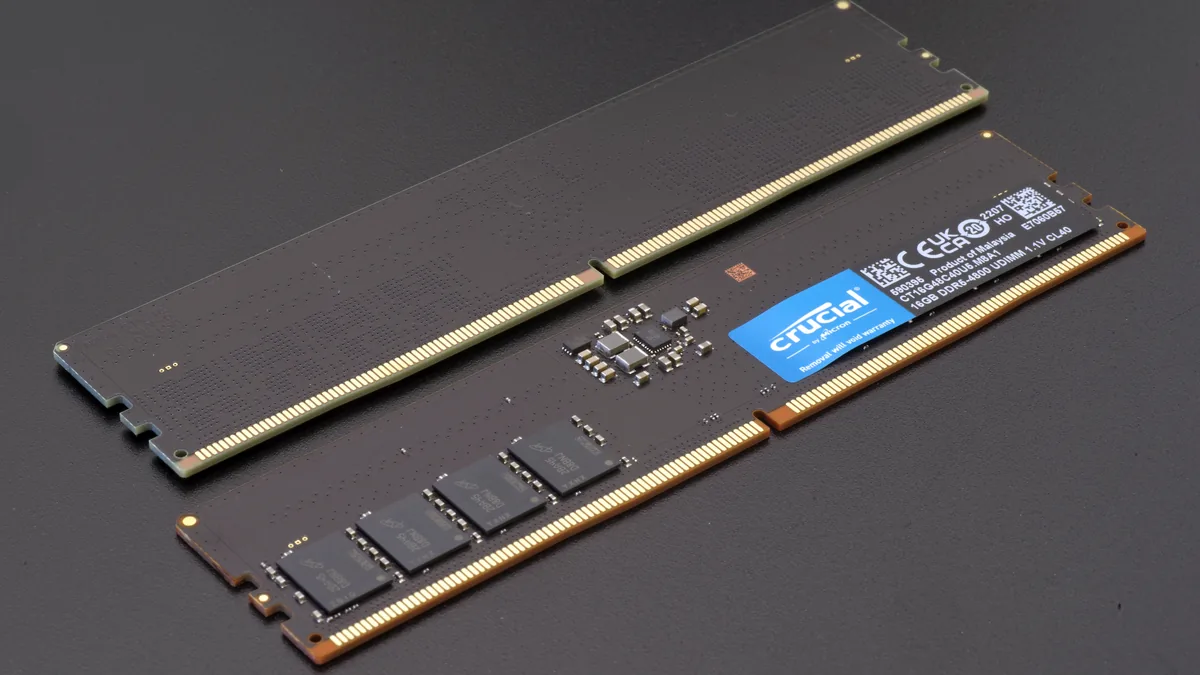
After months of relentless memory price hikes, Wall Street analysts are beginning to map out the ceiling. In a late November 2026 supply chain research note, GF Securities analyst Jeff Pu sharply cut his 2027 contract price growth outlook for conventional DRAM and modeled a steep 2028 correction ranging from -25% to -75%.
Before holding off on a PC build, one distinction matters: these numbers track B2B contract pricing negotiated between memory makers (Samsung, SK hynix, Micron) and OEMs, not overnight retail stickers on DDR5 kits. Even so, the report marks a clear shift away from the narrative of endless price escalation.
A Contract Price Plateau by the Second Half of 2027
GF Securities lowered its quarter-over-quarter contract price growth estimates for conventional DRAM across all four quarters of 2027. Previous sequential forecasts of +10%, +7%, +5%, and +3% (a cumulative +27.3% annual climb) have been revised down to +6% in Q1, +3% in Q2, 0% in Q3, and 0% in Q4 2027.
That brings projected cumulative 2027 growth down to +9.2%. The key takeaway sits in the back half of the year: following one more wave of increases between late 2026 and spring 2027, conventional DRAM contract prices are expected to flatten out.
Market intelligence firm TrendForce points in a similar direction in its November 2026 outlook. While contract pricing remains firm heading into Q4 2026, TrendForce expects sequential gains to narrow steadily and reach a plateau in the second half of 2027 under its base case. In a more bearish scenario for suppliers, contract prices could even begin slipping as early as Q4 2027, while NAND Flash could enter oversupply earlier in 2027.
Analysts point to four concrete pressure points behind this cooling momentum:
- Consumer electronics demand is pushing back against inflated component bills across PCs, laptops, and smartphones.
- Server DRAM procurement momentum from Chinese cloud service providers has softened.
- Power grid bottlenecks are slowing the rollout pace of several planned AI data centers.
- Fab capacity expansions and denser manufacturing nodes are gradually increasing wafer bit output.
Three Scenarios for 2028: From -25% to -75%
Using an estimated reference baseline of $12 per GB in 2026 peaking at $16 per GB in 2027, GF Securities lays out three distinct 2028 trajectories for conventional DRAM:
| 2028 Scenario (GF Securities) | Conventional DRAM Price | Change vs. 2027 Peak ($16/GB) | Market Driver |
|---|---|---|---|
| Bull Case | $12/GB | -25% | Resilient AI and enterprise demand |
| Base Case | $8/GB | -50% | Long-term agreement (LTA) floor pricing |
| Bear Case | $4/GB | -75% | Full reversion to pre-AI boom levels |
Even in the most supplier-friendly scenario, contract prices still fall by a quarter in 2028. Just as telling is supplier profitability: in the base case where conventional DRAM halves to $8 per GB, industry gross margins would only ease from roughly 91% in 2027 to 80% in 2028. Memory makers could cut contract prices in half and still operate with extraordinary margins.
High-Bandwidth Memory (HBM) for AI accelerators looks far more insulated. From an estimated $14.6 per GB in 2026 climbing to $29.6 per GB in 2027, GF Securities models 2028 HBM scenarios ranging from flat pricing ($29.6/GB in the bull case) to $23.7/GB (-20% base case) and $20.7/GB (-30% bear case). Because HBM consumes far more wafer area per gigabyte than standard DDR5, AI allocation will keep constraining PC memory supply longer than past cycles.
Why Memory Makers and Analysts Disagree
This 2028 reset is far from consensus, as it clashes directly with guidance from semiconductor producers. As we recently covered regarding Samsung's 2027 DRAM capacity being effectively sold out through long-term AI contracts, manufacturers emphasize multi-year supply commitments. SK hynix leadership has similarly warned that DRAM and NAND supply tightness could persist toward the end of the decade.
On the opposite side, financial analysts including teams at Morgan Stanley have argued that actual DRAM supply growth could beat market expectations once new fabs and process migrations scale up. Historically, memory cycles turn faster than suppliers anticipate the moment hyperscaler orders normalize.
What This Means for PC Gamers Buying DDR5
For PC builders watching 32 GB DDR5 kits and GDDR7 graphics card costs, near-term relief remains unlikely. Memory budgets are tight enough that even operating system vendors are adapting: Microsoft recently trimmed over 860 MB of RAM usage in Windows 11 across Defender, OneDrive, and Microsoft 365.
Retail DDR5 pricing typically lags wholesale contract reversals by several months while module brands clear inventory built on peak-cost silicon. If GF Securities and TrendForce prove accurate, 2027 will remain expensive before meaningful retail relief arrives gradually in 2028.
My Test Bench
This forecast does not mean DDR5 kits will drop overnight, but it underscores a basic truth of the semiconductor industry: memory is cyclical, and 91% gross margins never stay untouched forever. As long as AI accelerators soak up HBM wafer capacity, 2027 will stay rough for PC builders eyeing RAM or high-VRAM GPUs. If your rig already runs comfortably on 32 GB of DDR4 or DDR5, I see zero reason to pay peak-cycle prices for an optional upgrade. If you need a new build in the next few months, waiting for 2028 is impractical, so targeting a solid 6000 MT/s CL30 kit during a brief retail dip makes far more sense than trying to time Wall Street spreadsheets.

PC hardware enthusiast and competitive gamer, Arthur 'Heimdall' splits his time between France and the UK working in enterprise B2B software solutions. A business school graduate passionate about component benchmarking, he has been building, modding, and tuning PCs since childhood, optimizing every thermal degree and millisecond of display latency. An avid gamer across Assassin's Creed and sandbox titles, he forged his alliance with Grimtag and Chaya during late-night World of Warcraft raids before joining Pro-Gamer.