Black Friday 2026: Why the Cheapest RTX 5090 Gaming PC Still Costs $8,299
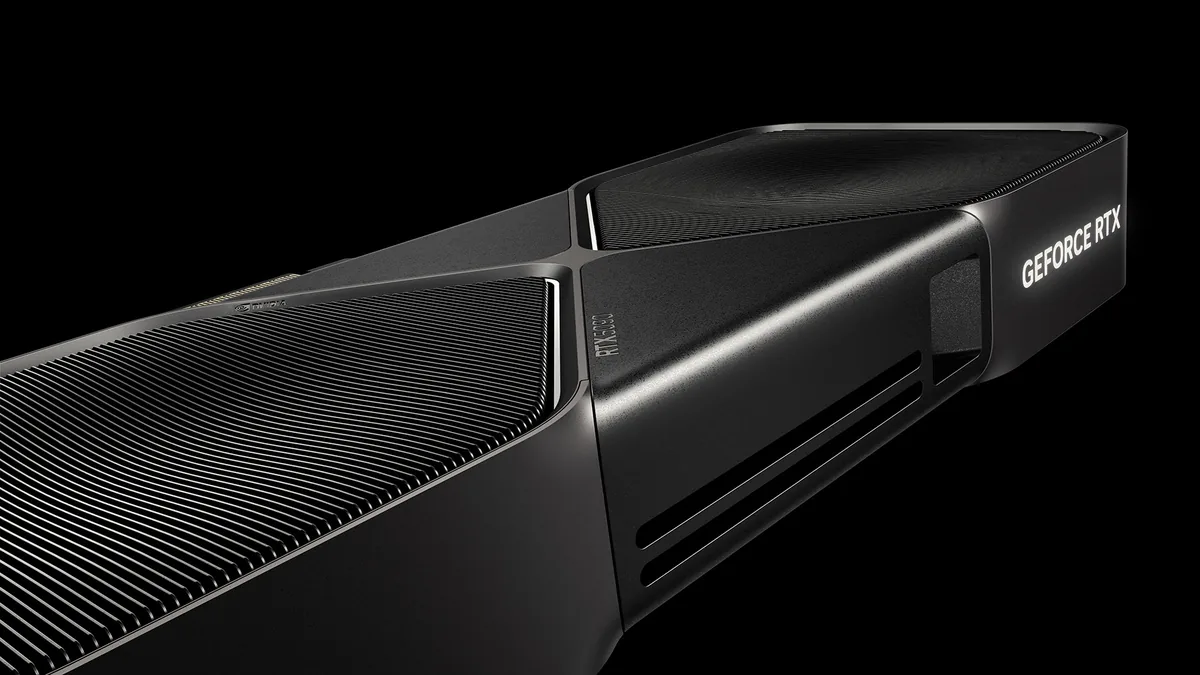
Black Friday is supposed to be the one week of the year when flagship hardware finally gets a sensible price tag. In late November 2026, the exact opposite is playing out at the top of NVIDIA's lineup: the cheapest off-the-shelf prebuilt gaming PC featuring a GeForce RTX 5090 in the United States now starts at $8,299, and European retail prices look even steeper.
Not long ago, an $8,000-plus system meant a multi-GPU workstation built for studio rendering. Today, it is simply the baseline price to walk away with a ready-to-run consumer desktop carrying Blackwell's flagship card without hunting scarce retail drops for months.
The $8,299 Black Friday Floor in the US
Current Black Friday listings across US system integrators leave very little wiggle room. The lowest-priced prebuilt entry point currently in stock, the Maingear MG-1 Amethyst, sits at $8,299 for a build pairing the GeForce RTX 5090 with an Intel Core Ultra 7 processor, 32 GB of DDR5 RAM, and a 2 TB SSD.
Even steep headline discounts barely move the needle. The Corsair Vengeance i7600 Air (Intel Core Ultra 9 285K, 64 GB of RAM, 2 TB SSD, and an RTX 5090) carries a $2,600 Black Friday markdown from its $11,299.99 list price, yet still lands at $8,699.99 at checkout.
Across national outlets such as Newegg and Best Buy, higher-tier flagship desktops routinely clear $10,500 to $11,000 and beyond. Standalone RTX 5090 retail cards frequently trade between $5,000 and $7,000+ when stock briefly appears, towering over NVIDIA's original $1,999 launch MSRP from January 2025.
Europe Sees an Even Sharper Reality
Crossing the Atlantic does not bring much relief. Compared against NVIDIA's original European launch baseline of €2,099 to €2,349 (depending on regional VAT and launch currency rates in early 2025), late-November 2026 street prices have multiplied several times over:
- France (LDLC, Materiel.net): Standalone RTX 5090 cards in stock start around €8,899.95, with most custom boards sitting between €8,500 and €10,000. Complete RTX 5090 desktop builds open near €12,899 and climb past €16,000.
- Germany and DACH (Geizhals, Alternate, Dubaro): Standalone custom cards start lower, around €5,200 to €7,000 (with Alternate batches observed near €8,128 and flagship liquid-cooled cards exceeding €10,000). Because individual card markups are so severe, prebuilt towers from German integrators starting between €5,400 and €7,500 can paradoxically cost close to a standalone GPU.
In short, Black Friday 2026 brings virtually zero real bargains on the RTX 5090 tier. Whenever a handful of cards reaches retail shelves, they sell at full scarcity pricing.
Why RTX 5090 Supply Collapsed in Late 2026
A glance at the official NVIDIA GeForce RTX 5090 specifications page shows why this card sits right in the crosshairs of enterprise demand: a massive Blackwell GB202 die packing 21,760 CUDA cores, 32 GB of GDDR7 memory on a 512-bit bus delivering 1,792 GB/s of bandwidth, and a 575 W TGP.
Three overlapping bottlenecks are driving the current squeeze. First, GB202 silicon competes directly with far higher-margin enterprise AI and workstation accelerators. That allocation shift lines up directly with reports of NVIDIA cutting GeForce RTX 50 gaming GPU supply by 20% to 30% heading into January 2027.
Second, memory giants like Samsung and SK Hynix have heavily prioritized high-margin server memory over consumer GDDR7 chips. Sourcing 32 GB of GDDR7 per board has tightened assembly lines and inflated component costs across the entire board-partner chain.
Third, bulk buyers have continued acquiring consumer RTX 5090 cards only to strip their gaming shrouds and refit them into dense dual-slot AI server racks, draining retail stock before gamers ever see an Add to Cart button. The ripple effect is hitting every tier below it, as seen in the GeForce RTX 5070 climbing past $1,000 in Japan.
My Test Bench
From a pure hardware-value standpoint, spending $8,299 or more on a single-GPU gaming desktop makes zero sense for PC gaming. NVIDIA has formally confirmed that RTX 5090 production has not been discontinued, yet the trickle of units reaching consumer retail cannot support anything close to normal pricing.
If I were upgrading a 4K rig this Black Friday, I would walk straight past the 5090 aisle. Until GDDR7 capacity expands and enterprise AI demand stops swallowing consumer silicon, the flagship tier belongs to commercial budgets rather than gamers. Sitting tight or targeting a balanced mid-to-high-end build is the only smart play right now.

PC hardware enthusiast and competitive gamer, Arthur 'Heimdall' splits his time between France and the UK working in enterprise B2B software solutions. A business school graduate passionate about component benchmarking, he has been building, modding, and tuning PCs since childhood, optimizing every thermal degree and millisecond of display latency. An avid gamer across Assassin's Creed and sandbox titles, he forged his alliance with Grimtag and Chaya during late-night World of Warcraft raids before joining Pro-Gamer.