Iceland Prologue, Broch Island and the Golden Cathedral: Over 100 Senua Concept Art Pieces Reveal the Scope of Hellblade 3
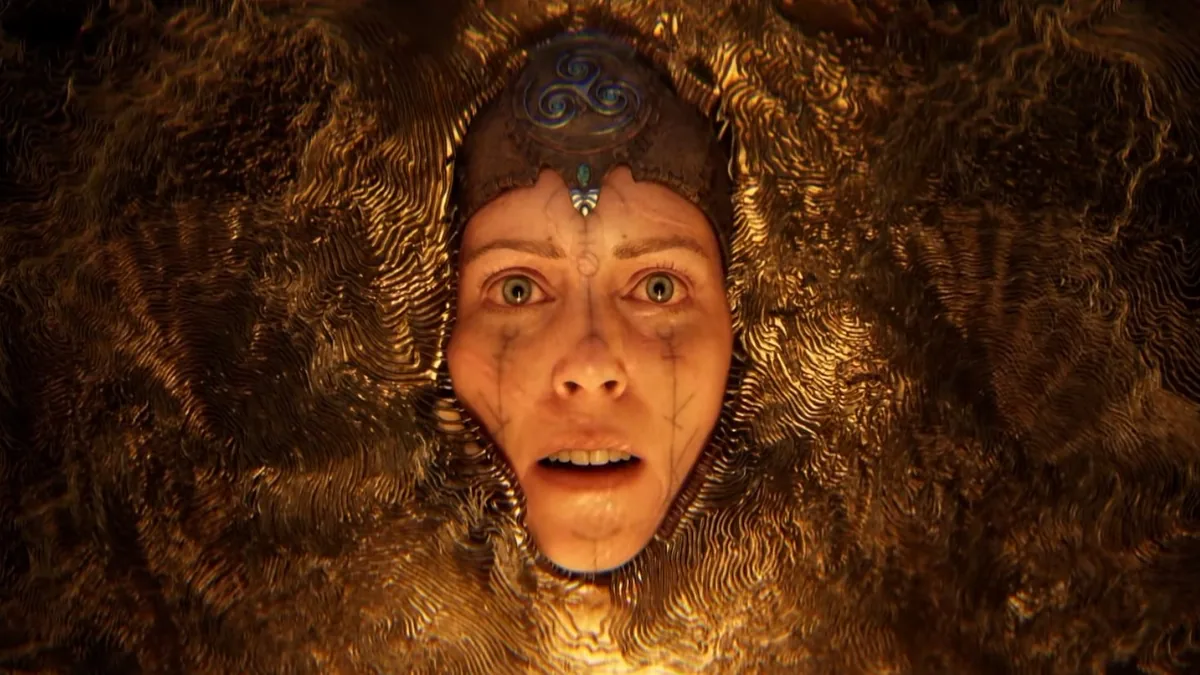
Revealed as a surprise during the June 2026 Xbox Games Showcase with a 2027 target window, Senua was meant to push the Hellblade series into a much larger action-adventure direction. Yet ever since autumn, Ninja Theory's third installment has sat in limbo following Microsoft's layoff wave and proposed studio closure. While players still have no word on whether the game will ever be finished, six environment artists who worked on the project have just offered an extraordinary look at what was being built.
Jay Brindle, Chris Rundell, Jim Waters, Andrew Watkins, Dan Attwell, and Dan Bavin recently uploaded more than a hundred concept art pieces and Unreal Engine 5 alpha captures to ArtStation. Taken together, these portfolios map out a sizable portion of Senua, from its narrative opening straight through to mid-game and late-game mission zones.
From Iceland Return to Arrival Beach: How Senua Opened
An album titled Iceland Return, posted by Jim Waters on ArtStation, outlines the prologue bridging Senua's Saga: Hellblade II and this third chapter. Built in Unreal Engine 5 using heavily modified and re-textured assets from the previous game, the sequence set up Senua's departure across the water. Whether the opening was meant to be playable or strictly cinematic remains unclear, though the next sequence strongly points toward hands-on exploration.
Portfolios from Dan Attwell and Andrew Watkins showcase Senua's boat alongside a rocky coastline named Arrival Beach. Watkins notes that this early section asked players to weave along coastal paths and climb through a settlement tucked into gorse-covered cliffs. True to larger adventure games, distant landmarks visible from the opening beach already previewed locations players would only reach much later in the campaign.
Broch Island, Scottish Field Trips, and Interconnected Missions
Climbing beyond the starting shoreline led into a rocky hillside designed as a puzzle zone with branching routes. One of those paths guided players toward Broch Island, a craggy offshore outcrop connected to the mainland by a causeway lined with wooden staves and devil catchers meant to keep outsiders away. Waters confirms the island belonged to the game's third mission.
Much of the world drew heavily from location shoots the team carried out across Scotland in 2024 and 2025. Developers referenced real sites such as Lindisfarne, St Abbs Head, Seaton Cliffs, and Findlater Castle on Scotland's northeast coast for the Highland Ruins. According to Waters, Findlater Castle proved too treacherous for usable photogrammetry scans, forcing artists to reconstruct the mood through extensive visual reference instead.
Further portfolios reveal how varied the later missions were slated to become. Jim Waters shared early alpha shots of the entirely fictional Afterlife Temple Ruins slated for the fifth mission, while Jay Brindle, Dan Bavin, and Chris Rundell posted mossy woodlands, an abandoned village, snowy mountain passes, coastal caves, and a vast Hall of Memories.
The Golden Cathedral Towering Over a Burnt Forest
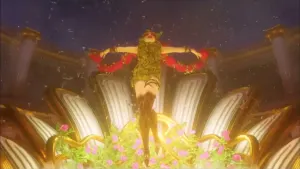
The single most striking landmark across the portfolios is a towering monument rising out of a scorched quarry. Referred to as the Cathedral by Andrew Watkins, the structure was developed alongside Jay Brindle to contrast sharply with the organic Scottish-inspired wilderness. Its angular, almost crystalline stonework laced with veins of gold was meant to look as though it were spreading like a blight, burning and clearing the surrounding forest in its wake. That same visual motif had already been teased at the end of the reveal trailer.
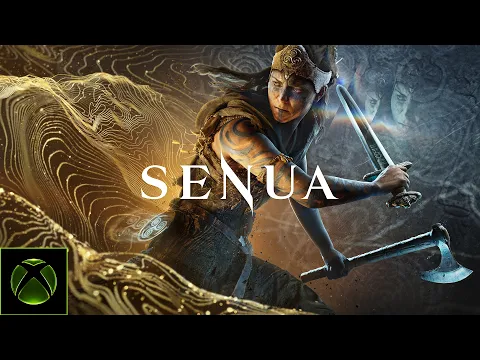
This breadth of world-building reinforces what Ninja Theory promised on stage in June 2026: a wider, less linear evolution of Senua's journey. At the same time, a coordinated wave of portfolio drops carries an unmistakable sense of finality, echoing the raw Perfect Dark gameplay that surfaced after Microsoft pulled the plug on that reboot.
My Take
Scrolling through more than a hundred Unreal Engine 5 environments from a game that has not even entered full marketing feels heartbreaking. When six seasoned artists publish everything from the opening beach to the fifth mission and a centerpiece late-game monument within days of each other, it reads far less like a teaser and far more like developers preserving years of work after a studio shutdown process begins. What stings most is how clearly Senua addressed the biggest complaint aimed at Hellblade II by embracing real exploration, branching puzzle spaces, and interconnected vistas. Unless Microsoft unexpectedly transfers the IP to another studio, this may be the clearest glimpse we ever get of Ninja Theory's final vision.

SEO consultant for over 20 years and digital entrepreneur, Charles "Grimtag" is the founder of Pro-Gamer.gg, Retrocharting.com, and Gamescharting.com. A competitive gamer, streamer, and retro game collector, he has worked in the video game industry for over 15 years, notably as a consultant for leading game price comparison platforms. Passionate about real-time performance data and gaming technology, he analyzes competitive esports, gaming hardware benchmarks, and creator workflows on Pro-Gamer.gg with an authentic player perspective.