Intel 14A (1.4nm) High-NA EUV Node: PDK 0.9 Reaches Foundry Customers Ahead of Q1 2027 1.0 Release
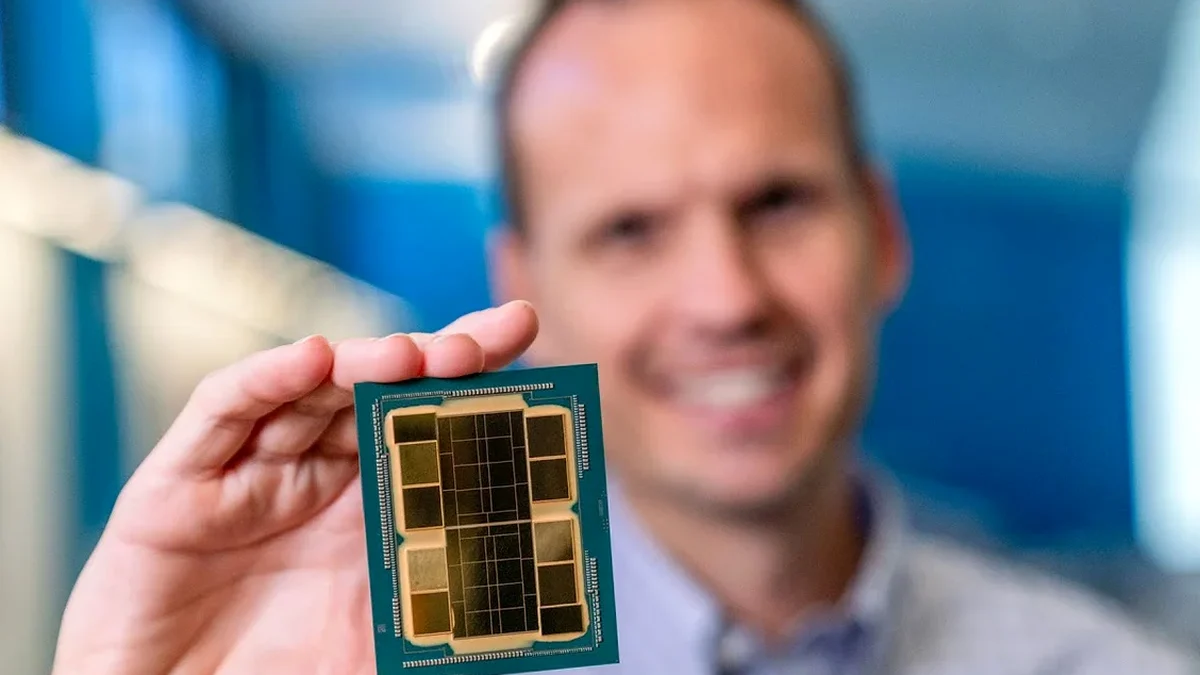
The race toward sub-2nm semiconductor manufacturing just crossed a critical threshold. In late October 2026, Intel Foundry officially distributed version 0.9 of the Process Design Kit (PDK) for its 14A (1.4nm-class) node to external partners, setting the stage for the final PDK 1.0 release in the first quarter of 2027.
From Simulated Models to Physical Silicon: Why PDK 0.9 Matters
In chip manufacturing, a Process Design Kit (PDK) serves as the foundational rulebook that hardware engineers use to layout, simulate, and verify integrated circuits before committing silicon to a fab. Up until recently, prospective foundry clients evaluating Intel's 14A node worked with early-stage kits such as PDK 0.5, which relied heavily on theoretical projections and simulation models.
With the late-October rollout of PDK 0.9, Intel transitions its design environment to physical measurements gathered directly from early test wafers running through its fabs. Intel CEO Lip-Bu Tan has described this 0.9 milestone as a "holy grail" moment for the foundry division: it gives external chip designers the validated electrical and thermal parameters required to launch commercial trial designs and initial tape-outs, knowing their layouts will transition smoothly into the final production specification.
RibbonFET 2, PowerDirect, and High-NA EUV: Inside the 1.4nm Architecture
To compete head-to-head against TSMC's upcoming A14 (1.4nm) node, Intel 14A combines three major architectural advancements on a single process:
- High-NA EUV Lithography: Utilizing ASML's Twinscan EXE:5000 and EXE:5200 scanners (featuring a 0.55 numerical aperture compared to standard 0.33 EUV systems) enables single-exposure printing of ultra-dense features, reducing multi-patterning complexity and mask defects.
- RibbonFET 2 Transistors: Intel's second-generation Gate-All-Around (GAA) nanosheet architecture refines channel drive current while operating at significantly lower threshold voltages.
- PowerDirect Backside Power Delivery: Evolving from the PowerVia design introduced on 18A, PowerDirect routes power directly to the underside of the transistors, freeing up front-side metal layers exclusively for signal routing.
Compared to the preceding Intel 18A node, Intel projects that 14A will deliver a 15% to 20% performance-per-watt improvement at iso-power (or a 25% to 35% power reduction at iso-performance), alongside up to a 30% increase in transistor density.
Production Timeline and What It Means for Future Gaming CPUs
Following the PDK 0.9 deployment, Intel's manufacturing roadmap is locked into three key phases. The final PDK 1.0 will arrive in Q1 2027 to formally validate High-Volume Manufacturing (HVM) readiness. Risk production is scheduled to kick off in the second half of 2027, leading into full commercial mass production in 2028.
For PC gamers, this timeline clarifies Intel's multi-year desktop processor strategy. While Intel's upcoming Nova Lake desktop CPUs slated for a CES 2027 reveal on the 18A-P node will handle the near-term battle against AMD's Ryzen X3D lineup, the 14A process will serve as the silicon foundation for post-Nova Lake architectures (such as Razer Lake around 2028). Meanwhile, builders upgrading their rigs today on the LGA1851 platform continue to rely on the Core Ultra Series 2 family.
Intel Core Ultra 7 265K Desktop Processor (20 Cores, up to 5.5 GHz)
- 20 Cores (8 P-Cores + 12 E-Cores) up to 5.5 GHz Boost
- Arrow Lake-S Architecture on LGA1851 Socket
- Native DDR5-6400 Memory and PCIe 5.0 Support
My Take on the Spec Sheet
Let's be completely transparent about where we stand on the timeline: shipping a 0.9 PDK does not mean 1.4nm gaming processors are landing on retail shelves tomorrow. We are looking at the foundational engineering phase where chip architects finalize physical layouts ahead of 2028 mass production. Even so, transitioning from simulated PDK 0.5 models to silicon-validated PDK 0.9 data on schedule is a genuine execution milestone for Intel Foundry. We have not yet had a physical unit on our desk—if the manufacturer's team would like to send over a review sample so we can put it through our full real-world testing protocol, our lab doors are wide open.
What stands out most to me on this spec sheet is the combination of PowerDirect backside power delivery and that 25% to 35% power reduction target. Over the last few desktop generations, cooling high-end gaming CPUs has become a battle against extreme thermal density rather than raw heat output alone. By routing current directly beneath the transistor layer with PowerDirect and dropping operating voltages via RibbonFET 2, Intel is tackling voltage droop and parasitic resistance at the physical root. If Intel hits its Q1 2027 window for PDK 1.0 with healthy defect density on High-NA EUV, the late-2020s CPU rivalry against TSMC's A14 silicon is going to be fiercely competitive.

PC hardware enthusiast and competitive gamer, Arthur 'Heimdall' splits his time between France and the UK working in enterprise B2B software solutions. A business school graduate passionate about component benchmarking, he has been building, modding, and tuning PCs since childhood, optimizing every thermal degree and millisecond of display latency. An avid gamer across Assassin's Creed and sandbox titles, he forged his alliance with Grimtag and Chaya during late-night World of Warcraft raids before joining Pro-Gamer.