"Anything Goes if It Sounds Like John Williams": Why Final Fantasy Composer Nobuo Uematsu Warns Against Hollywood-Style Game Scores
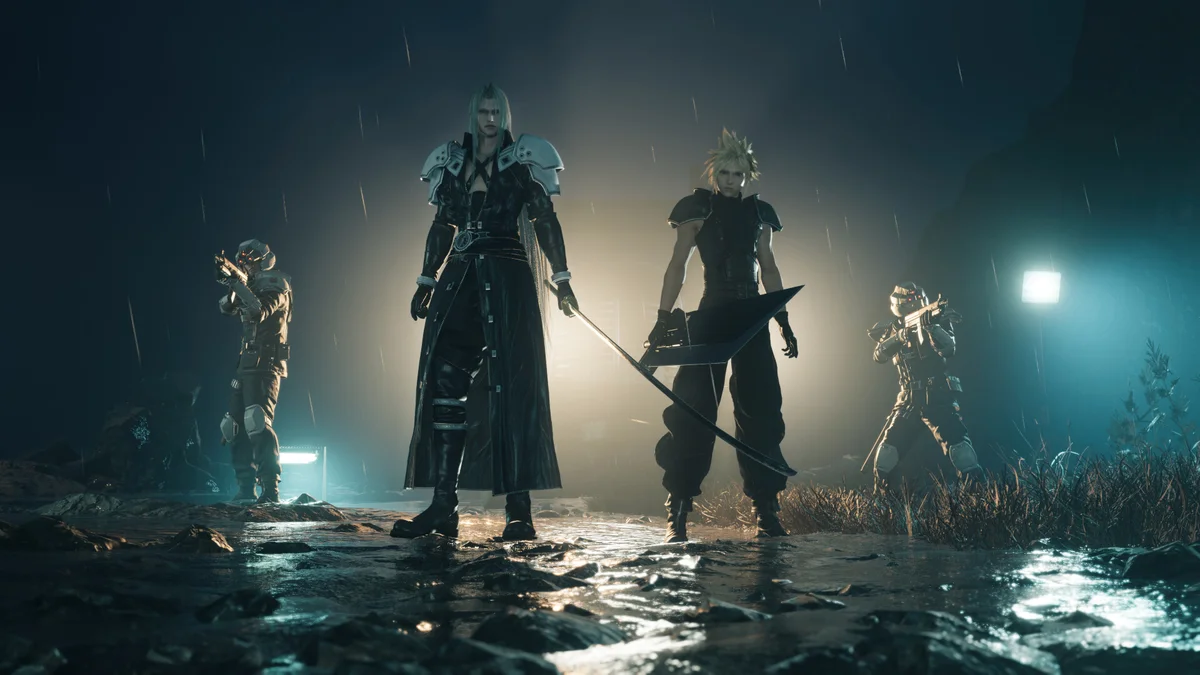
As the mastermind behind some of the most recognizable melodies in role-playing history, from the crystal prelude of Final Fantasy to the operatic fury of One-Winged Angel, Nobuo Uematsu has never shied away from speaking his mind about the state of video game audio. During an in-depth dialogue with Japanese media artist and academic Yoichi Ochiai on NewsPicks, alongside his candid reflections shared with Japanese music outlet Real Sound and on his official Nobuo Uematsu ConTiki Show channel, the 67-year-old composer issued a pointed warning: by constantly chasing Hollywood film scores, modern blockbuster game soundtracks are losing their distinct identity.
The John Williams Formula and Producer Overreach
According to Uematsu, the root cause of this sonic homogenization lies in how modern development studios distribute creative authority. Game directors and producers now wield overwhelming control over audio direction, leaving composers with very little room to push back or propose unconventional ideas, regardless of their technical mastery.
"I won't go as far as to call it stagnation, but I believe directors and producers hold too much power in their hands even when it comes to the music. Even now, game composers aren't in a position to speak their opinion freely, and no matter how much musical knowledge or technical skills they possess, they're still in a position where it's difficult to speak their mind. There are almost no game producers who are well versed in worldwide entertainment and are familiar with a wide variety of musical genres, so anything goes for them as long as you make it sound like a John Williams movie soundtrack."
Instead of encouraging bold genre-blending, mainstream studios default to either sweeping cinematic orchestration or soothing digital synthesizer beds sequenced to stay politely in the background. As Uematsu bluntly put it, "Frankly speaking, there are fewer weird things now." Yet it was precisely that willingness to embrace musical eccentricity, fusing 1970s progressive rock, baroque organ, Celtic folk, and jazz fusion, that gave classic franchises an unmistakable sonic fingerprint.
When Hardware Constraints Forced Melodies to Tell the Story
During the 8-bit and 16-bit eras on the NES and Super NES, and continuing into the early CD-ROM generation on the original PlayStation, composers could not mask a forgettable melody behind a wall of cinematic brass and booming percussion. Working with just three melodic channels and a noise channel on the Famicom, or the eight sampled voices of Sony's SPC700 sound chip on the Super Famicom, meant every single note had to carry narrative weight on its own.
| Musical Dimension | Identity-Driven Melodic Scoring (8-Bit to PS1 Era / Uematsu Philosophy) | Hollywood-Style Standardization (Modern AAA Blockbusters) |
|---|---|---|
| Creative Catalyst | Strict memory and sound-chip limits demanding an instantly memorable melodic hook | Unrestricted orchestral budgets designed to blend seamlessly behind cinematic cutscenes |
| Composer Autonomy | High creative freedom, bold genre-blending (progressive rock, opera, synth, world music) | Tight producer oversight anchored to safe, Hollywood-inspired temp tracks |
| Narrative Role | The melody itself tells the story and defines a character or world (Terra's Theme, Aerith's Theme) | Atmospheric sonic wallpaper that often feels interchangeable across major franchises |
| Artistic Risk ("Weirdness") | Unapologetic experimentation and unmistakable personal quirks | Conformity to the John Williams blockbuster template to satisfy executive expectations |
That hunger for unapologetic musical personality is precisely why players celebrate composers who refuse to play it safe: we saw a striking example of this recently when Lena Raine's Pigstep disc pushed Mojang to demand full-on bangers in Minecraft, proving that a fearless, genre-bending track leaves a far deeper cultural mark than generic background ambiance.
Uematsu's Challenge to Modern Composers: "What Is It That Only I Can Do?"
Honored with a Special Award at the CEDEC Awards for his lifetime achievements in interactive audio and having composed the full soundtrack for Mistwalker and Square Enix's Fantasian Neo Dimension alongside Hironobu Sakaguchi, Uematsu insists that game music must never settle for being a second-hand imitation of cinema. Addressing the rise of generative AI and standardized orchestral templates, he urged young musicians not to rely on automated shortcuts or industry trends.
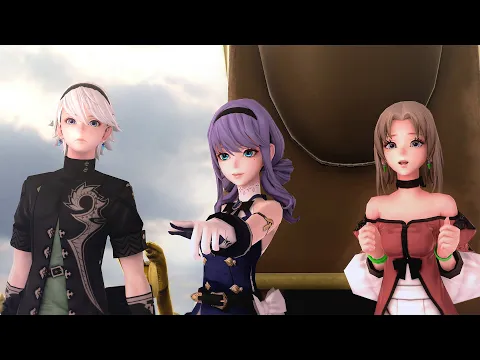
Instead, he believes anyone trained in the arts should look inward and ask a single defining question: "What is it that only I can do?" Only by digging into personal tastes, eccentricities, and lived musical influences can a composer create themes that endure for decades. In an era where studios behind breakout RPGs like Clair Obscur: Expedition 33 champion fiercely independent creative control, Uematsu's call for artistic individuality resonates louder than ever.
My Perspective
Every word Nobuo Uematsu said hits the nail on the head. Think about how many massive AAA blockbusters from the last five years boasted a full symphony orchestra recorded in a prestigious hall, yet left you unable to hum a single melody ten minutes after rolling the credits. Somewhere along the way, major publishers confused orchestral scale with musical identity. What made walking into Narshe in Final Fantasy VI or hearing Aerith's Theme in Final Fantasy VII unforgettable was never the fidelity of the audio samples; it was the raw, eccentric soul of a composer channeling 1970s prog-rock and unabashed emotion through a tiny sound chip. Today, that fearless melodic spirit is mostly kept alive by indie developers and agile mid-sized RPG teams who actually trust their composers to be weird, loud, and unmistakably human rather than asking for another safe Hollywood temp track.

Based on the outskirts of New York City, Chaya 'Chayane' spent five years studying software engineering in Montreal before returning to her home state. A Full-Stack developer and Deep Learning AI architecture researcher, she explores neural networks and algorithmic optimization while engineering data pipelines for Retrocharting and Gamescharting alongside Grimtag. A gamer for over 20 years and an avid collector of Nintendo history and The Legend of Zelda, she explored World of Warcraft's Azeroth before bringing her deep technical background to video game analysis.