Orders Booked Until 2030, 12x Laminate Costs, and Shifted Intel CPUs: How the AI PCB Shortage Threatens Motherboards and GPUs
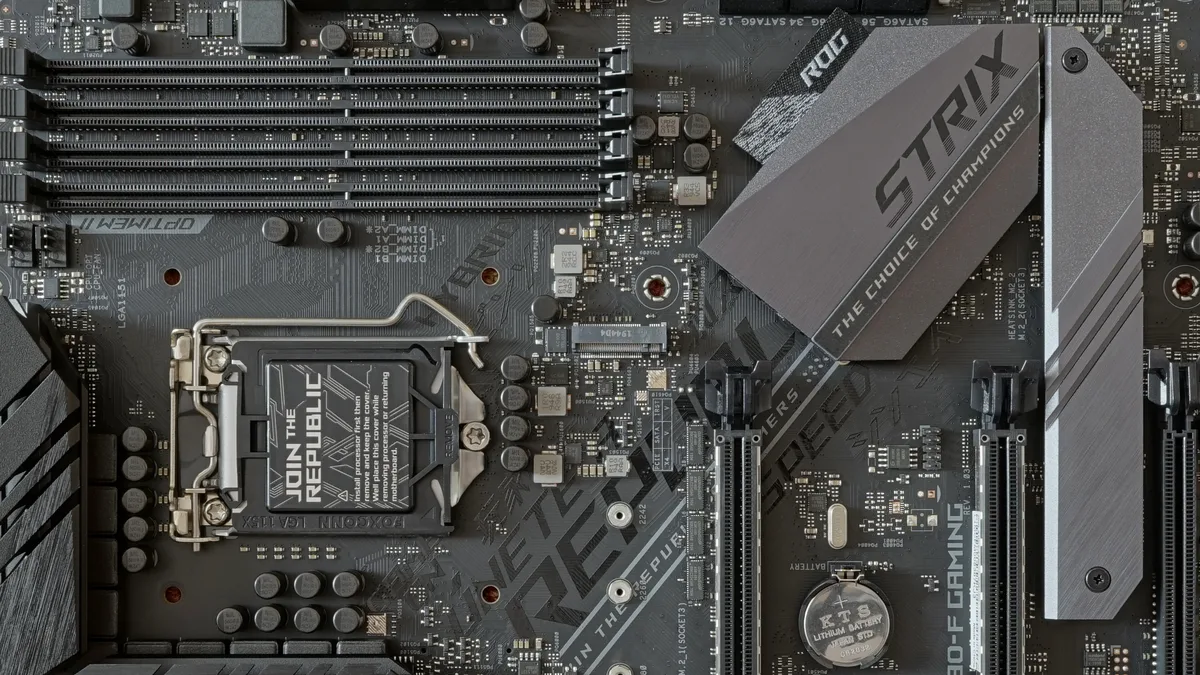
After silicon wafers at TSMC and high-bandwidth memory chips, the relentless appetite of artificial intelligence data centers has reached the physical foundation of every piece of computer hardware: the printed circuit board (PCB) and its upstream raw materials. Across supply chain disclosures at the TPCA Show (Taiwan Printed Circuit Association) in Taipei and third-quarter financial briefings from Taiwanese and Japanese manufacturers, a stark reality has emerged: order books at the world's leading copper-clad laminate (CCL) producers are now fully booked through 2030, while lead times for specialized PCBs and factory equipment have stretched up to 30 months.
CCL Order Books Filled Until 2030 and 12x Material Spikes Crowd Out Consumer PCs
Every gaming motherboard, GeForce RTX or Radeon RX graphics card, and laptop relies on copper-clad laminates (CCLs): foundational sheets made by laminating electronic-grade fiberglass, specialized resins, and copper foil. Today, hyperscale AI server deployments are absorbing virtually all available capacity for ultra-low-loss, high-frequency laminates (specifically M8, M9, and upcoming M10 grades).
At Taiwanese market leader Elite Material Co. (EMC), alongside peers Taiwan Union Technology (TUC) and Iteq, customer order visibility now extends all the way to 2030. Even though Elite Material has initiated an aggressive capital expenditure program to triple its manufacturing capacity by 2028 across facilities in Taiwan, Malaysia, and China, consumer PC hardware makers face a severe structural squeeze:
- 3 to 5 Times More Layers per Board: A single AI accelerator server board requires a high-density interconnect (HDI) PCB with 20 to over 40 layers, roughly 3 to 5 times the layer count of a mainstream desktop gaming motherboard. Every AI server rack effectively cannibalizes the factory floor time of multiple consumer PCs.
- 30-Month Equipment Delays and Late 2028 Backlogs: As S.C. Chien (Jian Shanjie), Chairman of substrate and PCB giant Unimicron, highlighted in Taipei, lead times for the precision manufacturing machinery needed to expand cleanroom capacity have reached 30 months. For several categories of multi-layer PCBs, new orders placed today will not be fulfilled until late 2028.
- T-Glass Scarcity and 12x Laminate Cost Surges: Upstream of laminate makers, severe bottlenecks have hit low-thermal-expansion electronic fiberglass (T-Glass), a critical material dominated by Japan's Nitto Boseki, as well as hyper-very-low-profile (HVLP) copper foil. Major PC manufacturers (including supply chain partners servicing brands such as HP and Dell) report that procurement costs for certain CCL grades have surged up to 12-fold since July, while experienced PCB and substrate engineers are commanding 20% to 30% salary increases across Asia.
This upstream material crunch compounds the $5 billion commitment made by NVIDIA, AMD, and Intel in Taiwan to lock down ABF substrates at Unimicron, Nan Ya PCB, and Kinsus, alongside multi-year supply agreements signed with Japan's Ibiden and South Korea's Samsung Electro-Mechanics.
Check Availability for ASUS ROG Strix and MSI Motherboards on Amazon→
Intel Shifts Production Capacity From Consumer PCs to Server Xeon CPUs
The bottleneck is not limited to third-party board partners: it is actively reshaping processor manufacturing allocations. During Intel's third-quarter 2026 earnings call, CEO Lip-Bu Tan warned that the semiconductor industry is navigating "one of the most significant supply shortages in history," fueled by unprecedented data center demand.
With the consumer PC market facing a projected contraction through the first half of 2027 amid skyrocketing memory and component prices, Intel Chief Financial Officer David Zinsner confirmed a decisive capacity pivot: Intel is shifting manufacturing capacity away from its consumer division (Client Computing Group, CCG) toward its server division (Data Center and AI, DCAI). Specifically, Intel has transitioned wafer equipment at its Oregon facilities toward the Intel 3 process node to pump out additional Xeon 6 (Granite Rapids) server processors, where demand is projected to outstrip supply through 2027 and 2028.
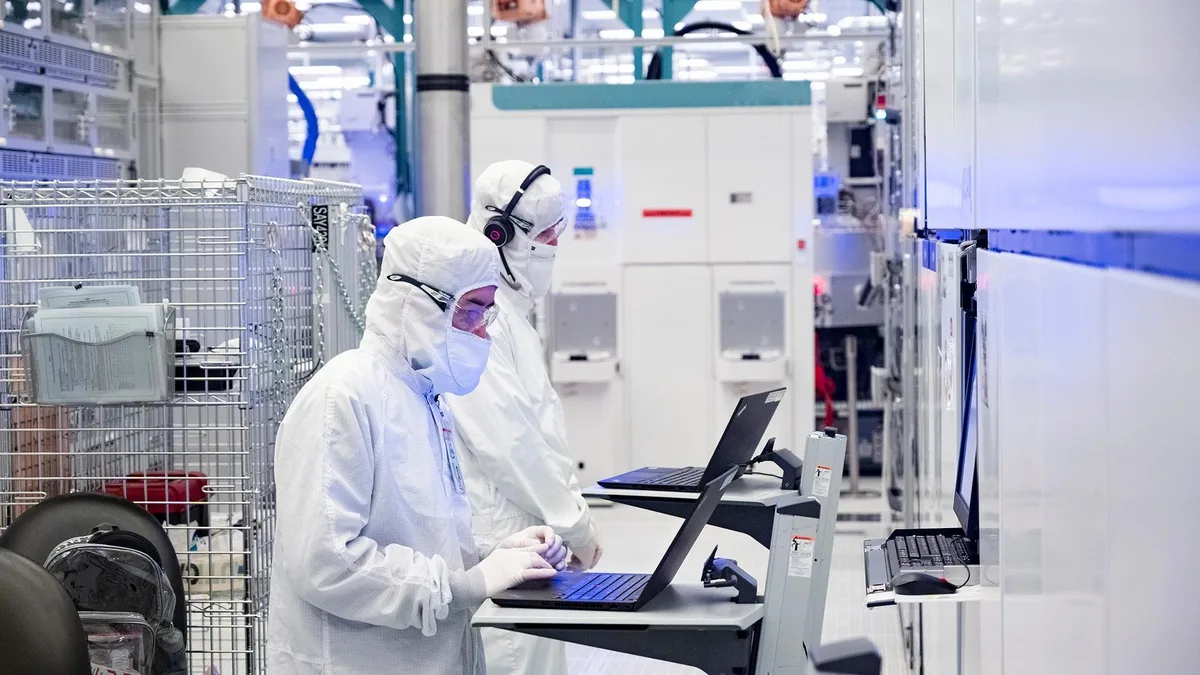
Crucially, Intel management emphasized that beyond wafer fabrication and a temporary disruption at Fab 28 in Israel, one of the primary ceilings on processor output is the global shortage of advanced organic substrates required for its EMIB (Embedded Multi-die Interconnect Bridge) packaging technology.
From PCBs to Fujifilm Magnetic Tape: The Entire Hardware Stack Under Pressure
To grasp just how deeply AI infrastructure is straining manufacturing lines, even cold-storage magnetic tape is experiencing a historic capacity crunch. Alongside the PCB bottleneck and SK hynix's warning that DRAM and HBM4 memory shortages will persist until 2030, Japan's Fujifilm Corporation has announced a record 10 billion yen (approximately $64 million) investment at its Odawara site in Kanagawa Prefecture. Marking Fujifilm's first major LTO production expansion in 20 years, the outlay will increase magnetic data storage tape capacity by 5x between fiscal 2026 and 2028 to meet data center demand for high-capacity LTO Ultrium 10 cold archiving.
| Hardware Layer | Key Industry Suppliers | Supply Chain Bottleneck (2026-2030) |
|---|---|---|
| Copper-Clad Laminates (CCL) | Elite Material Co. (EMC), TUC, Iteq | Order books filled through 2030; up to 12x cost spikes on specific grades since July. |
| Multi-Layer PCBs and Substrates | Unimicron, Ibiden, Nan Ya PCB, Nitto Boseki | Equipment lead times up to 30 months; fresh PCB orders pushed to late 2028. |
| Processors and EMIB Packaging | Intel (CCG and DCAI divisions) | Consumer wafer capacity shifted to Xeon 6 servers; substrate constraints through 2028. |
| Cold Storage (LTO-10 Tape) | Fujifilm (Odawara Factory, Kanagawa) | 10 billion yen investment to boost magnetic tape production capacity by 5x by 2028. |

My Take
On my test bench, it is easy to see why this PCB and copper-clad laminate shortage is such a dangerous blind spot for PC builders. Whenever I test a modern PCIe 5.0 motherboard running high-frequency DDR5 memory, maintaining signal integrity across the board requires 8-layer to 12-layer PCBs built with the exact low-loss resins and fiberglass that AI data centers are now locking up through 2030.
When a cloud hyperscaler is willing to pay a massive premium for a 30-layer server board while consumer motherboard and graphics card vendors operate on razor-thin retail margins, laminate suppliers like Elite Material and Unimicron will naturally prioritize data center contracts. Combine that upstream PCB squeeze with Intel actively shifting wafer capacity from client PCs to Xeon server chips, and the outlook for 2027 is unmistakable: even components we used to take for granted, like mid-range motherboards and graphics card PCBs, face sustained cost pressure. If you are planning an AM5 or LGA1851 build over the coming months, waiting for component prices to magically cool down in 2027 is a losing bet when the underlying circuit board materials are already booked out for the rest of the decade.
Check Availability for Intel Core Ultra and AMD Ryzen CPUs on Amazon→

SEO consultant for over 20 years and digital entrepreneur, Charles "Grimtag" is the founder of Pro-Gamer.gg, Retrocharting.com, and Gamescharting.com. A competitive gamer, streamer, and retro game collector, he has worked in the video game industry for over 15 years, notably as a consultant for leading game price comparison platforms. Passionate about real-time performance data and gaming technology, he analyzes competitive esports, gaming hardware benchmarks, and creator workflows on Pro-Gamer.gg with an authentic player perspective.