Rescued From a Nintendo Dumpster, the Original 1981 Donkey Kong Artwork Breaks the World Record at $329,400
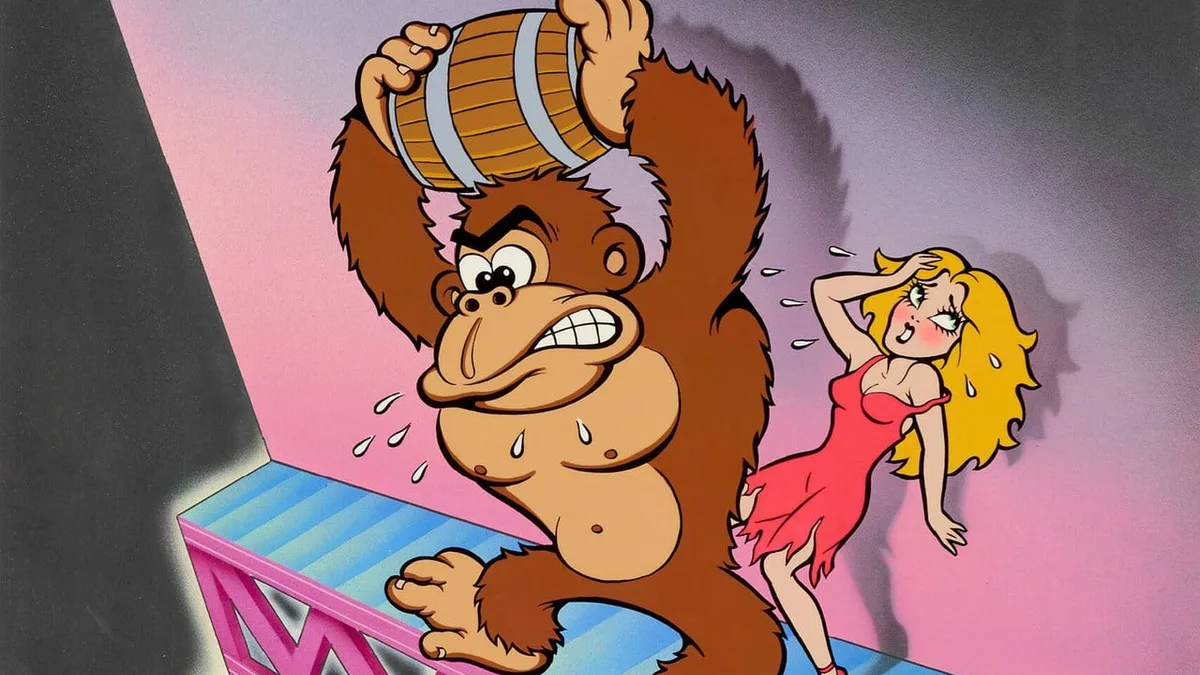
Tossed into a disposal bin in the late 1980s during an office expansion at Nintendo of America and subsequently tucked away inside the flat drawers of a living room coffee table for nearly four decades, the original North American arcade flyer painting for Donkey Kong (1981) has officially rewritten auction history. Sold for $329,400 on October 28, 2026, through Landry Pop Auctions as the centerpiece of its "Jumpman: The Beginning of an Icon" event, the artwork by New York illustrator Leslie Cabarga is now the most expensive piece of original video game art ever sold.
Originally estimated between $100,000 and $150,000, the 50 by 42 centimeter mixed-media painting more than doubled its high estimate at the Millville, Massachusetts auction house. In doing so, it shattered the previous world record for original video game artwork held since 2023 by Robert Florczak's 1989 Prince of Persia cover painting ($63,000 at Heritage Auctions), beating the prior benchmark by $266,400.
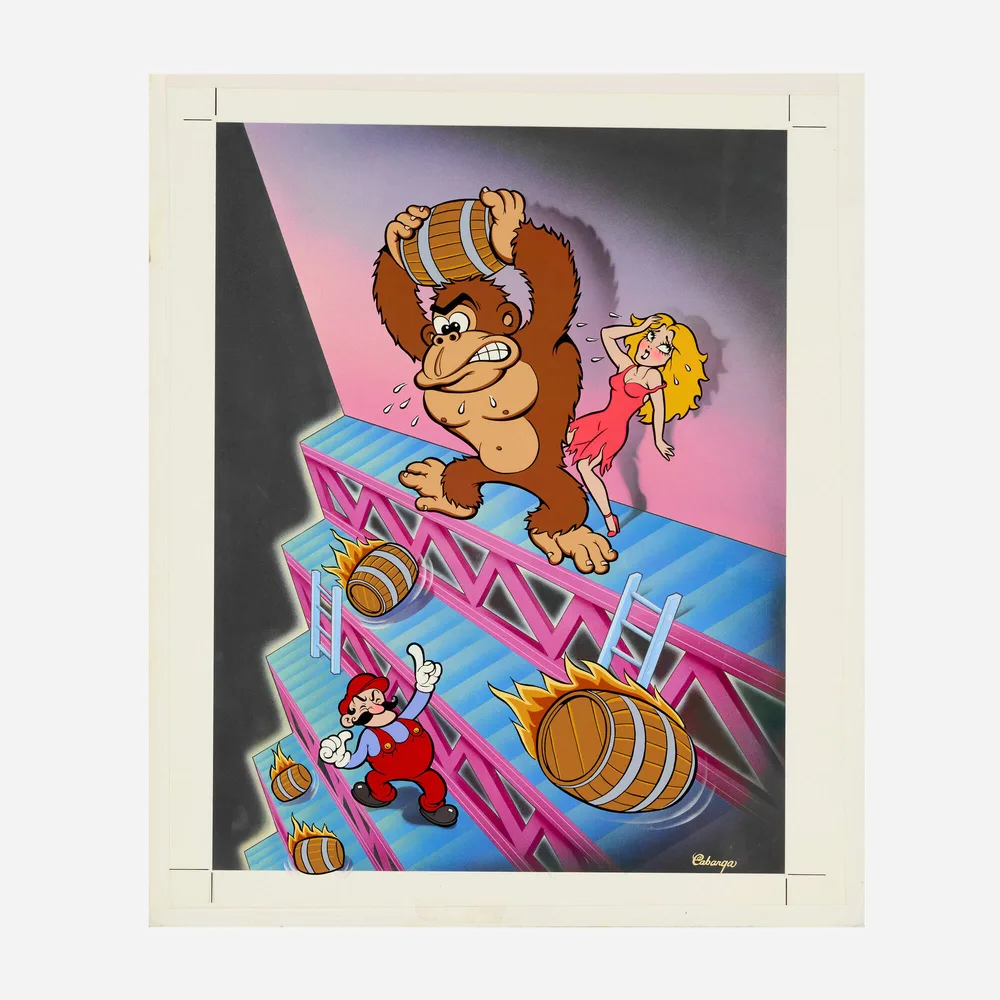
The Very First Public Appearance of Mario ("Jumpman") After the Radar Scope Crisis
Beyond its visual charm, the painting captures the exact turning point that rescued Nintendo of America from an early arcade crisis while introducing the most recognizable character in entertainment history. In 1980, Nintendo's American subsidiary suffered a major commercial misfire with the space shoot 'em up Radar Scope, leaving roughly 2,000 unsold arcade cabinets sitting in storage.
Desperate for a conversion kit to salvage that hardware, Nintendo president Hiroshi Yamauchi entrusted a young staff artist, Shigeru Miyamoto, who still champions human design intention today, with creating a brand-new platformer built around character-driven storytelling. When Donkey Kong arrived in North America in 1981, Nintendo's advertising agency, Dentsu, commissioned New York illustrator and typeface designer Zavier Leslie Cabarga (born in 1954 and renowned for his 1920s Fleischer Studios and Betty Boop aesthetic) to bring the cast to life far beyond the limits of 8-bit arcade sprites.
Printed on promotional flyers distributed to arcade operators across the United States and later reused on Ralston Purina's Donkey Kong cereal box, Cabarga's artwork marked the first time an American illustrator ever drew the mustachioed carpenter in red overalls. Still billed as Jumpman when the flyer went to press, the hero scaling pink and blue steel girders to rescue Pauline from flaming barrels was renamed Mario shortly afterward in honor of Mario Segale, the landlord of Nintendo of America's Washington State warehouse, before the name became permanent with Donkey Kong Jr. in 1982.
From a Nintendo of America Dumpster to the Drawers of a Coffee Table for Nearly 40 Years
The survival of the physical painting is a story in itself. At the height of "Nintendo Fever" in the late 1980s, Nintendo of America expanded its office space and cleared out old marketing storage rooms. Donna Darbous, then serving as Nintendo of America's Advertising Manager overseeing U.S. campaigns for Super Mario Bros., The Legend of Zelda, Tetris, the NES, the Super NES, and the Game Boy, spotted several original production illustrations sitting among materials slated for the dumpster.
With permission from her supervisor, Darbous rescued the discarded boards and brought them home. Nearly forty years later, while sorting through her personal belongings, she launched a frantic search for the artwork before remembering that she had tucked the pieces inside the flat drawers of a coffee table still in her home, safely stored beside prewar lithographs she had collected during travels in the Czech Republic. Recognizing that the accidental time capsule belonged in the public eye, she contacted Landry Pop Auctions founder Travis Landry.
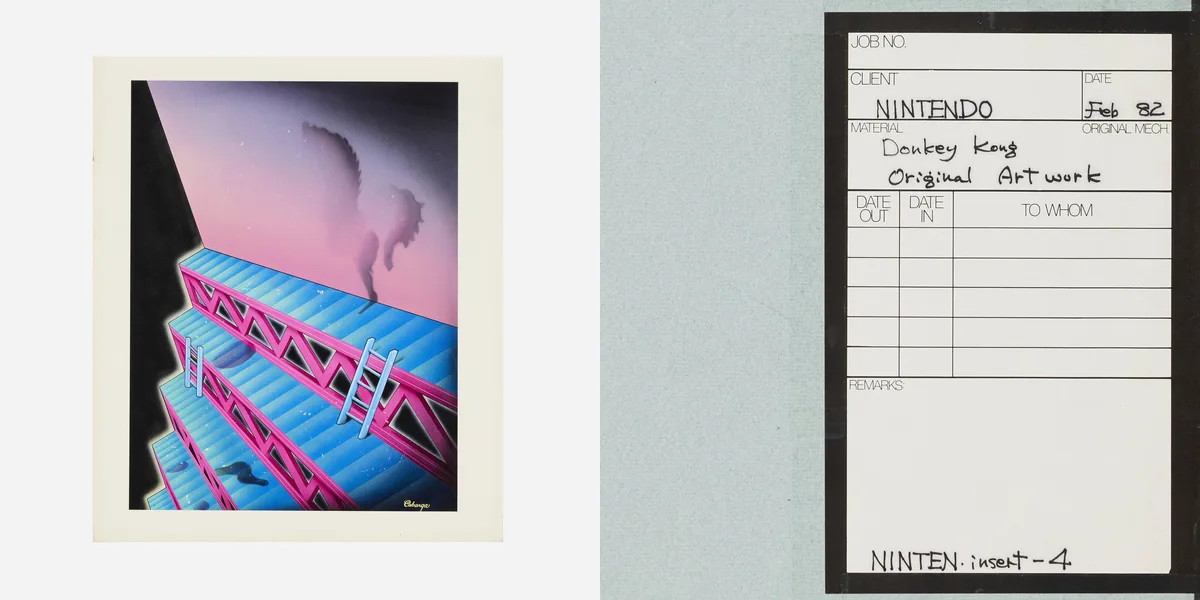
Technically, the piece preserves an analog commercial illustration process that has completely vanished from modern game marketing. Measuring 19 7/8 by 16 3/8 inches (50.5 by 41.6 cm), the artwork is constructed in two distinct physical layers: Donkey Kong, Pauline, Jumpman, and the rolling barrels are painted in vibrant acrylics on a clear acetate overlay positioned directly over an underlying cardstock board rendered in ink and airbrush. The board still retains its protective glassine cover with Japanese production notes on the recto and an internal job ticket ("CLIENT: NINTENDO / DATE: Feb 82 / MATERIAL: Donkey Kong Original Artwork / NINTEN.insert-4") taped to the upper right corner.
$471,683 Total and 100% Sold: Inside the Full Nintendo Archive Auction Results
Alongside Cabarga's record-shattering flyer painting, the entire "Jumpman: The Beginning of an Icon" catalog from the Donna Darbous collection achieved white-glove status, with 100% of lots sold for a combined total of $471,683 (reaching 231% of overall pre-sale estimates).
| Lot & Historic Nintendo Artifact | Year / Artist | Pre-Sale Estimate | Final Price |
|---|---|---|---|
| Lot 102: Donkey Kong North American Arcade Flyer Original Art | 1981 (Leslie Cabarga) | $100,000 to $150,000 | $329,400 (World Record) |
| Lot 104: Super Mario Bros. Mario and Luigi Original Production Art | c. 1985 (Nintendo) | $4,000 to $6,000 | $17,080 |
| Lot 101: Game & Watch Mickey & Donald Original Promotional Art | 1982 (Nintendo) | $8,000 to $12,000 | $10,980 |
| Lot 105: Super Mario Bros. Goomba Original Production Art | c. 1985 (Nintendo) | $3,000 to $5,000 | $10,370 |
| Lot 100: Game & Watch Mickey Mouse Original Packaging Art | 1981 (Nintendo) | $8,000 to $12,000 | $7,320 |
| Lot 103: Inaugural Nintendo of America Company Christmas Card Art | 1985 (Timothy Girvin) | $4,000 to $6,000 | $7,320 |
| Lot 112: Employee Nintendo SuperTeam Varsity Jacket | 1980s-1990s | $1,000 to $1,500 | $3,904 |
| Lot 128: Internal Employee Orientation "Mario" VHS Tape | Nintendo of America | $1,000 to $1,500 | $3,660 |
| Lot 119: Mike Tyson Signed Everlast Boxing Glove (Punch-Out!! Promo) | 1987 (Nintendo NES) | $100 to $200 | $2,074 |
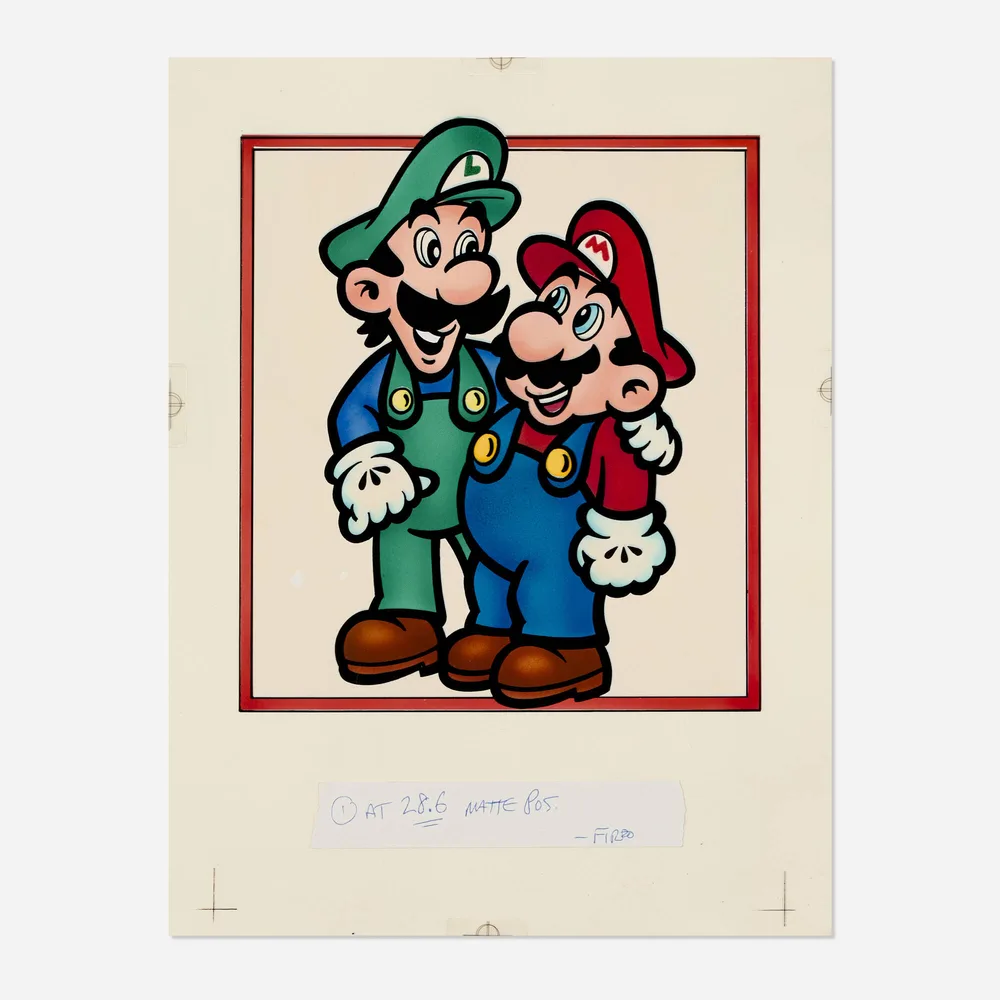
Other standout results included the original 1985 production painting of Mario and Luigi standing shoulder to shoulder ($17,080), an original Goomba production illustration ($10,370), and an Everlast boxing glove signed by Mike Tyson during Nintendo's Punch-Out!! promotional campaign, which soared more than ten times past its high estimate to reach $2,074. That surge proves high-end collectors are looking well beyond the rarest and most expensive Nintendo 64 cartridges toward one-of-a-kind production artifacts.
My Perspective
What strikes me most about this $329,400 record, beyond the sheer dollar figure, is the stark contrast between how corporate marketing departments treated artwork in the 1980s and how we treasure it today. During Nintendo of America's late-80s office expansion, nobody viewed Leslie Cabarga's acetate overlay as a museum masterpiece: once the arcade flyers had been printed and distributed, it was treated as disposable commercial collateral ready for the dumpster. Without Donna Darbous stepping in to save those boards, the very first painted portrait of Mario in North America would have ended up crushed in a Washington landfill.
I also find it refreshing to see the high-end video game collecting market reward hand-painted, one-of-a-kind original art rather than just factory-sealed cardboard boxes in plastic grading slabs. While a sealed cartridge is still a mass-produced retail item, this airbrushed cardstock and acrylic cel is a singular physical object bearing the brushstrokes of its illustrator and its original February 1982 job ticket. It is a long-overdue tribute to the commercial artists who gave our earliest arcade memories a vibrant identity on paper.

Based on the outskirts of New York City, Chaya 'Chayane' spent five years studying software engineering in Montreal before returning to her home state. A Full-Stack developer and Deep Learning AI architecture researcher, she explores neural networks and algorithmic optimization while engineering data pipelines for Retrocharting and Gamescharting alongside Grimtag. A gamer for over 20 years and an avid collector of Nintendo history and The Legend of Zelda, she explored World of Warcraft's Azeroth before bringing her deep technical background to video game analysis.