Bazzite Linux Turns the PS5 Into a Steam Machine: 40 GPU CUs Unlocked, USB SSD Boot, and Firmware Limits

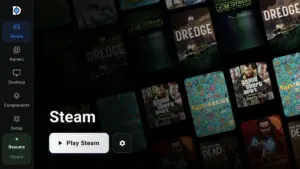
Turning a PlayStation 5 into a living-room SteamOS PC without overwriting Sony's internal operating system is no longer a rough proof of concept reserved for kernel developers. Created by developer Gilles (known as VivaLaVent on GitHub) on top of the foundational work from the ps5-linux collective, the unofficial ps5-bazzite-deck installer adapts the Fedora-based Bazzite distribution in Steam Deck mode for Sony's console hardware. Booted from an external drive, the system bypasses Orbis OS entirely and launches straight into Steam Gaming Mode with full Proton translation, Vulkan acceleration, and even a kernel toggle capable of unlocking all 40 physical compute units on the custom AMD Oberon GPU.
Non-Destructive USB or M.2 SSD Boot and Full SteamOS Interface
At its core, ps5-bazzite-deck relies on the PS5 Linux Loader maintained by developer rmux. Users flash the system image (a drive of at least 32 GB is required) from a PC using Rufus onto a fast USB flash drive or, ideally, an external SSD plugged into one of the console's 10 Gbit/s SuperSpeed ports (the two rear USB-A ports on original and Slim consoles, or the front USB-C port on the launch model). The console's internal flash storage remains untouched: whenever you reboot or power down without running the loader payload, the PS5 boots right back into its stock Sony dashboard even with the drive still plugged in.
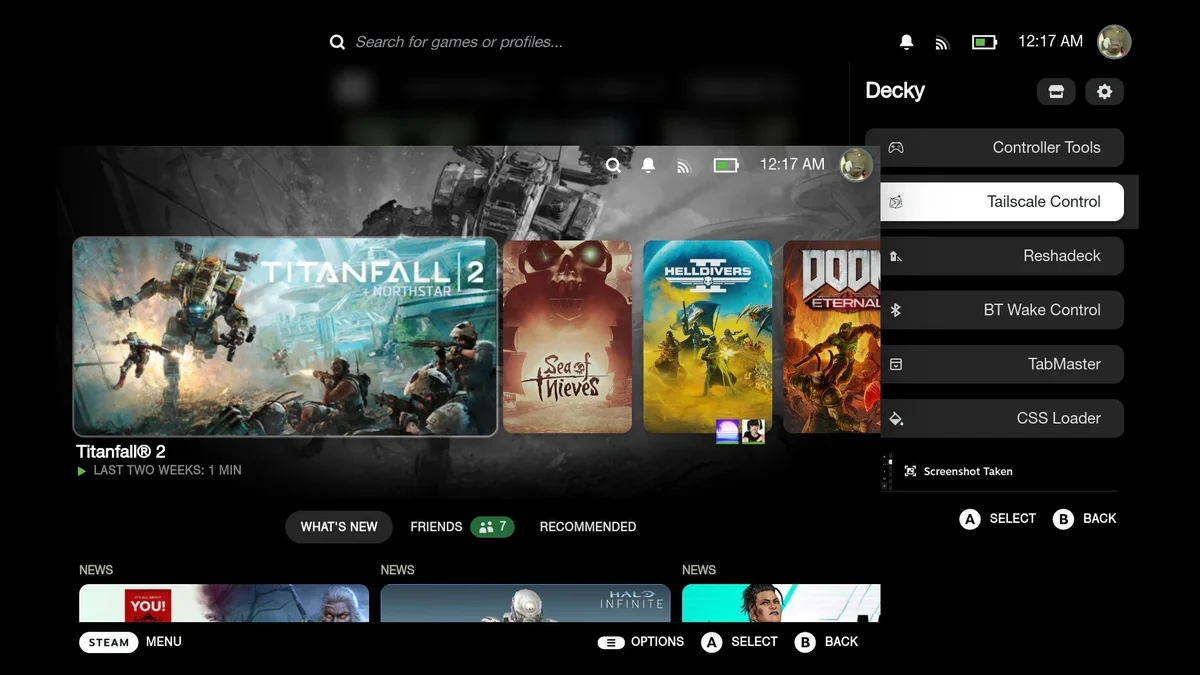
For players looking to bypass USB bandwidth limits when loading heavy PC titles, the project integrates ps5-linux-tools to install the operating system onto the PS5's internal M.2 NVMe SSD slot. In that hybrid setup, the USB drive only keeps a tiny FAT32 boot partition to feed the kernel to the loader, while the full Bazzite environment and Steam library run at native PCIe 4.0 speeds from the internal M.2 drive. With a single click from the power menu, users can also switch from Steam Gaming Mode to a full KDE Plasma desktop environment to install third-party PC storefronts such as GOG and Epic Games, run emulators, or use the console as a Linux workstation.
Check Availability of PS5-Compatible NVMe M.2 SSDs on Amazon→
AMD Oberon APU: Playing the Silicon Lottery to Unlock All 40 GPU CUs
Under the hood, both the original PlayStation 5 and the PS5 Slim are powered by the custom AMD Oberon APU, pairing an 8-core, 16-thread Zen 2 CPU clocked up to 3.5 GHz with an RDNA 2 graphics engine running at up to 2.23 GHz. While Sony ships retail units with 36 active Compute Units (CUs) to maximize wafer yields at the foundry, the physical silicon die actually contains 40 CUs. Four units are disabled at the factory level whether they contain a manufacturing defect or are completely healthy.
Running Bazzite Linux with open-source Mesa RADV drivers and the custom amdgpu kernel module allows original PS5 and Slim owners to bypass that factory lock. By appending a kernel boot parameter to the cmdline.txt file on the boot partition, the driver wakes up the 4 dormant units and brings the active GPU count from 36 up to the full 40 CUs, delivering roughly 11% more compute hardware under Vulkan. As the developer notes, this is a textbook silicon lottery: on consoles where the extra CUs were only fused off for binning purposes, players get a free, stable GPU boost, whereas chips with a physically defective unit will display green dots, a purple tint, or driver crashes, requiring the flag to be turned back off. On the PS5 Pro, which received initial support in version v1.8.4 alongside its dedicated GPU firmware, all 60 active compute units run out of the box without using the unlock flag.
Firmwares 3.00 to 13.60, FLAVA3 vs. VERDE HDMI Chips, and DualSense Profiles
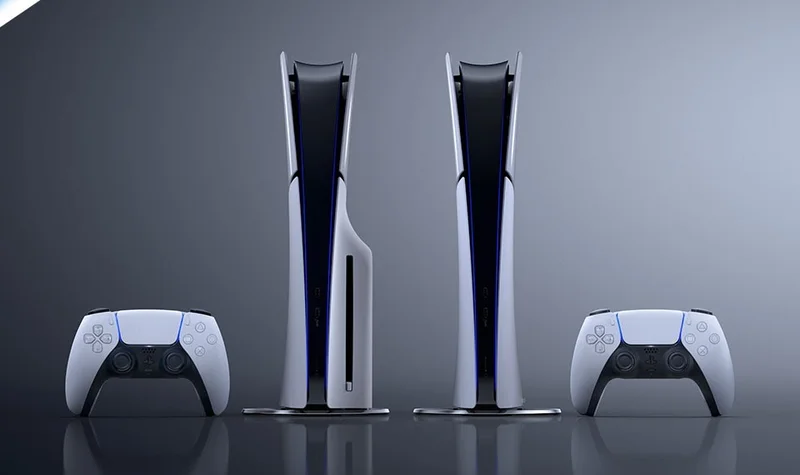
Accessing this Linux environment remains strictly tied to consoles with exploitable kernel and hypervisor vulnerabilities, a battleground that recently heated up following Sony's $50,000 bounty to patch an AI-discovered hypervisor vulnerability. Currently, the Linux loader supports original PS5 and Slim units on firmware versions ranging from 3.00 up to 13.60 (with internal M.2 SSD support enabled from firmware 4.00 onward across 4.xx, 5.xx, 6.xx, 7.xx, and 13.00 to 13.60 builds), as well as the PS5 Pro on firmware 13.60. Users must also keep homebrew payloads like etaHEN and kstuff disabled prior to launching Linux to prevent sleep-mode freezes, while weighing the requirements and risks of running a PS5 and PS5 Pro jailbreak.
Display output and wireless behavior in Bazzite depend heavily on three internal hardware revisions across PS5 motherboards:
- FLAVA3 vs. VERDE HDMI Controllers: Consoles equipped with the FLAVA3 HDMI IC (found in the vast majority of units) support full 4K at 120 Hz over HDMI 2.1 FRL, 1440p at 120 Hz, HDR, and HDMI VRR (excluding FreeSync-only monitors). They can even enable DisplayPort video output over the front USB-C port for USB-C monitors and the PSVR2 headset. Conversely, certain newer motherboard revisions built with a VERDE HDMI chip are currently limited to 1080p60, 1080p120, 1440p60, and 4K60 without HDR or VRR.
- Wi-Fi and Bluetooth Chips: The Marvell/NXP IW620 (original PS5), MediaTek MT7961 (PS5 Slim), and MediaTek MT7925 (PS5 Pro) wireless modules are all supported. Starting with release v1.8.9 in late October 2026, Linux assigns its own Bluetooth MAC address by default, allowing players to use a single DualSense controller across both the stock PS5 OS and Linux via separate pairing slots without re-pairing over USB every time they switch systems.
- Hardware Video Decoding: While VAAPI hardware acceleration works cleanly for H.264 streams, the PS5's VCN media engine misinterprets HEVC P-frames under Linux, meaning local game streaming clients like Moonlight or Sunshine should be configured to use H.264.
My Take on the Spec Sheet
From a hardware engineering standpoint, watching the custom AMD Oberon APU run Bazzite with native Steam Deck UI and Proton translation is a remarkable showcase of how close modern consoles are to desktop PCs. With 8 Zen 2 cores at 3.5 GHz, 16 GB of unified GDDR6 memory, and an RDNA 2 GPU that can scale up to 40 active CUs when you win the silicon lottery, a Linux-powered PS5 delivers desktop-class Radeon RX 6700 throughput inside a compact living-room chassis. Adding dual-profile DualSense Bluetooth pairing in v1.8.9 alongside 4K 120 Hz HDMI 2.1 VRR output on FLAVA3 boards removes most of the rough edges that used to make console Linux builds feel like a novelty. The obvious catch remains the firmware ceiling: because any console updated past 13.60 for PlayStation Network access is locked out of the loader, this DIY Steam Machine setup is strictly a playground for enthusiasts keeping a secondary PS5 offline. We have not yet had a physical unit on our desk—if the manufacturer's team would like to send over a review sample so we can put it through our full real-world testing protocol, our lab doors are wide open.

PC hardware enthusiast and competitive gamer, Arthur 'Heimdall' splits his time between France and the UK working in enterprise B2B software solutions. A business school graduate passionate about component benchmarking, he has been building, modding, and tuning PCs since childhood, optimizing every thermal degree and millisecond of display latency. An avid gamer across Assassin's Creed and sandbox titles, he forged his alliance with Grimtag and Chaya during late-night World of Warcraft raids before joining Pro-Gamer.