Sol Valley Desert and the Vi-O-La Bike: Why Metroid Prime's Lead Engineer Calls Metroid Prime 4's Open Hub a Waste
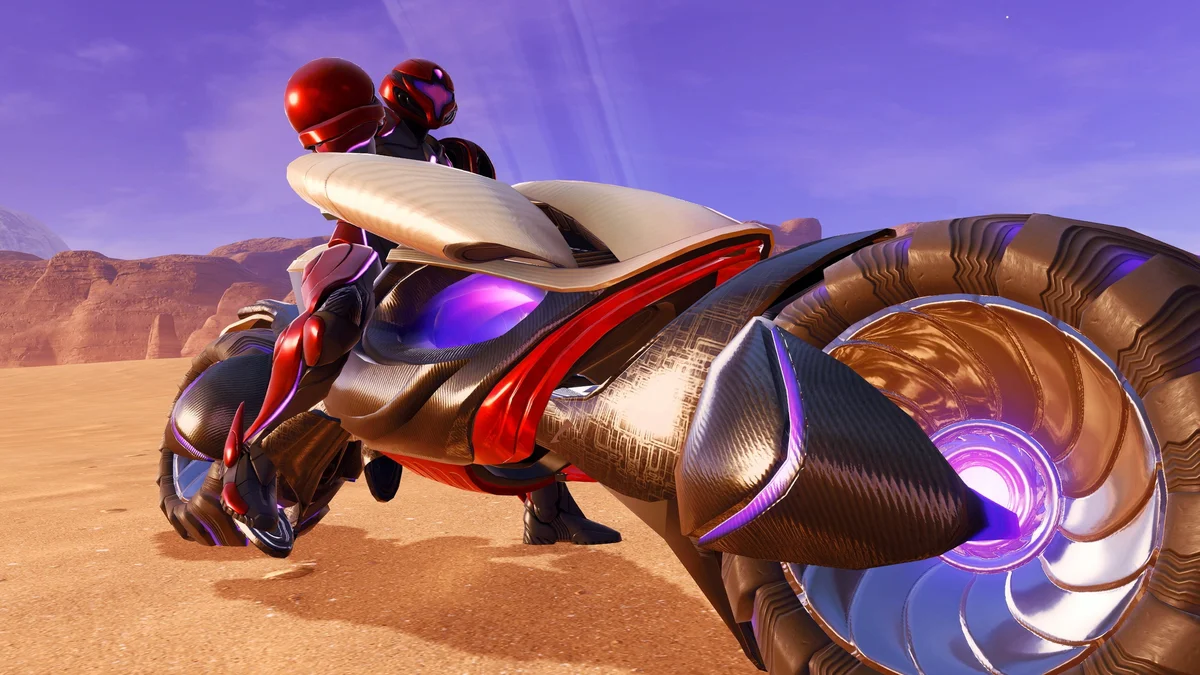
The addition of Samus Aran's Vi-O-La motorcycle and the sprawling Sol Valley desert in Metroid Prime 4: Beyond has been one of the most fiercely debated design shifts in the franchise's history. Speaking on the Kiwi Talkz podcast hosted by Reece Reilly, Jack Mathews, who served as Lead Technical Engineer across all three entries of the original Metroid Prime Trilogy at Retro Studios, explained why he views the open desert hub as a misallocation of engineering talent and a fundamental misunderstanding of the series' pacing.
Building a Terrain Engine From Scratch and the Wind Waker Sea Effect
From an engineering standpoint, Mathews drew a sharp line between the traditional interconnected zones of Viewros and the wide-open desert sitting between them. According to the veteran programmer, nearly all of the standard biomes in Metroid Prime 4: Beyond follow the established blueprint of the series, meaning a team could essentially adapt the core level-building tools from the original GameCube title and layer Samus's new psychic and suit abilities on top. That tight, claustrophobic design lineage stands in stark contrast to open-world trends and even echoes the harsher survival tone recently glimpsed in Metroid Ravenous on Switch 2.
Sol Valley, however, required an entirely new open-terrain streaming architecture that had never existed in a Metroid game. Mathews compared the decision to taking a classic dungeon-focused adventure and suddenly dropping the Great Sea from The Legend of Zelda: The Wind Waker or Hyrule Field into the middle of it. While riding across the dunes, players rarely see more than a single major landmark in the distance while little else is loaded into memory, culminating in isolated desert skirmishes and miniature structures sitting out in the open.
Split Development Focus, Single-Use AI, and Production Risks
For Mathews, the biggest issue with Sol Valley is what he calls a severe split focus across both technology and game design. Every engineer assigned to build the desert terrain system and vehicle physics from the ground up was pulled away from working on the core first-person adventure. Worse still, none of the underlying systems built for the Vi-O-La or the desert carry over into the rest of the campaign.
He pointed to enemy artificial intelligence as a prime example: the two or three bespoke AI behaviors written specifically for Sol Valley encounters are never reused anywhere else in the game. In a traditional Metroid Prime production schedule, Retro Studios could reliably estimate how long it would take to build a set number of rooms and enemies derived from proven archetypes, such as the six-armed Grievers (which Mathews compared to evolved Space Pirates or the Reptilicus from Metroid Prime 3: Corruption) and airborne foes modeled after classic War Wasps. By contrast, building a motorcycle hub introduced massive scheduling uncertainty because the studio had never engineered vehicle gameplay before and had no baseline for how long it would take to make riding across a desert genuinely fun.
Kensuke Tanabe's Love for Motorbikes and Misunderstanding Metroid Downtime
Why did a motorcycle make its way into a Metroid Prime game in the first place? While Mathews noted he has no inside knowledge of whether Sol Valley was inherited from the original version of Metroid Prime 4 started at Bandai Namco before Nintendo rebooted the project at Retro Studios, he recalled that longtime series producer Kensuke Tanabe has always had a strong personal fondness for motorbikes. It is a telling reminder of how a producer's personal vision can steer a project across the long history of landmark Nintendo Direct announcements.
Mathews also dismantled the two most common technical and design defenses for including Sol Valley:
- The loading screen myth: While Metroid games historically use elevators, corridors, and blast doors to mask level loading, Sol Valley does not eliminate transitions at all. Every time Samus leaves the desert to enter a proper biome, she still has to pass through a door, ride a tram, or board a rocket sequence that hides a lengthy load time before reaching the actual world.
- Misreading player downtime: Mathews believes the team packed heavy combat into smaller, more linear worlds and assumed riding across Sol Valley would serve as a relaxing breather in between. In his view, that misses the soul of Metroid Prime, where true downtime is not driving through an empty expanse, but the quiet moments between firefights spent exploring a room on foot and scanning the environment.
My Perspective
When Jack Mathews points out that true downtime in a Metroid Prime game is the quiet stretch where you lower your arm cannon and simply absorb the room around you, he nails exactly why Sol Valley feels so out of place. What made Tallon IV and Aether unforgettable was their suffocating, interconnected intimacy, where every damp corridor and chozo ruin felt purposeful. Blasting across an empty desert on the Vi-O-La only to hit a tram loading screen anyway breaks that solitary spell. Knowing that months of specialized terrain engineering and single-use AI went into a desert hub that never feeds back into the core dungeons stings a little, because I would have traded every square mile of that sand for one more tightly woven underground labyrinth.

Based on the outskirts of New York City, Chaya 'Chayane' spent five years studying software engineering in Montreal before returning to her home state. A Full-Stack developer and Deep Learning AI architecture researcher, she explores neural networks and algorithmic optimization while engineering data pipelines for Retrocharting and Gamescharting alongside Grimtag. A gamer for over 20 years and an avid collector of Nintendo history and The Legend of Zelda, she explored World of Warcraft's Azeroth before bringing her deep technical background to video game analysis.