AMD Zen 6 "Gainsborough" APU With 6 Cores and 24 GB of 9,600 MT/s LPDDR5 Surfaces on Linux: A Prime Candidate for Steam Deck 2
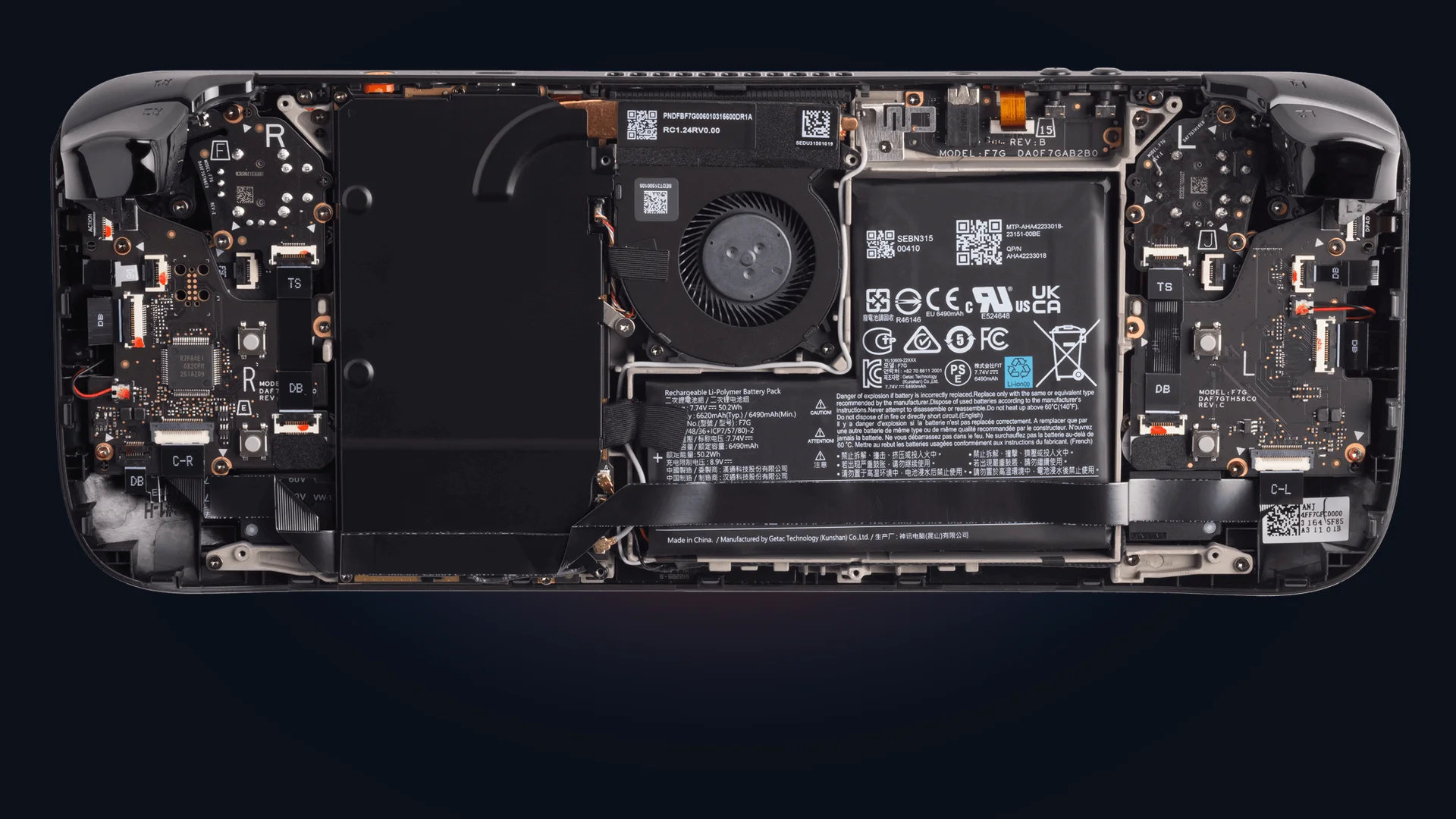
An unreleased AMD engineering sample has surfaced in the public database of OpenBenchmarking via the Linux-based Phoronix Test Suite. Carrying the internal codename "Gainsborough" and part number 100-000001930-12, the chip combines a 6-core, 12-thread Zen 6 processor with 24 GB of LPDDR5 memory clocked at 9,600 MT/s. Both its naming convention and its low-power Linux validation environment strongly suggest a custom silicon prototype built for a next-generation successor to Valve's Steam Deck.
From "Aerith" and "Sephiroth" to "Gainsborough": The Naming Clue Pointing to Valve
The most telling detail in the benchmark log lies in the validation motherboard identifier: AMD GBR-FF6-SKT, paired with a 113-GBRGENERIC-001 video BIOS. The GBR shorthand stands for the internal platform codename Gainsborough.
For hardware engineers tracking Valve and AMD's semi-custom partnership, that name immediately stands out because every Steam Deck APU to date has been named after characters from Final Fantasy VII:
- Aerith (Van Gogh): the 7nm TSMC APU powering the original LCD Steam Deck released in February 2022.
- Sephiroth: the 6nm die shrink introduced in late 2023 inside the Steam Deck OLED.
- Gainsborough: the surname of the heroine (Aerith Gainsborough), continuing the exact same naming lineage on a compact FF6 BGA socket package.
6-Core Zen 6 Microarchitecture and a Major Leap to 24 GB of 9,600 MT/s LPDDR5
Beyond the codename, the technical telemetry captured in the OpenBenchmarking log marks a substantial architectural jump over the 4-core, 8-thread Zen 2 CPU found in current models. The Gainsborough sample features 6 physical cores and 12 threads running at a 2.4 GHz base clock, delivering a 50% increase in core count for modern CPU-heavy game engines.
Crucially, the processor's microcode places it under AMD Family 1Ah, Model DCh (hexadecimal 0xDC). According to recent Linux kernel patches, models spanning 0xD8 through 0xEF within Family 1Ah are assigned to AMD's upcoming Zen 6 architecture family. The public test log does not yet specify whether this silicon utilizes standard Zen 6 cores, dense Zen 6c cores, or a hybrid low-power configuration.
On the memory front, the validation board is equipped with four 6 GB SK Hynix packages totaling 24 GB of LPDDR5 memory running at 9,600 MT/s. Across a 128-bit unified memory bus, 9,600 MT/s delivers 153.6 GB/s of theoretical bandwidth, compared to 88 GB/s on the original LCD Steam Deck (5,500 MT/s) and 102.4 GB/s on the Steam Deck OLED (6,400 MT/s). That 50% increase in both capacity and bandwidth directly addresses shared VRAM bottlenecks in modern AAA titles, especially at a time when surging DRAM and component manufacturing costs are forcing console architects to maximize every watt and memory channel.
2,400 MHz Integrated GPU and Early Ubuntu 24.04 Linux Benchmarks
The engineering sample was tested under Ubuntu 24.04 Linux running Linux Kernel 7.1.0 and early development Mesa graphics drivers. While the diagnostic log omits the exact Compute Unit (CU) count and specific Radeon generation, it confirms that the integrated GPU clocks up to 2,400 MHz, a notable bump over the 1,600 MHz peak of the current 8-CU RDNA 2 graphics engine.
Tested at a 1024 × 768 windowed resolution in GpuTest, the early prototype recorded 3,508 points in FurMark, 3,871 points in GiMark, and 9,319 points in TessMark. Those early synthetic figures reflect unoptimized pre-release Mesa drivers and conservative engineering clock states rather than final retail silicon. Combined with recent software breakthroughs such as AMD's FSR 4.1 upscaling support over the Vulkan API, a 9,600 MT/s memory subsystem positions this platform for a major leap in handheld efficiency.
My Test Bench: Why 24 GB at 9,600 MT/s Is the Real Trigger for Steam Deck 2
Ever since the OLED model launched, Valve engineers Pierre-Loup Griffais and Lawrence Yang have maintained a clear stance: there will be no Steam Deck 2 until silicon can deliver a true generational leap in performance per watt without sacrificing battery life. Across every handheld PC I tear down and benchmark on my test bench, the biggest bottleneck is rarely raw CPU clock speed alone; it is memory bandwidth starvation choking the integrated GPU the moment modern games demand more than 8 GB of VRAM.
By pairing 6 Zen 6 cores with 24 GB of 9,600 MT/s LPDDR5 using non-binary 6 GB SK Hynix packages, this "Gainsborough" platform solves both problems at once. Pushing 153.6 GB/s of bandwidth while allowing 8 to 10 GB of dedicated VRAM allocation without starving SteamOS is the exact architectural inflection point Valve has been waiting for.

PC hardware enthusiast and competitive gamer, Arthur 'Heimdall' splits his time between France and the UK working in enterprise B2B software solutions. A business school graduate passionate about component benchmarking, he has been building, modding, and tuning PCs since childhood, optimizing every thermal degree and millisecond of display latency. An avid gamer across Assassin's Creed and sandbox titles, he forged his alliance with Grimtag and Chaya during late-night World of Warcraft raids before joining Pro-Gamer.