Why DDR4 Memory Prices Are Surging Faster Than DDR5: The AI Shortage Lasts Until 2028
The PC memory market is heading into unexpected territory in late 2026. While widespread industry attention remains focused on modern platforms, older DDR4 memory is currently experiencing an aggressive price spike.
According to fresh data from investment bank Barclays, contract prices for previous-generation DRAM chips are accelerating significantly faster than DDR5.
DDR4 contract prices jump 24% in three months
Market tracking figures compiled by Barclays reveal a noticeable surge in long-term supply agreements. Over the three months ending in October 2026, DDR4 contract prices jumped by 24%, with a 4% monthly increase in October alone.
By comparison, DDR5 contract pricing climbed by 20% over the same three-month window, adding 3% month-over-month. DDR5 spot prices on the open market, however, posted an 8% gain in October.
This dynamic reflects a major shift in procurement strategies across the tech sector. Memory makers and hardware vendors have largely abandoned traditional price floors and ceilings, moving toward supply deals that mirror immediate market volatility.
The high-bandwidth memory rush drains standard DRAM lines
The fundamental cause of this pricing divergence lies in factory-floor reallocations by the world's leading semiconductor manufacturers. Memory giants Micron, Samsung, and SK Hynix are heavily shifting silicon wafers toward High Bandwidth Memory (HBM3E and HBM4).
Because artificial intelligence accelerators from Nvidia and AMD demand enormous volumes of stacked HBM, semiconductor foundries are prioritizing these high-margin components over standard computing DRAM.
To free up cleanroom capacity, chipmakers are sharply cutting production runs for DDR4, treating it as an end-of-lifecycle standard. As a result, newly fabricated DDR4 supply is drying up while worldwide demand remains robust.
Hardware designers are already reacting to the crunch through specification reductions (de-speccing). Several manufacturers have begun temporarily scaling back memory capacities across embedded processors, although analysts view this as a temporary stopgap.
A structural deficit projected to peak in late 2027
Relief appears distant for buyers. A parallel market assessment by investment bank Citi projects that the global supply deficit across DRAM and NAND flash will persist through 2028.
According to Citi's supply-demand modeling, DRAM market tightness will peak in the fourth quarter of 2027, with demand surpassing production by 13.9%. For NAND flash storage, the imbalance is expected to peak at 8.3% in the first quarter of 2028.
| Market Metric | DDR4 Memory | DDR5 Memory | Supply Outlook |
|---|---|---|---|
| 3-Month Contract Price Jump | +24% | +20% | Tight supply through 2028 |
| Monthly Increase (October) | +4% | +3% | Spot pricing index active |
| Supply / Demand Tightness Peak | Production curtailed | Spot up 8% in October | Q4 2027 (13.9% deficit) |
What this means for PC builders and gamers
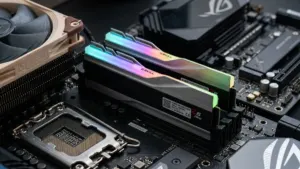
For PC builders and budget-conscious players, the sharp rise in DDR4 costs dismantles the traditional entry-level upgrade path. Popular budget systems built on AMD Socket AM4 (like Ryzen 5000 series processors) and Intel LGA1700 platforms have long relied on inexpensive DDR4 to keep total system costs low.
With hardware costs already climbing as seen in rising desktop processor prices, higher RAM costs further erode the value proposition of older architectures.
The price gap between a reliable 32GB DDR4 kit and a comparable DDR5 setup is shrinking fast. For anyone planning a memory upgrade on an aging rig, shifting the budget toward a modern DDR5 motherboard and processor is becoming the more logical financial move.

SEO consultant for over 20 years and digital entrepreneur, Charles 'Grimtag' Ronchain is the founder of Pro-Gamer.gg, Retrocharting.com, and Gamescharting.com. A competitive gamer, streamer, and retro game collector, he has worked in the video game industry for over 15 years, notably as a consultant for leading game price comparison platforms. Passionate about real-time performance data and gaming technology, he analyzes competitive esports, gaming hardware benchmarks, and creator workflows on Pro-Gamer.gg with an authentic player perspective.