
€24 Billion Revenue, 6,600 Studios and 12 Infographics: EGDF Report Reveals the Reality of Europe's Gaming Industry
The European Games Developer Federation (EGDF) and Video Games Europe have published their most detailed industry report to date. Compiling verified data across 28 European nations, the study offers an unvarnished diagnostic of the European video game ecosystem.
Behind headline growth driven by an influx of independent micro-studios lies an unprecedented hiring freeze across the European Union. Here is an exhaustive breakdown of the twelve official infographics decoding Europe's economic landscape.
6,600 Studios in the EU: The Startup Paradox During Industry Headwinds
The report records 6,600 active video game studios across the European Union, estimating year-over-year growth between 5% and 10%. Across wider Europe, the United Kingdom holds the top spot with 2,148 registered studios.
Within the EU single market, Sweden leads with 1,101 studios, followed by Germany (910 studios) and Poland (824 studios). On Europe's borders, Türkiye hosts a thriving cluster of 851 studios.
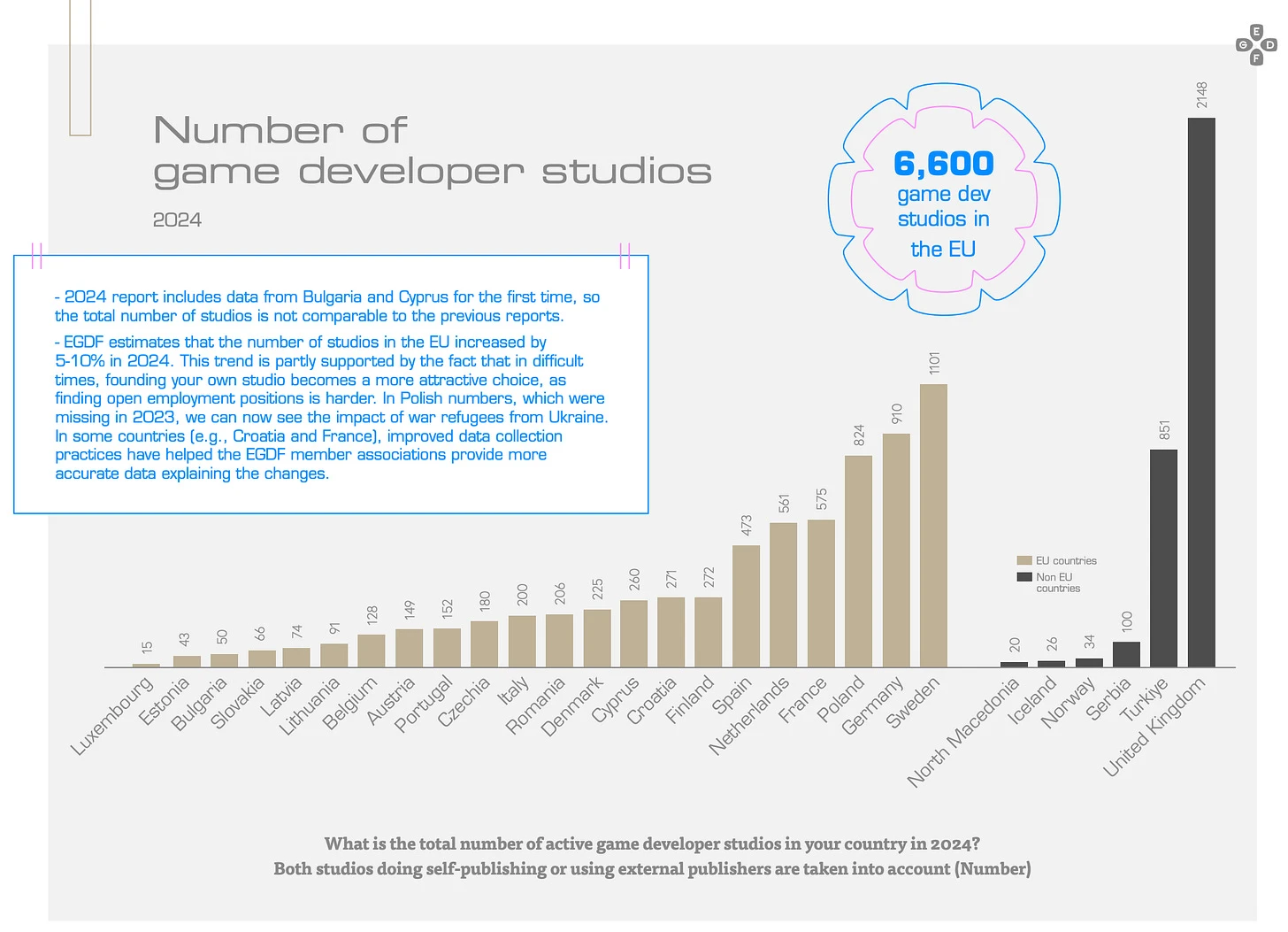
This studio surge reflects a structural industry mechanism. When tech layoffs limit corporate hiring, experienced developers and leads frequently found independent micro-studios to keep building.
Geopolitical shifts have reinforced this trend. In Poland, displaced Ukrainian developers established dozens of new ventures, expanding the national studio registry.
Poland's state PARP agency adds crucial context: out of the 824 listed Polish studios, at least 120 companies that were active in 2023 closed down, suspended operations, or ceased development altogether over the year.
Cyprus made its report debut with 260 registered studios, surpassing established development hubs including Denmark (225), Romania (206), and Italy (200).
95,000 Employees: EU Employment Hits an Abrupt Plateau
European game studios and publishers employ 95,000 people. The UK remains the largest employer with 28,516 staff, followed by Poland (14,929 workers) and Türkiye (14,918 workers).
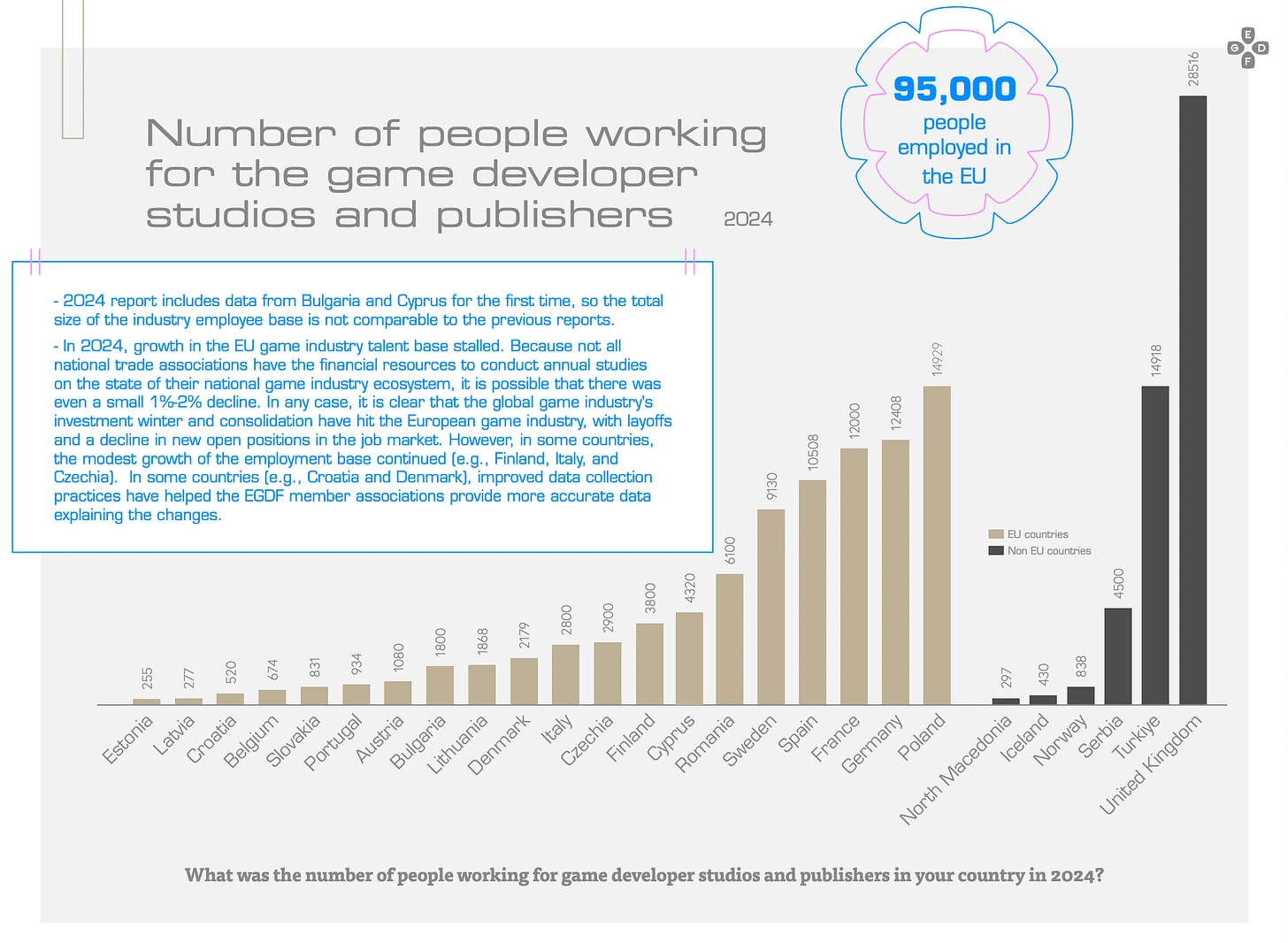
EGDF highlights that EU workforce expansion stalled in 2024 due to venture capital retraction, corporate consolidation, and studio restructuring. The federation warns of a potential 1% to 2% contraction in upcoming cycles.
Across the sixteen EU nations with comparative data, headcount remained flat: 69,000 employees in 2024 compared to 68,700 in 2023.
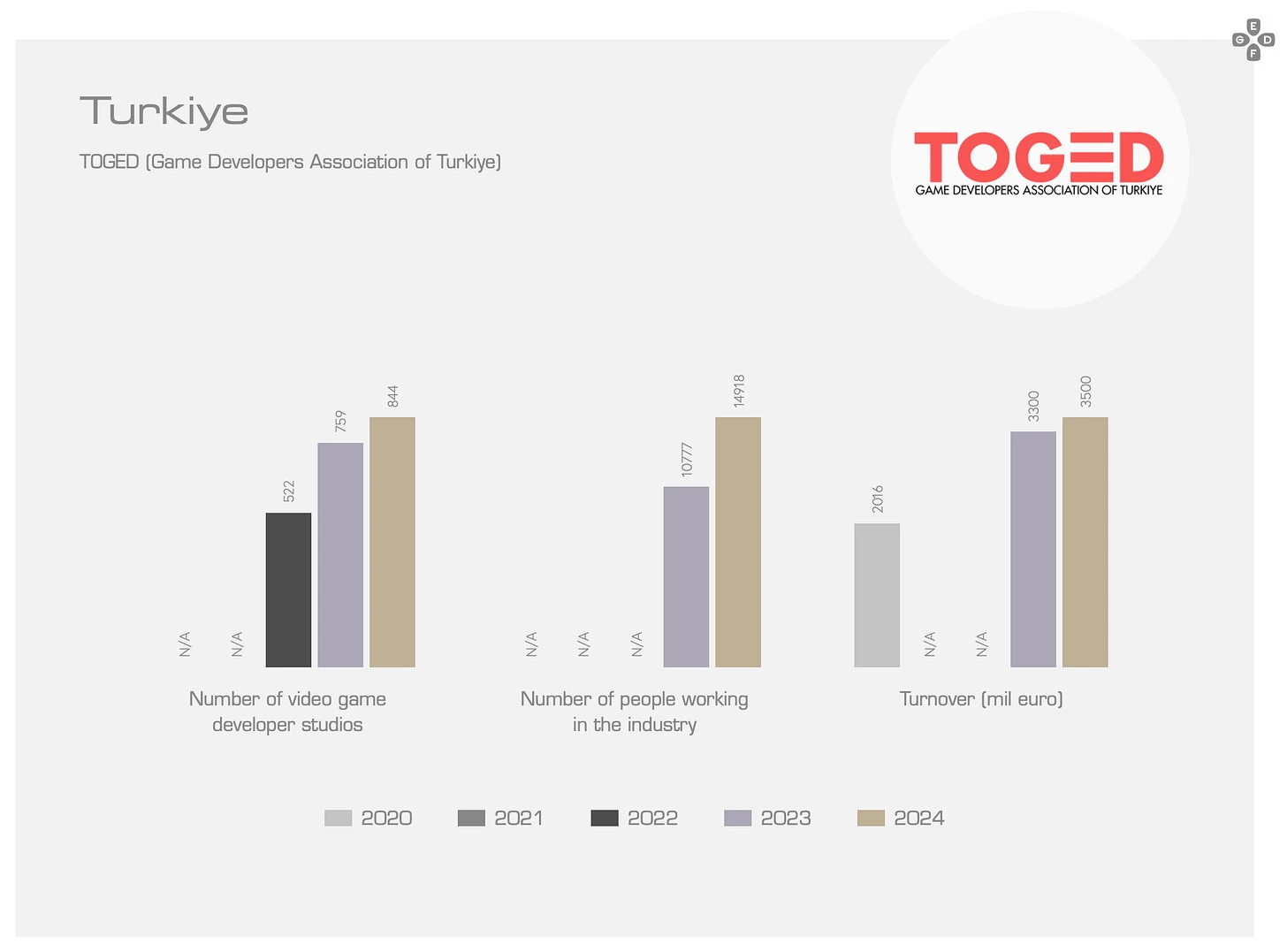
Regional headcount declined in Poland (14,929 vs. 15,290), Romania (6,100 vs. 6,600), and Lithuania (1,868 vs. 2,124). Minor gains were recorded in Germany (12,408), Spain (10,508), and Finland (3,800).
Türkiye showed standout growth, expanding its game development workforce by 38% year-over-year from 10,777 to 14,918 developers.
Workforce Diversity: Female Representation Remains at 24.5%
Women account for 24.5% of the video game workforce across the European Union, matching the 24.9% figure recorded in previous benchmarks.
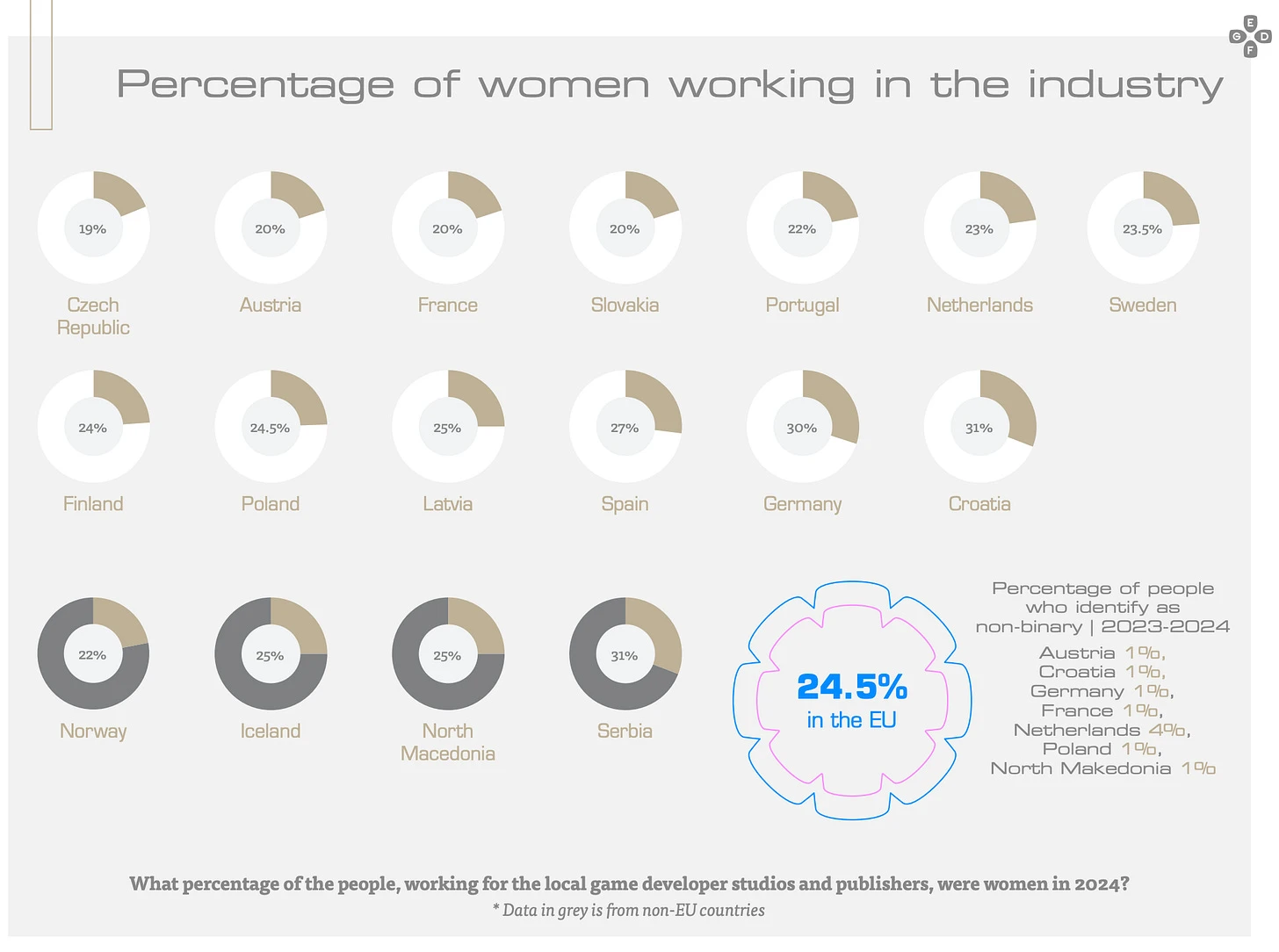
Balkan and Central European nations lead in gender diversity. Croatia (31%), Serbia (31%), and Germany (30%) register the highest female ratios, while Czechia trails at 19%.
Urban Hubs: Istanbul Surpasses London and Warsaw
The city breakdown redefines Europe's urban rankings. With 9,370 active game developers, Istanbul is now the single largest game development hub on the European continent.
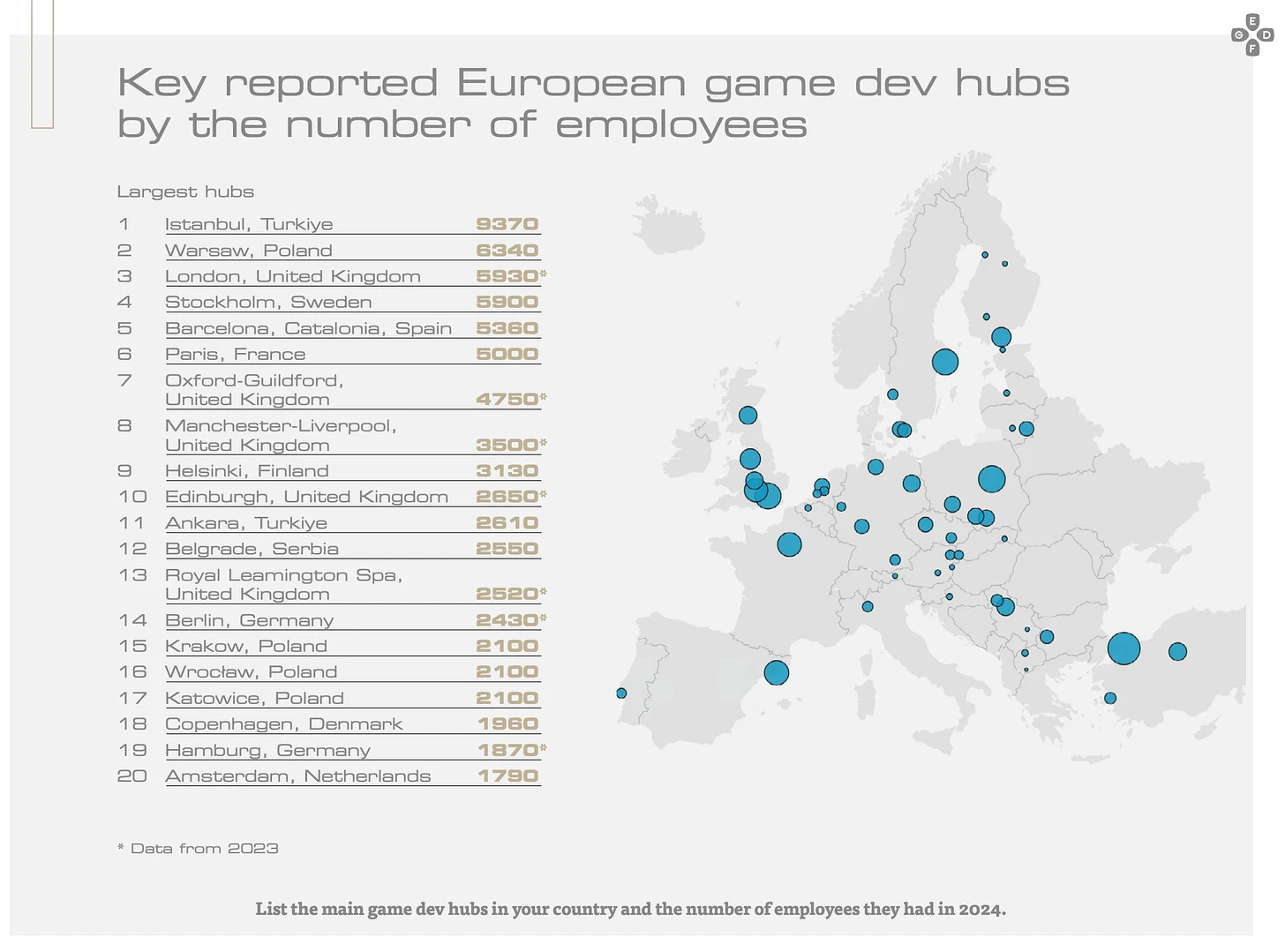
Warsaw takes second place with 6,340 developers, pushing London into third (5,930 staff). The European top 20 demonstrates UK and Polish regional clustering, with Kraków, Wrocław, and Katowice each employing 2,100 developers.
€24 Billion Turnover: The Cyprus Hub and Productivity Divergence
Combined turnover for studios and publishers headquartered in Europe totaled €24 billion, reflecting 6% estimated growth. The study tracks local corporate revenue rather than domestic player spending.
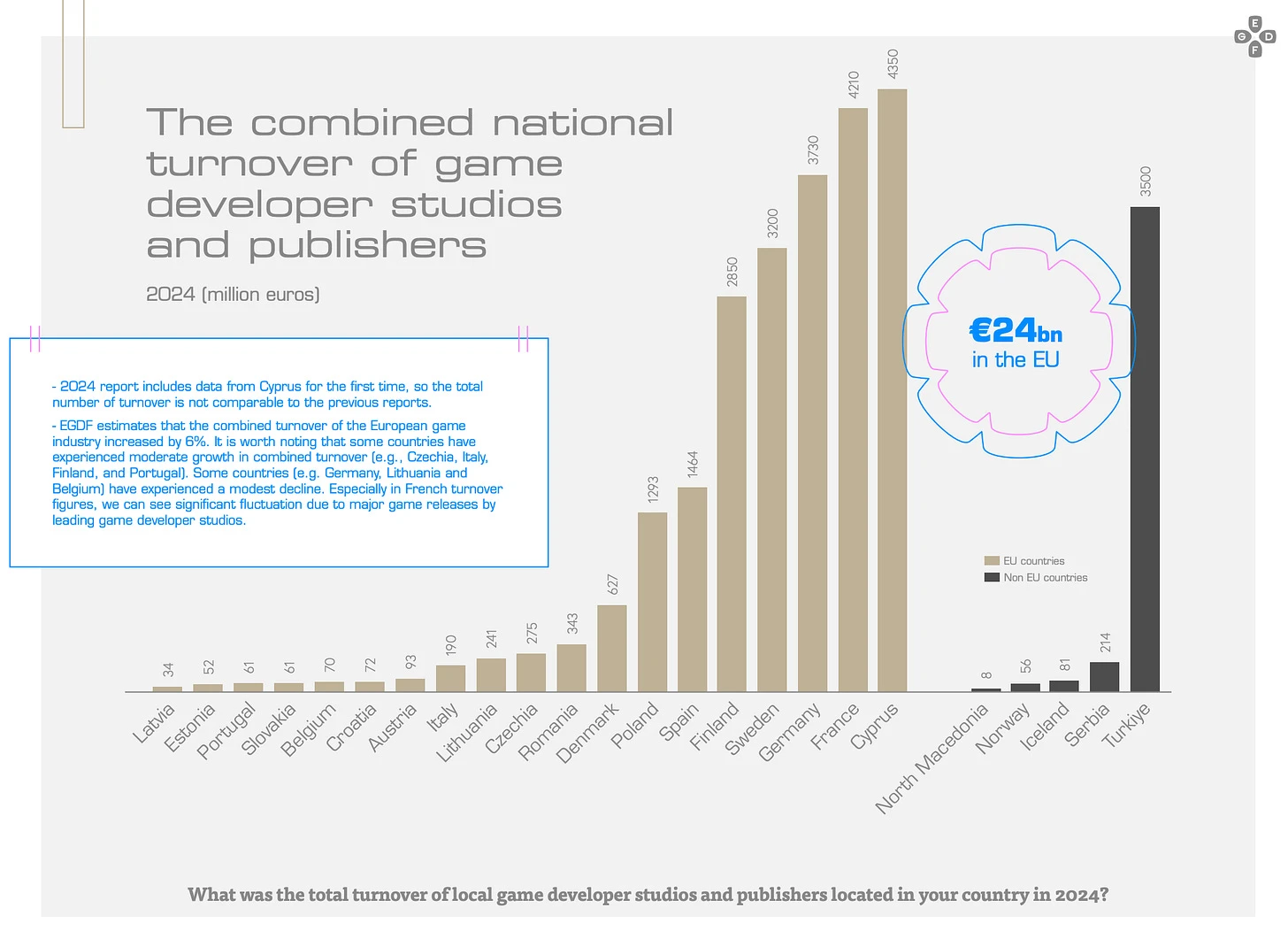
Cyprus achieved first place in the EU with €4.35 billion in annual turnover. The Mediterranean hub generates 18% of total EU game industry revenue due to international publisher registrations.
France ranks second in the EU at €4.21 billion, ahead of Germany (€3.73 billion, -4.4%) and Sweden (€3.2 billion, +6.2%). Non-EU member Türkiye generated €3.5 billion in turnover, exceeding Sweden.
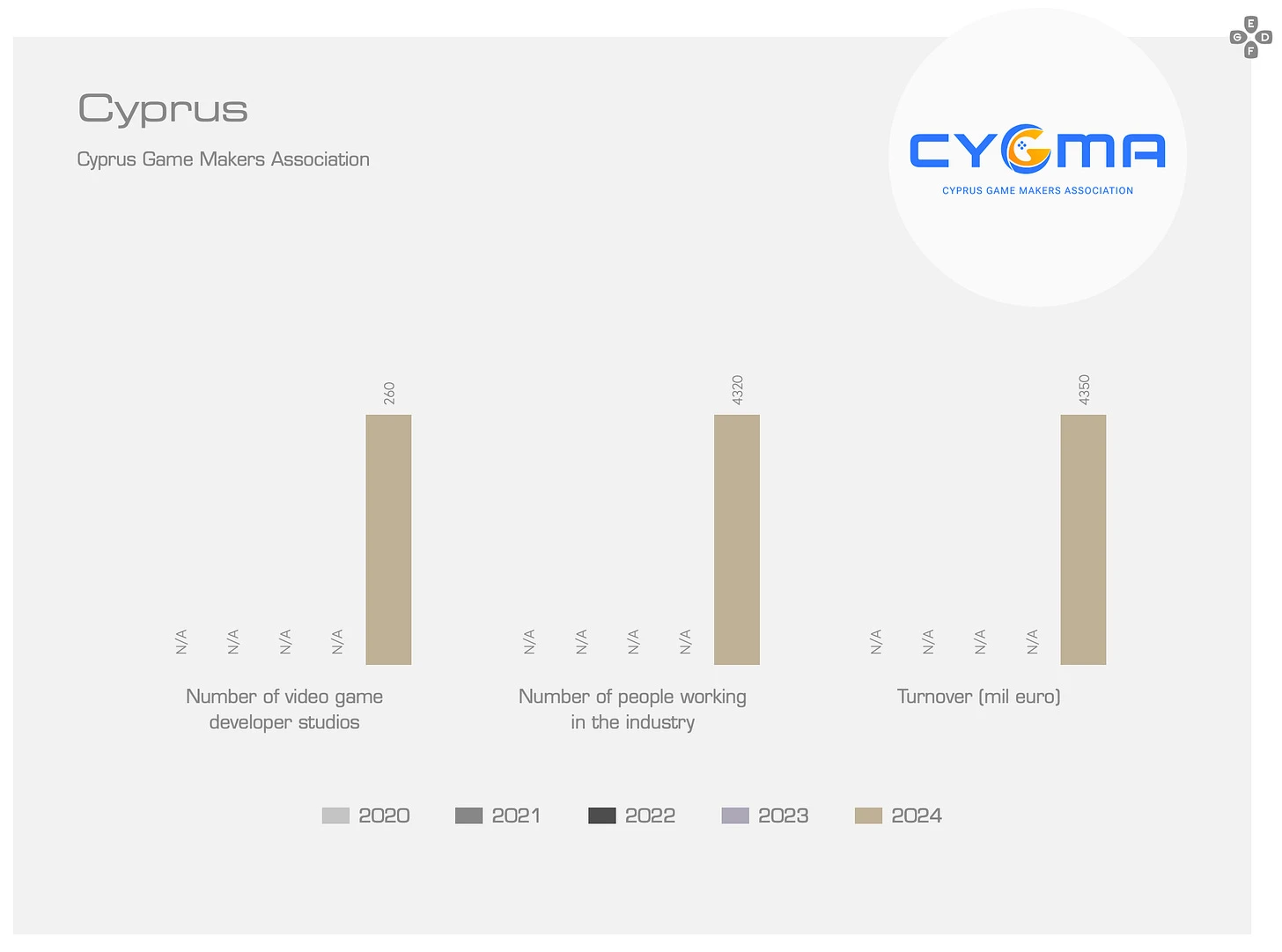
The data highlights a sharp productivity divide between Eastern and Northern Europe. Despite having the largest game development workforce in the EU, Poland ranks seventh in revenue with €1.293 billion.
On a per-employee basis, Polish developers generate €87,000 annually. By contrast, Finnish studios generate €750,000 per employee, while Cyprus-registered companies average close to €1,000,000 per worker.
Production and Platforms: PC Dominance and Self-Publishing
Poland produced the highest volume of new game releases with 450 titles in 2024, followed by France (420 titles) and Spain (233 titles).
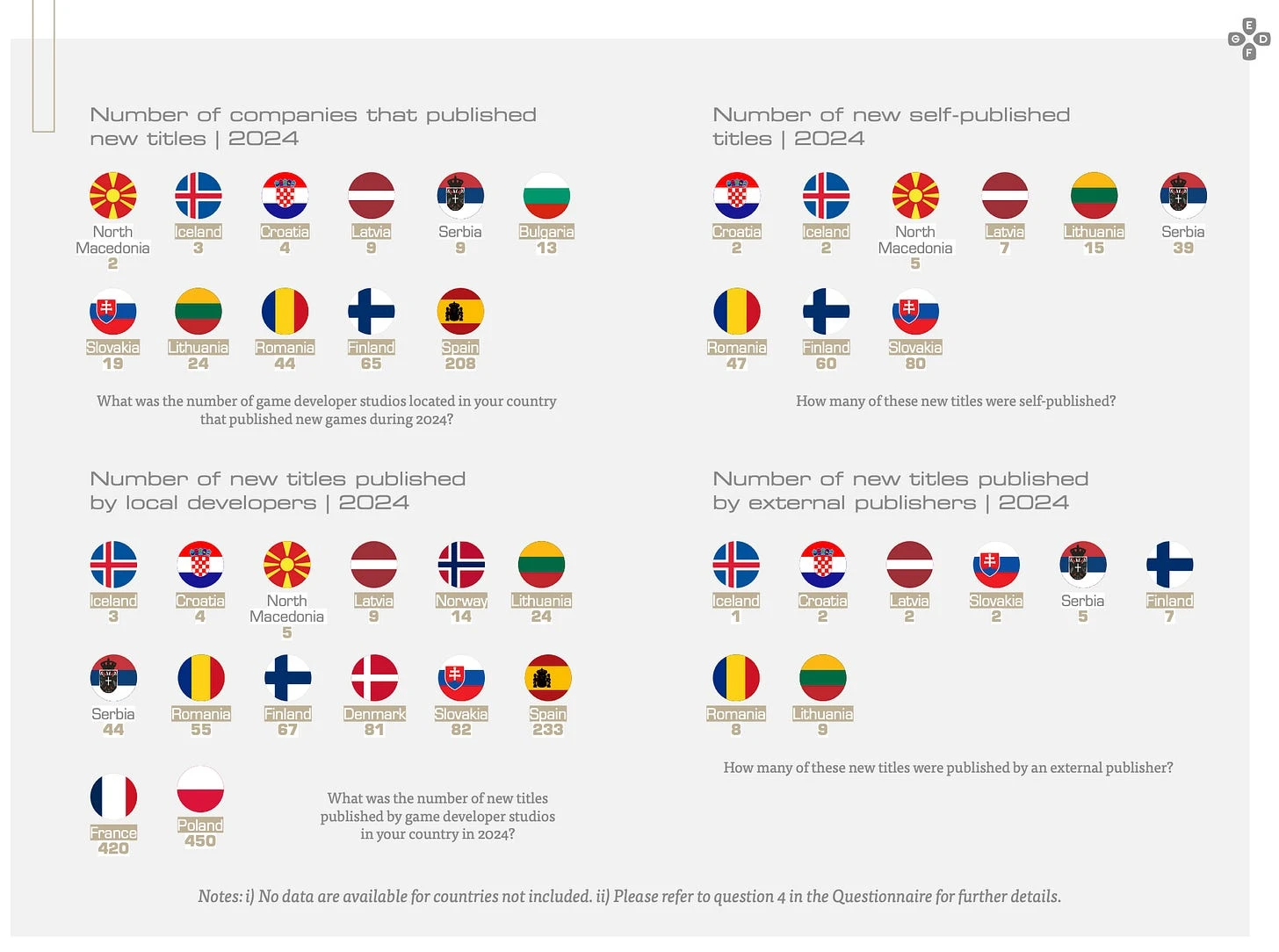
Self-publishing is the dominant distribution path. In Finland, 60 of 67 released titles were self-published; Romania saw 47 of 55, and Slovakia recorded 80 self-published titles out of 82 releases.
PC remains the primary platform for European studios. In 15 of 19 tracked countries, over 60% of studios target PC, led by Croatia (98.5%) and Spain (95%).
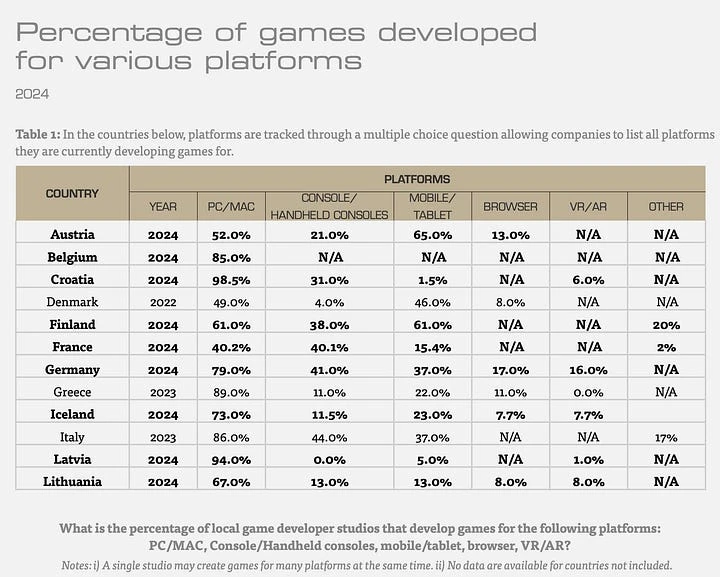
Mobile leads production in select markets including Serbia (80% of studios), North Macedonia (68%), Austria (65%), and Cyprus (82.7%). Consoles remain a secondary focus, most prevalent in Spain (63%), Serbia (48%), and Italy (44%).
Education and Public Policy: French Academies vs. Swedish Market Independence
Institutional infrastructure reveals divergent national strategies. France leads the continent with 130 dedicated game development higher education institutions, ahead of the UK (75 schools) and Poland (63 programs).
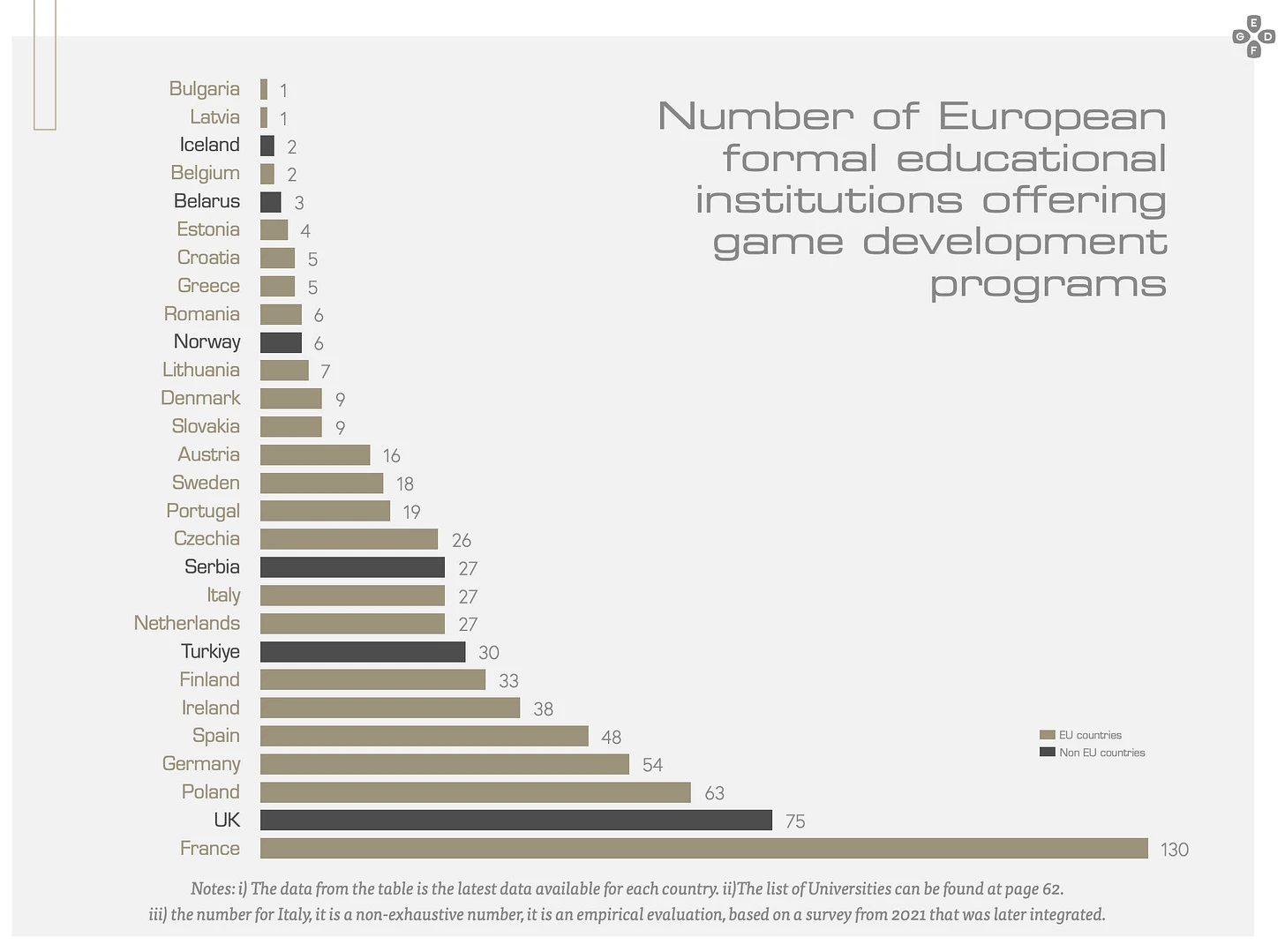
Public support models vary significantly. Eleven of 29 nations provide direct development grants, while only four countries (Belgium, France, Italy, and the UK) operate video game tax credit incentives.
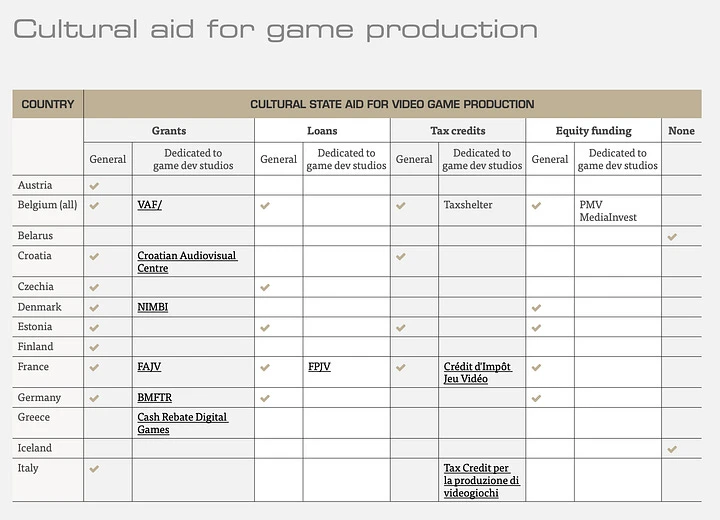
Sweden presents a notable case: Swedish studios receive zero state funding or tax incentives. Despite this lack of public subsidies, Sweden hosts 1,101 active studios generating €3.2 billion in turnover.
Dedicated technology and R&D programs remain rare, available in only four countries: Belgium, Czechia, Spain, and Türkiye.
European Gaming Industry: Consolidated Figures
| Metric | Total Europe | First Place | Second Place |
|---|---|---|---|
| Active Studios | 6,600 (EU) | United Kingdom (2,148) | Sweden (1,101) |
| Workforce | 95,000 | United Kingdom (28,516) | Poland (14,929) |
| Turnover | €24 Billion | Cyprus (€4.35B) | France (€4.21B) |
| Leading Hub | - | Istanbul (9,370 dev) | Warsaw (6,340 dev) |
| Titles Released | - | Poland (450 games) | France (420 games) |
| Game Academies | - | France (130 schools) | United Kingdom (75 schools) |
| Female Workforce | 24.5% (EU) | Croatia & Serbia (31%) | Germany (30%) |
While Europe remains an indispensable global creative engine, its economic strength relies on specialized hubs. Between Cyprus's fiscal center, Finland's per-head productivity, and Poland and Türkiye's production capacity, studios are positioning for endurance amid prolonged capital constraints.

SEO consultant for over 20 years and digital entrepreneur, Charles 'Grimtag' Ronchain is the founder of Pro-Gamer.gg, Retrocharting.com, and Gamescharting.com. A competitive gamer, streamer, and retro game collector, he has worked in the video game industry for over 15 years, notably as a consultant for leading game price comparison platforms. Passionate about real-time performance data and gaming technology, he analyzes competitive esports, gaming hardware benchmarks, and creator workflows on Pro-Gamer.gg with an authentic player perspective.