“A Title That Surpasses Anything We Have Created Before”: How Atlus Is Restructuring P-Studio Beyond Persona 6 to Shorten Mainline Wait Times
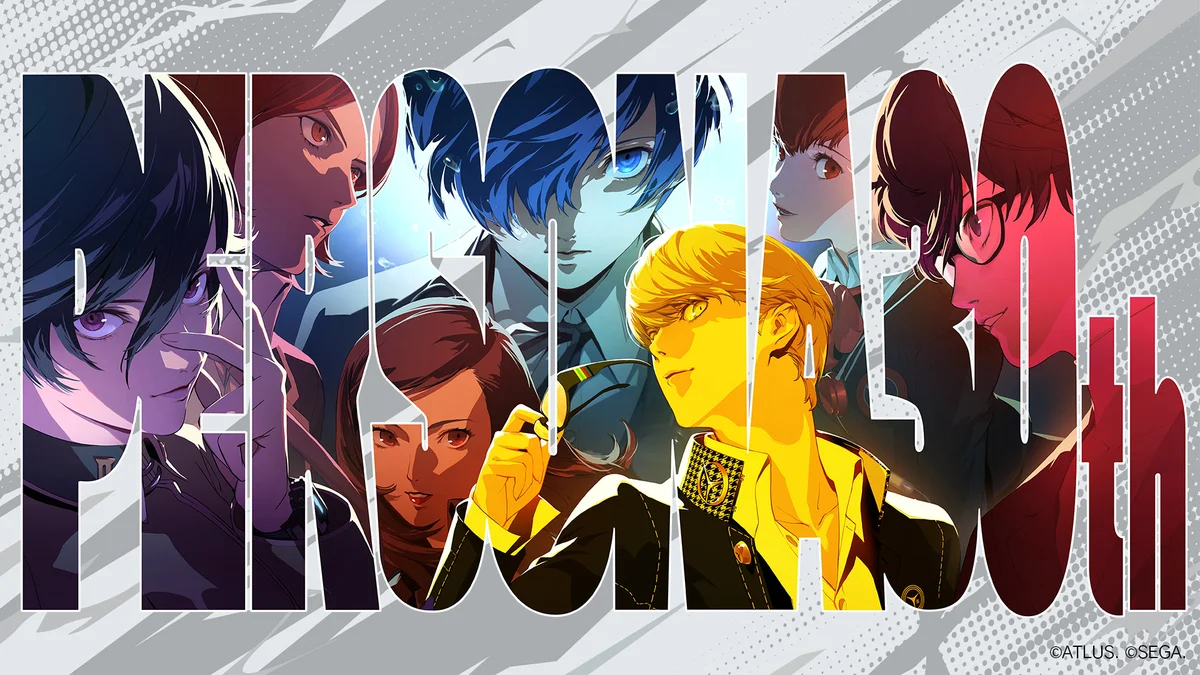
Marking three decades since the original Revelations: Persona debuted in Japan on September 20, 1996, SEGA Sammy Holdings has published an extensive two-part feature in its corporate investor series, SEGASAMMANIA #002. Across the interview, Persona Studio (P-Studio) General Producer Kazuhisa Wada, a veteran who has worked on the franchise since Persona 2: Eternal Punishment and directed design on Persona 3 and Persona 4 before producing Persona 5 Royal, offered a direct development update on Persona 6 while detailing how Atlus is restructuring its pipeline to shorten the wait for future mainline entries.
“A Title That Surpasses Anything We Have Created Before”
Since its official debut at the June 2026 Xbox Games Showcase alongside its signature emerald-green visual motif, Atlus's next numbered entry has kept its gameplay details under wraps, even as fans tracked the recent Wildcard SSL certificate update on the official persona6.jp domain ahead of The Game Awards. Speaking in Part 2 of the Sega Sammy feature, Wada confirmed that production is progressing with strong internal momentum even if full reveals remain under lock and key for now.
“Within that broader trajectory, the title we are currently developing is Persona 6,” Wada stated. “What I can speak about at this stage is still limited, but we want to prove the results of all the challenges we have accumulated so far through the game itself. With that determination, we are creating something that surpasses anything we have made before, while feeling a strong sense of fulfillment as we build it.”

Why Atlus Is Overhauling P-Studio So Fans Will Not Wait Another Decade After Persona 6
Beyond his confidence in the upcoming game, Wada directly addressed one of the community's biggest long-term frustrations: the decade-long gap between Persona 5's September 2016 Japanese release and the June 2026 unveiling of Persona 6.
“Large-scale RPGs like the Persona series can take five years or more to develop, which naturally leaves a long interval between numbered installments,” Wada acknowledged, before stressing that Atlus is actively reforming its production model. “And Persona 6 is not the finish line. We are implementing various measures to ensure that, unlike in the past, we will not keep players waiting so long for the next title.”
To compress development timelines without compromising the depth expected from a 100-hour role-playing game, Wada outlined three structural reforms underway inside P-Studio:
- Cross-Departmental Workflows and Shared Management Tools: Atlus is strengthening cooperation across its internal creative divisions and deploying modern tracking and information-sharing tools, redesigning its development framework not just for a single project, but for the titles that will follow five and ten years down the line.
- Ending Reliance on Individual Talent by Documenting Tacit Know-How: Wada emphasized that a 30-year-old franchise cannot maintain consistent quality if it depends on the personal experience of any single creator. P-Studio is now formally documenting development knowledge that previously existed only as unspoken, informal know-how, creating a two-way exchange where veterans pass down institutional expertise while also learning new techniques from younger developers.
- Early Script Lock-In for Simultaneous Global Localization: Because Persona games feature massive text volumes, writers historically tweaked Japanese dialogue right up until the end of production. After experiencing multiple voice re-recordings during early global rollouts, Atlus now integrates localization and voice recording into the earliest stages of development to treat simultaneous worldwide launches as the default standard.
Over 30 Million Copies Sold Worldwide With 80% Coming From Overseas Markets
The SEGA Sammy Holdings report also provides an updated statistical breakdown of the franchise's commercial trajectory. As of June 2026, cumulative worldwide sales across the Persona series have surpassed 30 million units. Following the stylistic and musical reinvention introduced by Persona 3 in 2006 (over 5 million cumulative sales across its sub-series) and the multimedia expansion pioneered by Persona 4 in 2008 (over 5.70 million units), the Persona 5 family propelled the IP into the global mainstream by exceeding 13 million copies on its own.
According to Wada, the decisive turning point for international growth arrived in 2020 with the simultaneous multilingual PC release of Persona 4 Golden on Steam, which sold over one million copies within a single year and proved that digital catalog titles could generate sustained long-tail revenue worldwide rather than relying solely on first-week boxed sales. Fueled by the 15-language multi-platform rollout of Persona 5 Royal, total series sales roughly doubled between 2020 and 2024. Today, overseas territories account for approximately 80% of all Persona sales, split between North America at 40%, Europe at 20%, and Asia at 20%, alongside 20% in Japan.
While players await the next look at Persona 6 (confirmed for PlayStation 5, Xbox Series X|S, PC, and Nintendo Switch 2, including a day-one launch on Xbox Game Pass Ultimate and PC Game Pass), P-Studio is gearing up for a major early 2027 milestone following Persona 4 Revival surpassing 2 million wishlists ahead of its February 2027 launch.
My Perspective
Reading through Kazuhisa Wada's full remarks in the Sega Sammy investor briefing, the most encouraging takeaway is not just the confidence behind Persona 6, but the candid admission of why Atlus used to take so long between releases. For years, P-Studio operated like a boutique workshop where Japanese scripts were rewritten until the final months and institutional knowledge lived inside the heads of a few senior directors. By locking in localization pipelines early for 15-language simultaneous launches and turning informal studio habits into shared documentation across departments, Atlus is finally building the production backbone required to deliver its next era of RPGs without making us wait another decade between numbered chapters.

Based on the outskirts of New York City, Chaya 'Chayane' spent five years studying software engineering in Montreal before returning to her home state. A Full-Stack developer and Deep Learning AI architecture researcher, she explores neural networks and algorithmic optimization while engineering data pipelines for Retrocharting and Gamescharting alongside Grimtag. A gamer for over 20 years and an avid collector of Nintendo history and The Legend of Zelda, she explored World of Warcraft's Azeroth before bringing her deep technical background to video game analysis.