5-Layer QD-OLED, 4K at 180Hz, and DisplayPort 2.1: How the AOC U32G5D Targets Mainstream 31.5-Inch 4K Gaming
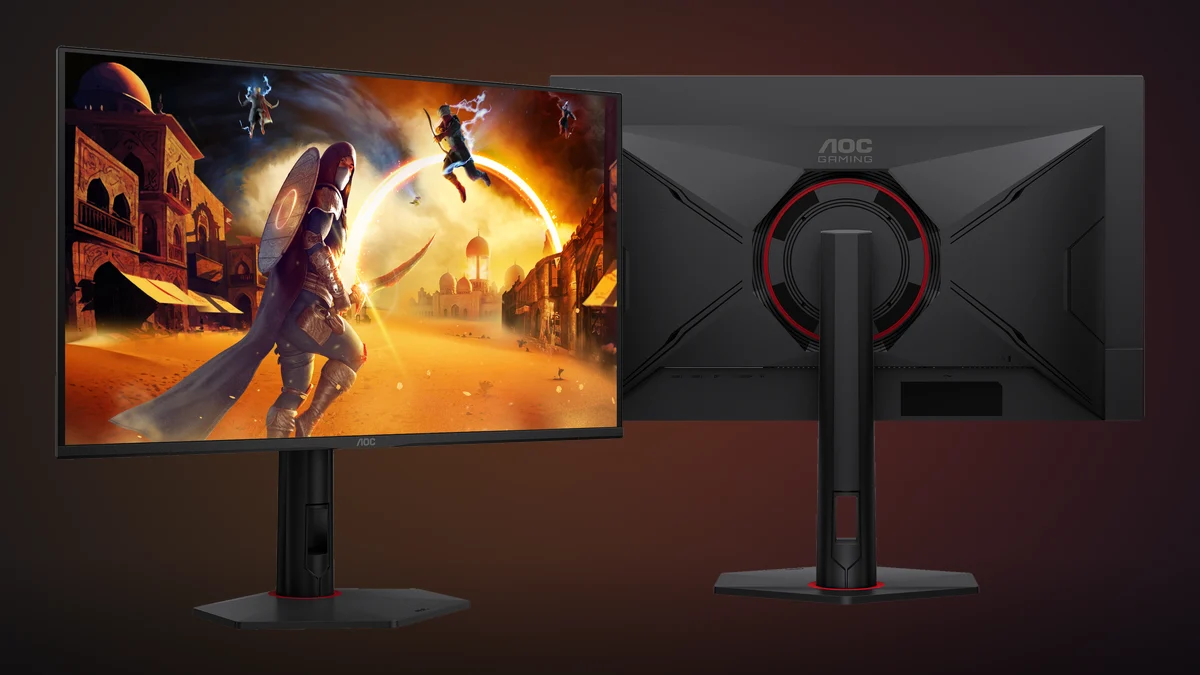
AOC is expanding its OLED gaming monitor lineup with the official reveal of the AOC Gaming U32G5D. Built around a 31.5-inch 4K UHD (3840 × 2160) screen, this new model pairs a five-layer QD-OLED Penta Tandem panel running at 180Hz with high-bandwidth DisplayPort 2.1 (UHBR13.5) and dual HDMI 2.1 connectivity.
Five-Layer QD-OLED Penta Tandem Panel and Graphene Passive Cooling
At the core of the AOC U32G5D is an UL TrueBright-certified QD-OLED Penta Tandem panel built on Samsung Display's EL Gen.3 five-layer stacked organic structure. By distributing light emission across five distinct layers and more than 20 million individually self-lit pixels, the panel boosts luminous efficiency while significantly reducing organic wear over time.
To keep operating temperatures in check without relying on a noisy active cooling fan, AOC integrates its latest QD-OLED Care protection suite alongside a custom graphene heatsink. This passive thermal design works in tandem with silent pixel refresh algorithms to mitigate burn-in risks during extended desktop or gaming sessions with static HUD elements.
The screen surface is treated with an AR (Anti-Reflection) coating engineered to curb ambient room glare while preserving deep contrast levels. AOC also equips the monitor with flicker-free dimming and Hardware Low Blue Light filtering, keeping high-energy blue light wavelengths (415nm to 455nm) below 50% of the total blue spectrum without shifting the image toward an unnatural warm tint.
Why AOC Chose 180Hz Over 240Hz at 4K UHD
While flagship models under the AGON PRO banner push 31.5-inch 4K OLED panels to 240Hz and even experiment with native 1000Hz IPS esports displays, the U32G5D enters the mainstream AOC Gaming G5 series with a targeted 180Hz maximum refresh rate (supporting a 48Hz to 180Hz VRR range via Adaptive-Sync and AMD FreeSync).
From a hardware perspective, dialing the refresh rate to 180Hz is a pragmatic trade-off. Driving native 4K resolution (delivering a crisp 140 PPI pixel density with a 0.1814mm pixel pitch) past 180 frames per second already pushes flagship desktop GPUs to their limits in modern AAA titles. Capping the panel at 180Hz allows AOC to lower manufacturing costs while retaining the core visual advantages of the five-layer QD-OLED architecture:
- Instantaneous Pixel Response: 0.03ms GtG (gray-to-gray) response time paired with a dedicated Motion Blur Reduction (MBR) mode.
- Contrast and HDR Certification: 1,500,000:1 static contrast ratio, VESA DisplayHDR True Black 400 certification, 250 nits typical full-screen SDR brightness (100% APL), and 450 nits HDR brightness on a 10% window (10% APL).
- Factory-Calibrated Color Accuracy: Native 10-bit color depth (1.07 billion colors) covering 100% of the sRGB (CIE 1931) and 99% of the cinema-grade DCI-P3 (CIE 1976) color spaces, pre-calibrated at the factory to an average Delta E under 1 in sRGB mode with an individual calibration report included in the box.
DisplayPort 2.1 UHBR13.5, HDMI 2.1, and Full Specifications
Unlike many competing 4K monitors that still rely on older DisplayPort 1.4 inputs, the AOC U32G5D features a DisplayPort 2.1 port rated for UHBR13.5, delivering up to 54 Gbps of bandwidth to handle 3840 × 2160 at 180Hz in 10-bit RGB or YCbCr 4:4:4 without restrictions. It is accompanied by two HDMI 2.1 ports (FRL6 at 48 Gbps) with DSC support for current-gen consoles and gaming PCs.
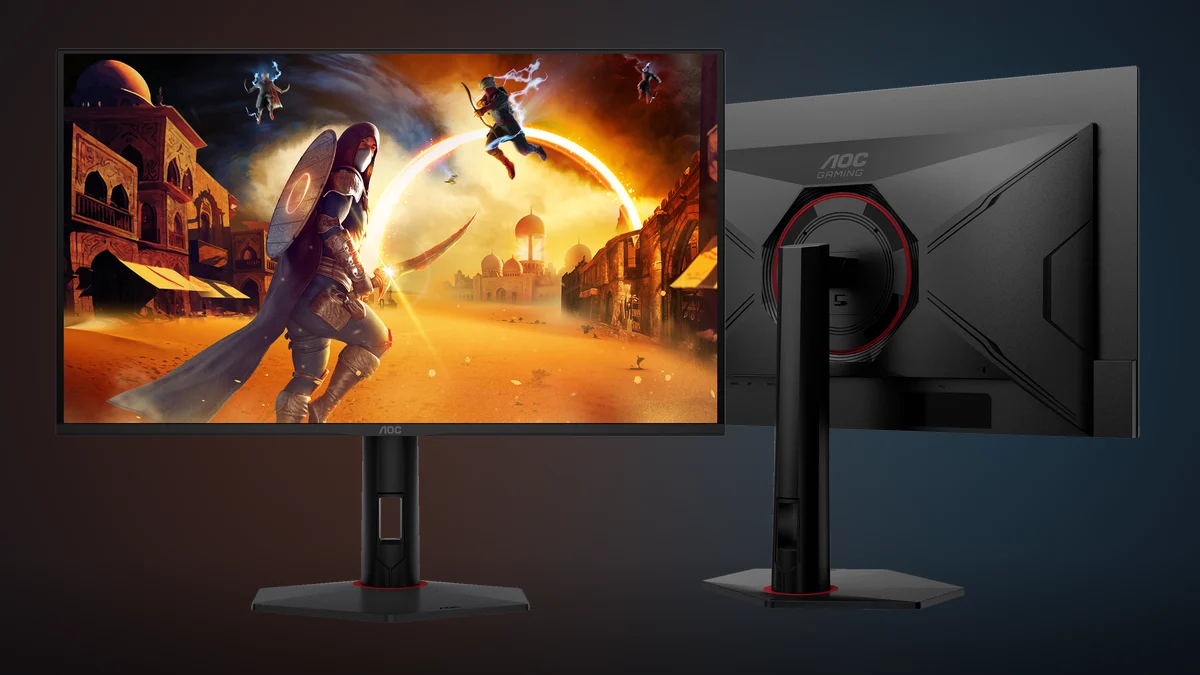
The rear I/O panel also houses a built-in USB 3.2 Gen 1 (5 Gbps) hub with one upstream port and two downstream USB Type-A ports (including a yellow fast-charging port), plus a 3.5mm headphone jack. Players comparing display technologies across price tiers can also check our complete 144Hz vs. 240Hz vs. OLED gaming monitor comparison guide.
| Feature | Official Specification (AOC Gaming U32G5D) |
|---|---|
| Panel Size and Type | 31.5-inch (699.48 × 394.73 mm) QD-OLED Penta Tandem (5-layer EL Gen.3) |
| Coating and Cooling | AR Anti-Reflection coating, passive graphene heatsink, QD-OLED Care |
| Resolution and Pixel Pitch | 4K UHD (3840 × 2160), 0.1814mm pixel pitch (~140 PPI) |
| Refresh Rate and Response | 180Hz (48Hz to 180Hz VRR, Adaptive-Sync / FreeSync), 0.03ms GtG |
| Brightness and HDR | 250 nits (SDR 100% APL), 450 nits (HDR 10% APL), VESA DisplayHDR True Black 400 |
| Color Gamut and Contrast | Native 10-bit, 100% sRGB, 99% DCI-P3, Delta E < 1, 1,500,000:1 static contrast |
| Video and Data Ports | 1× DisplayPort 2.1 (UHBR13.5, 54 Gbps), 2× HDMI 2.1 (FRL6, 48 Gbps), 2× USB-A 3.2 Gen 1 + USB upstream, 3.5mm audio out |
| Ergonomics and Weight | 150mm height, tilt, swivel, pivot, VESA 100 × 100 mm, hexagonal base, 8.33 kg with stand (5.50 kg panel only) |
| Power Consumption | Internal power supply, 110W typical operating (≤ 0.5W standby) |
The quick-release ergonomic stand rests on a compact hexagonal footprint (265.9mm total depth) and offers four-way adjustments including 150mm of height travel, tilt, swivel, and portrait pivot. Multi-source PiP (Picture-in-Picture) and PbP (Picture-by-Picture) modes, hardware crosshairs, frame counters, and AOC G-Menu software controls are all included. First listed on AOC's official Chinese portal in late October 2026, official retail pricing and global release dates are expected to follow shortly.
My Take on the Spec Sheet
Full transparency upfront: we have not had the AOC U32G5D on our test bench yet to measure its panel with our colorimeters. Looking strictly at the engineering choices, however, AOC is making a smart play here. By pairing a 180Hz refresh rate with the latest five-layer Penta Tandem QD-OLED stack, passive graphene cooling, and a 54 Gbps DisplayPort 2.1 input, the U32G5D trims away the 240Hz premium tax while keeping all the next-generation panel durability and connectivity upgrades intact.
Everything will now hinge on how aggressively AOC prices this G5-series monitor against established 240Hz competitors in North America and Europe. If the team at AOC and AGON by AOC is reading this, we would gladly welcome a review unit in our lab to put that promised sub-1 Delta E factory calibration, AR coating, and graphene thermal dissipation through our full suite of real-world tests.

PC hardware enthusiast and competitive gamer, Arthur 'Heimdall' splits his time between France and the UK working in enterprise B2B software solutions. A business school graduate passionate about component benchmarking, he has been building, modding, and tuning PCs since childhood, optimizing every thermal degree and millisecond of display latency. An avid gamer across Assassin's Creed and sandbox titles, he forged his alliance with Grimtag and Chaya during late-night World of Warcraft raids before joining Pro-Gamer.