Black Holes and Impossible Geometry: Why Mind-Bending Puzzler Desolus Skips Switch for Switch 2
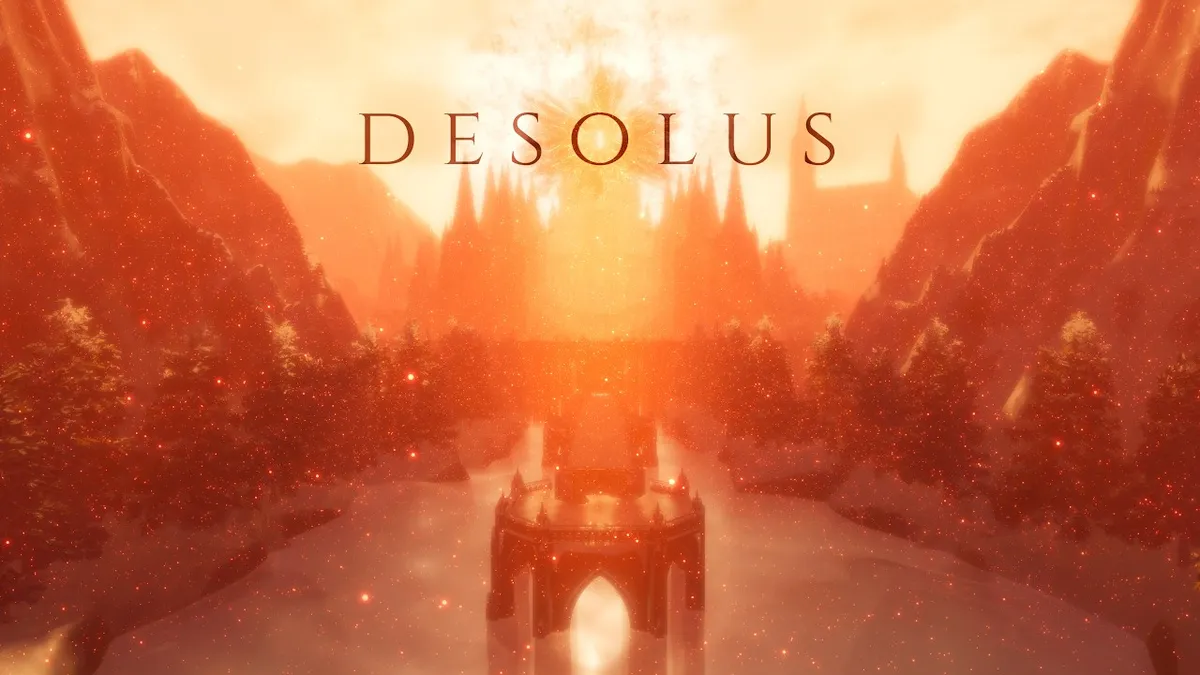
Following a monumental twelve-year solo development journey, independent creator Mark J. Mayers and publisher The Quantum Astrophysicists Guild have officially launched DESOLUS today, Thursday, October 15, 2026.
This mesmerizing first-person puzzle adventure is now available worldwide on PC via Steam, PlayStation 5, Xbox Series X|S, and exclusively on Nintendo Switch 2 within Nintendo's console lineup.
Recognized for his key technical contributions to landmark indie triumphs such as Outer Wilds and Manifold Garden, Mayers crafted a visionary project that was previously showcased as interactive fine art at the Smithsonian American Art Museum.
Black Holes and Impossible Escher-Inspired Geometries
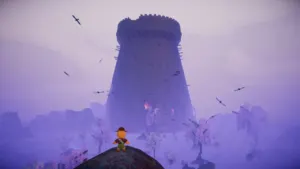
In DESOLUS, players explore the haunting remains of a surreal metropolis defined by impossible architecture, directly paying homage to the optical illusions of Dutch artist M.C. Escher.
As an impending cosmic cataclysm threatens the city, your mission centers on manipulating portable gravitational singularities that function as living dimensional thresholds.
By casting these miniature black holes, you seamlessly peer and move between the city's golden past and its decaying future, bridging disconnected realities without loading screens.
Repositioning these temporal rifts allows you to realign shattered stairways, massive stone arches, and drifting pillars across centuries to re-energize colossal solar pylons.
Every environmental puzzle demands careful spatial observation, urging you to twist perspective and uncover hidden pathways tucked away within non-Euclidean corridors.
The journey is underpinned by an evocative ambient synthesizer score, designed to heighten the feeling of quiet wonder and contemplation amidst the cosmic ruins.
Skipping the Original Switch for Switch 2 Hardware
While the game showcases a strikingly minimalist aesthetic with vibrant surrealist palettes, its underlying non-Euclidean engine relies on persistent geometric transformations and spatial warping.
Simulating real-time gravitational lensing and recursive spatial distortion requires substantial matrix computing power from both the GPU and memory subsystem.
To deliver these intricate relativistic effects at crisp resolutions without frame pacing hiccups, Mark J. Mayers intentionally bypassed the aging 2017 Switch hardware to fully harness the Nintendo Switch 2 architecture.
On Nintendo's next-generation system, the title runs at an ultra-smooth 60 frames per second with crystal-clear geometry, whether playing in docked or handheld mode.
Find Nintendo eShop Gift Cards Best Deals→
My Take
Watching a passion project reach completion after twelve years of solitary dedication from an artisan behind Outer Wilds and Manifold Garden commands immense respect.
The pragmatic decision to bypass the legacy Switch in order to leverage the Switch 2's extra compute power ensures these impossible geometries render cleanly without distracting aliasing, proving that auteur puzzle design is stepping into an exciting technical era.

PC hardware enthusiast and competitive gamer, Arthur 'Heimdall' splits his time between France and the UK working in enterprise B2B software solutions. A business school graduate passionate about component benchmarking, he has been building, modding, and tuning PCs since childhood, optimizing every thermal degree and millisecond of display latency. An avid gamer across Assassin's Creed and sandbox titles, he forged his alliance with Grimtag and Chaya during late-night World of Warcraft raids before joining Pro-Gamer.