Without Writing a Single Line of Code: Google Launches Playground and Partners with Unity to Generate Playable AI Games
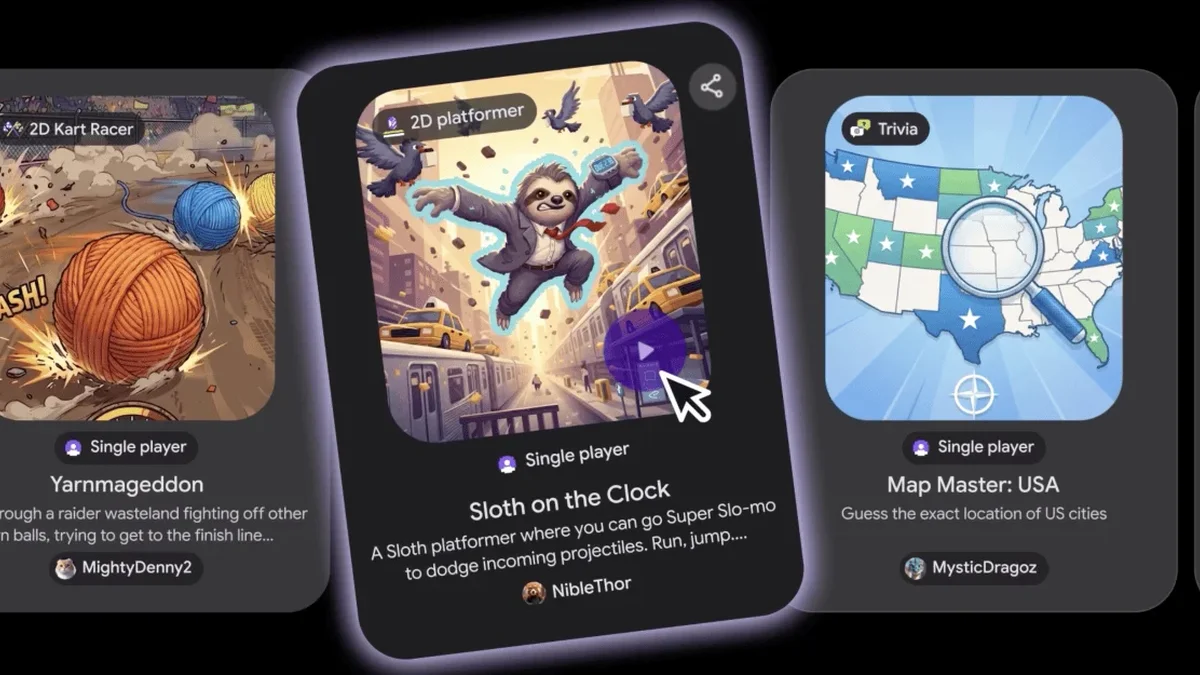
Typing a concept into a chat prompt and watching a fully playable video game materialize on your screen within seconds. That is the promise behind Google Playground, an experimental web-based platform launched by Google to make game development accessible to anyone with a browser.
The platform eliminates traditional programming hurdles entirely. Users step into the role of a creative director, using conversational natural language prompts to craft custom 2D and 3D experiences without writing a single line of code.
Prompt to playable prototype in seconds
Google Playground is built around an interactive, real-time creation loop. As soon as you submit an initial prompt, the game renders inside the browser window and becomes instantly playable with keyboard, mouse, or touch controls.
The system shines during iteration. Want to lower jump gravity, spawn waves of laser-firing drones, or swap a neon cyberpunk skyline for ancient mossy ruins? You simply type the request into the conversational chat window, and the underlying engine updates the gameplay live.
Once a game is finished, creators can generate a direct web link to invite friends. Experiences can also be published to the public Playground Explore gallery, which features community ratings and competitive leaderboards.
Under the hood: Gemini, Nano Banana, and Lyria
Behind the streamlined interface, Google is coordinating several of its most powerful foundation models. Company representatives confirmed that the platform leverages three distinct neural architectures working in tandem.
Gemini handles natural language comprehension, gameplay logic, game mechanics, and underlying code execution. Meanwhile, Nano Banana generates visual assets, sprites, and environmental textures, while Lyria provides dynamic soundtracks and sound effects.
This multi-model pipeline is orchestrated by a custom software harness that Google refined internally through extensive evaluations and game testing.
Unity Spark brings professional-grade 3D to the browser
The most consequential reveal of the announcement is a strategic partnership with Unity. Together, the two tech giants unveiled Unity Spark, an expanded creation environment designed to live inside Playground later this year.
Unlike basic web-game builders, Unity Spark harnesses the official Unity runtime engine. This unlocks advanced physics simulation, higher-fidelity 3D rendering, and real-time multiplayer co-creation where multiple people can build together simultaneously.
Crucially, Unity Spark also connects directly to the Unity Asset Store. Creators will be able to incorporate polished, professional 3D models and textures made by human artists directly into their AI-driven game environments.
Taking on Roblox and Meta in the AI sandbox race
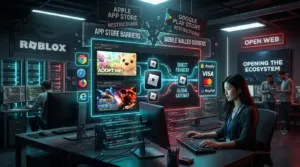
This launch places Google squarely in the middle of a heated battle for user-generated content platforms. Meta is actively pushing AI creation tools for its Horizon ecosystem, while Roblox continues to experiment with mobile creation to protect its massive digital economy.
Google's primary strategic edge is frictionless distribution. Players do not need to download an external launcher, install an app store client, or purchase virtual currencies, an approach that mirrors how platforms seek to bypass traditional app store fees.
Everything runs straight out of an open web tab, complete with seamless sign-in and integration with Google Play Games profiles.
Access, quotas, and what this means for creators
Google Playground is currently rolling out in the United States for users aged 18 and older through Google's experimental labs portal.
The core service is free to use with weekly token quotas, though Google One subscribers receive significantly higher generation allowances. A closed beta for Unity Spark is scheduled to kick off later in 2026, with an official waitlist opening immediately.
Lowering the barrier to game creation will inevitably flood the web with millions of instant prototypes. Whether prompt-driven sandboxes can cultivate lasting depth or just fleeting novelty remains the defining question for the industry.

SEO consultant for over 20 years and digital entrepreneur, Charles 'Grimtag' Ronchain is the founder of Pro-Gamer.gg, Retrocharting.com, and Gamescharting.com. A competitive gamer, streamer, and retro game collector, he has worked in the video game industry for over 15 years, notably as a consultant for leading game price comparison platforms. Passionate about real-time performance data and gaming technology, he analyzes competitive esports, gaming hardware benchmarks, and creator workflows on Pro-Gamer.gg with an authentic player perspective.